Roasted Poblano Soup with Chicken, Potatoes and Cream
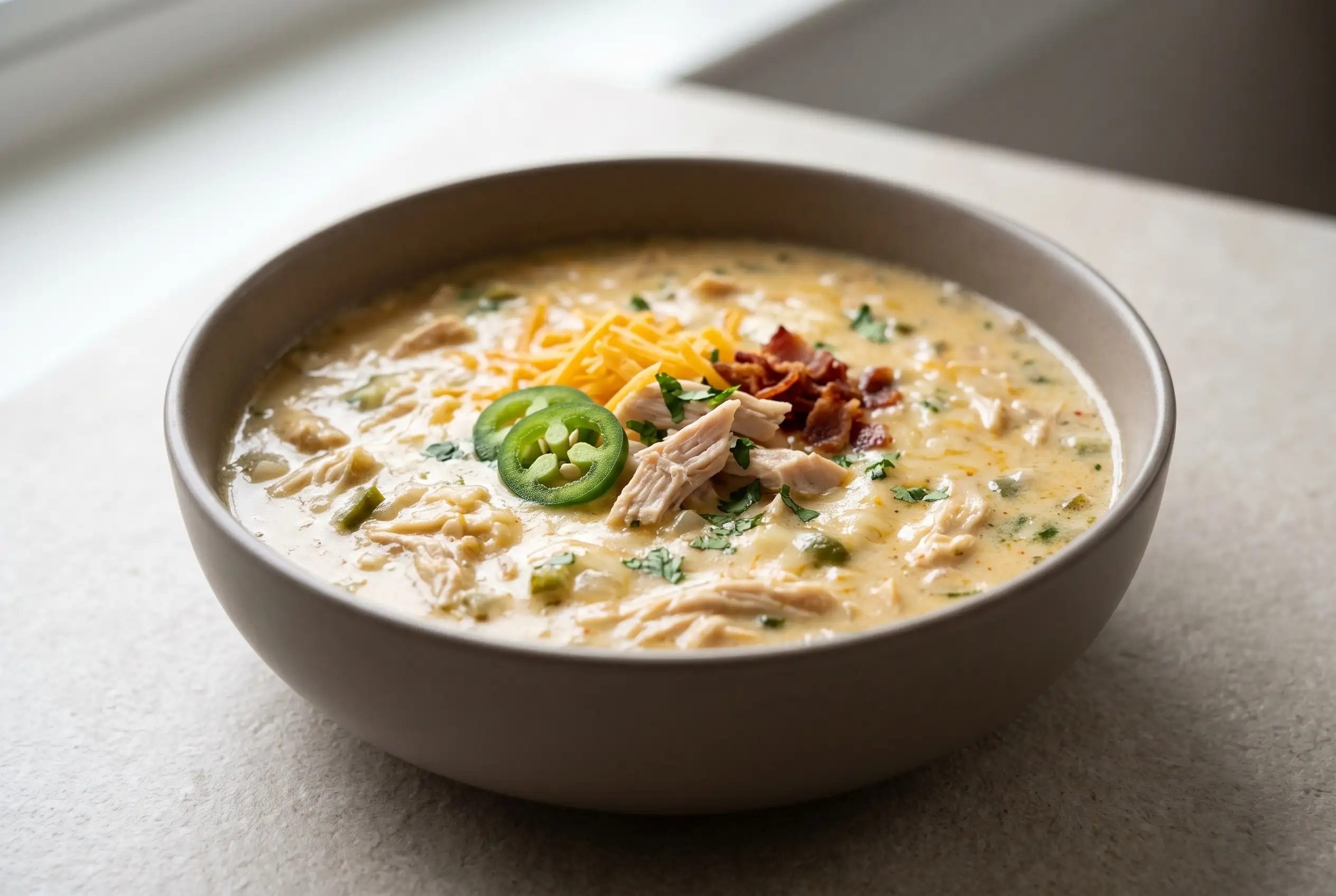
Roasted poblano soup combines smoky poblano peppers with chicken, potatoes, celery, onion, garlic, cumin, red pepper flakes, broth, and cream. The result is a hearty bowl with a mild pepper character, savory vegetables, tender chicken, and a rich finish. Roasting the poblanos first gives the soup its defining flavor, while the potatoes help make the bowl feel substantial.
What Roasted Poblano Soup Tastes Like
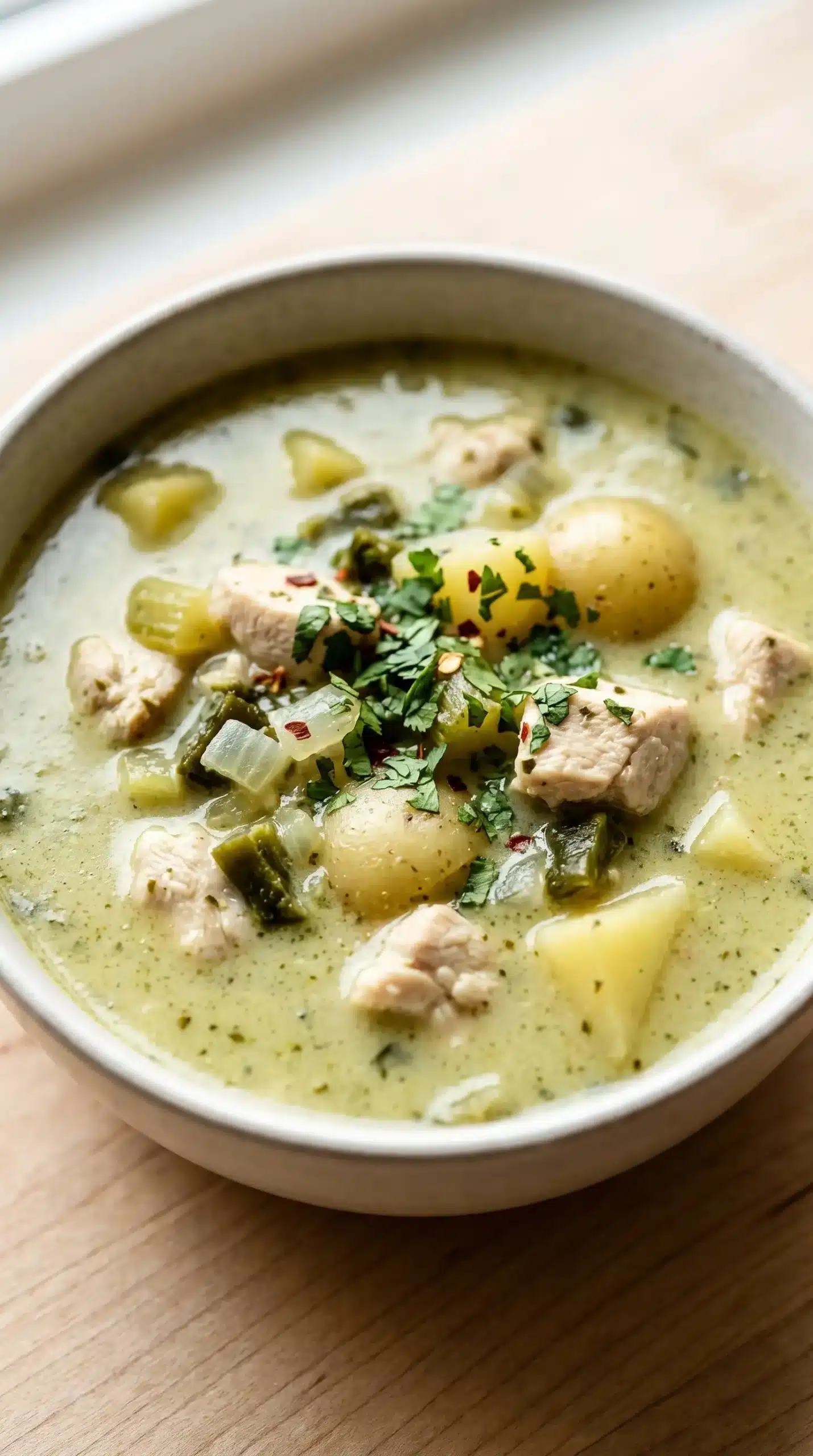
Each spoonful brings together roasted pepper, tender vegetables, chicken, and a creamy broth. The poblanos provide a mild smoky character, while cumin and red pepper flakes add earthy warmth. Potatoes make the soup more filling, and cilantro gives the finished bowl a fresh herbal accent.
Why Roasting the Poblanos Matters
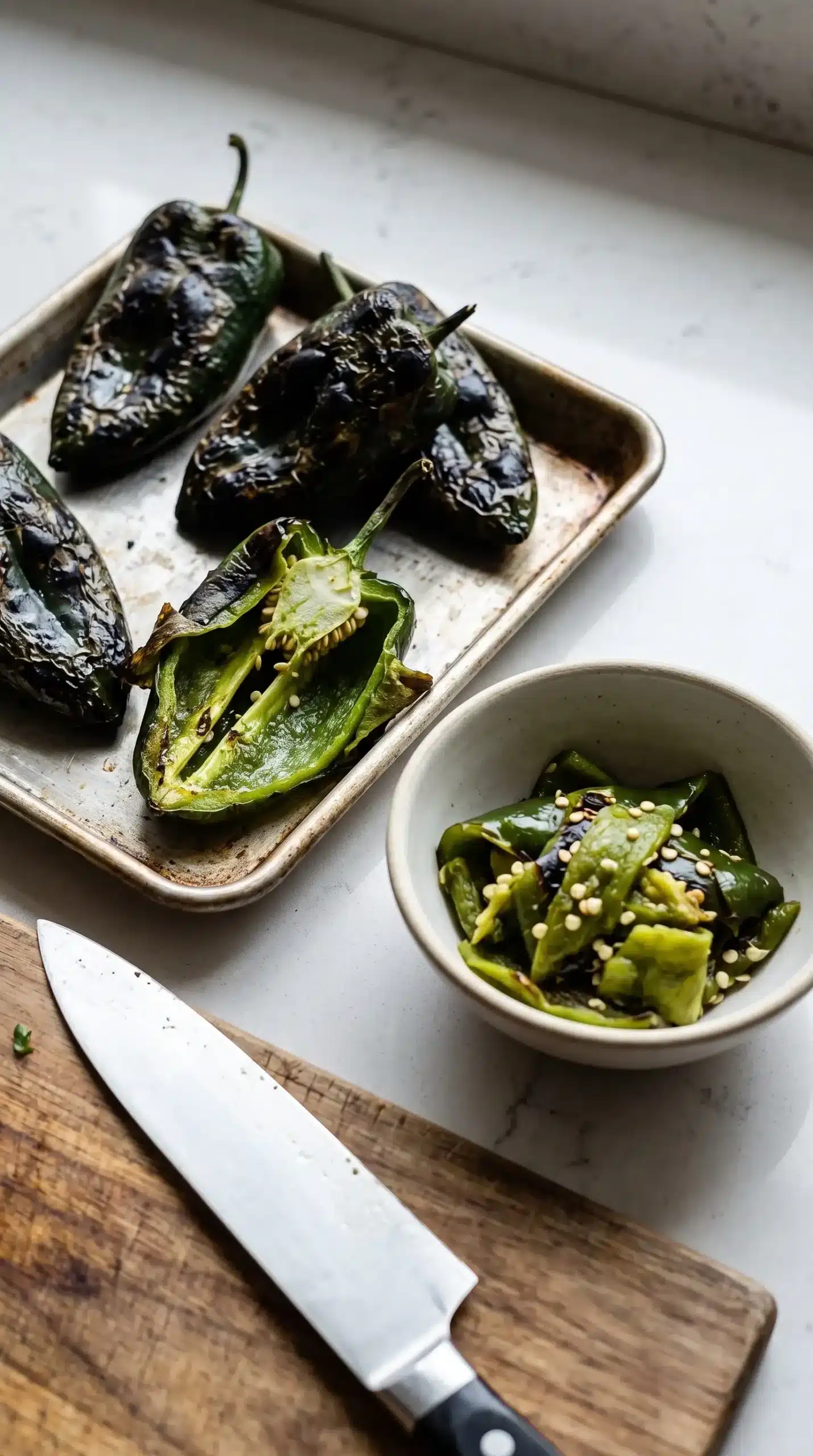
Blackening the poblano skins before adding the peppers to the pot changes the character of the soup. The roasted peppers bring a deeper, smoky note that fresh chopped poblanos would not provide in the same way.
After roasting, the peppers need a short covered rest so steam can loosen the skins. Peeling, seeding, and chopping them afterward keeps the finished soup focused on the roasted pepper flesh instead of toughened skin.
For a creamy roasted poblano soup, that roasted pepper preparation also matters because the pepper flavor has to remain noticeable beside butter, cream, chicken, and potatoes. Keeping the roasted peppers as a distinct ingredient helps preserve that balance.
The Ingredients That Shape the Creamy Base
Butter and heavy cream create the richer side of the soup, while olive oil starts the vegetable base and chicken broth carries the flavors through the pot. Baby gold potatoes add body, and onion, celery, and garlic establish the savory foundation. For a hearty potato-based soup with a creamy finish, chicken soup with Yukon Gold potatoes shows how tender potatoes can anchor a comforting bowl. Cumin and red pepper flakes give the broth an earthy, lightly spicy edge without replacing the roasted poblano flavor.
Choosing the Pepper Heat Level
Poblanos are the central pepper and provide mild smokiness. Jalapeño or serrano peppers can be used when a hotter bowl is preferred, while the red pepper flakes can also be adjusted to taste.
| Pepper choice | How it changes the soup |
|---|---|
| Poblano peppers | Keeps the roasted pepper character mild and smoky |
| Jalapeño peppers | Adds more noticeable heat |
| Serrano peppers | Provides another hotter pepper option |
Keeping the poblano as the main roasted pepper lets the soup retain its signature character even when extra heat is added. If the heat needs to stay gentle, the simplest adjustment is to rely on the poblanos and use less red pepper flake.
Building the Vegetable Base Without Losing Flavor
Onion, celery, and garlic should soften together in the olive oil and butter before the potatoes and spices join the pot. About five minutes of cooking gives the vegetables time to become tender and fragrant. Stirring them as they cook helps the base develop evenly without rushing the next stage.
When the Potatoes Are Ready for Chicken
Potatoes determine when the broth is ready for the chicken. Once the broth and roasted poblanos are simmering with the potatoes, the pieces should become tender before the chicken is added.
That order keeps the cooking stages manageable. The potatoes need time to soften in the broth, while chicken breast chunks need a shorter period to cook through.
If the potatoes are still firm when the chicken goes in, the two ingredients can compete for attention because the chicken may finish before the potatoes reach the desired tenderness. Waiting for the potatoes to become tender keeps the timing of the pot more controlled.
Chicken Texture in the Soup
Boneless skinless chicken breasts are cut into chunks and cooked directly in the simmering soup. They should be fully cooked before the cream is stirred in. Rotisserie chicken is also an option when a quicker preparation is needed, giving the soup a practical shortcut without changing its overall flavor direction.
Making the Soup Creamy Without Overworking It
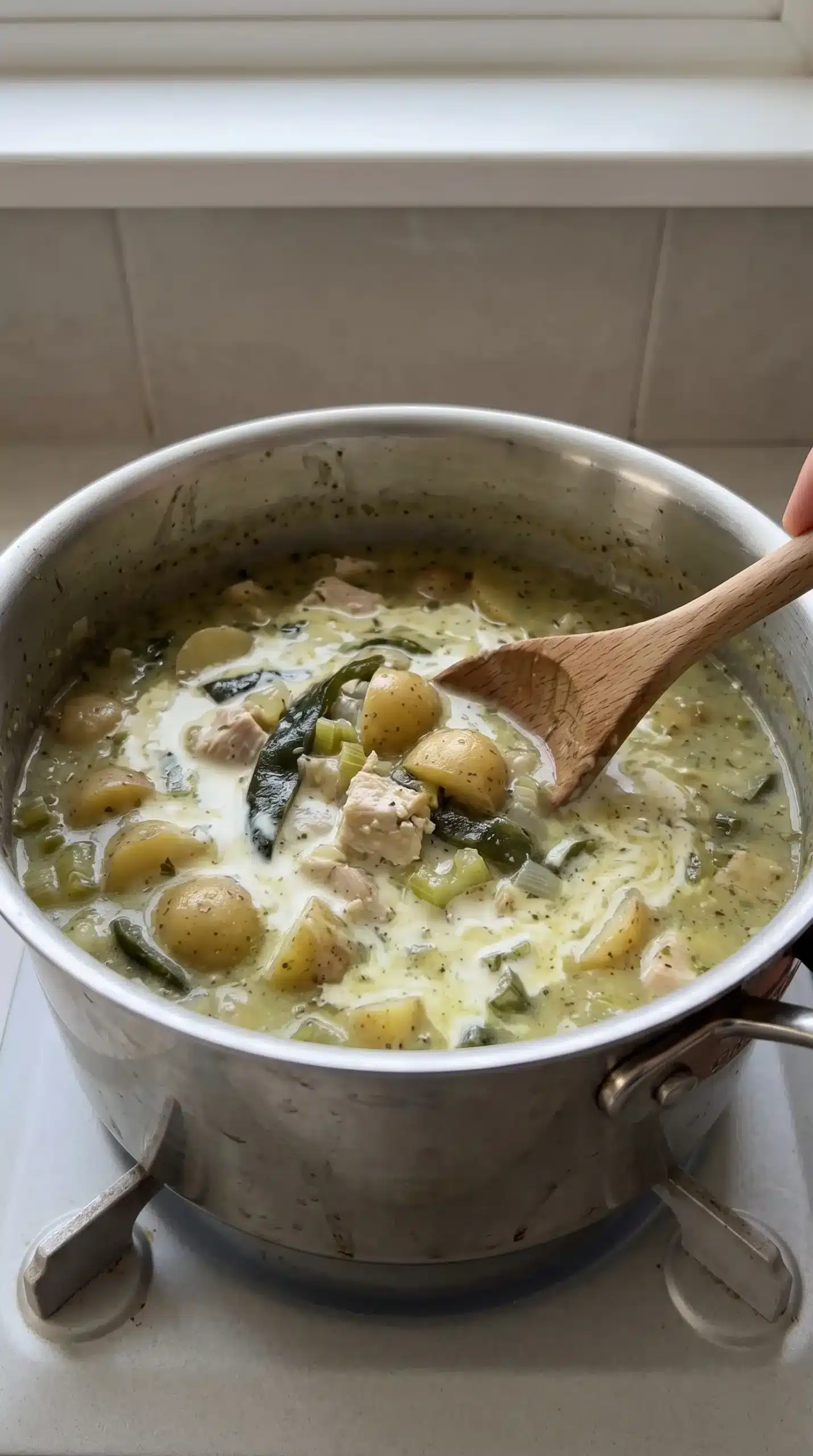
Heavy cream goes in after the chicken has cooked, so the creamy finish is added near the end instead of being exposed to the entire cooking process. Once it is stirred in, the soup only needs to warm through.
An immersion blender can be used on part of the soup before the cream is added when a thicker, creamier texture is wanted. Blending only part of the pot preserves some pieces of potato, vegetables, chicken, and pepper for a more varied spoonful.
Full-fat coconut milk or oat milk can replace the heavy cream when a different finish is desired. Coconut milk changes the character more noticeably, while oat milk offers another option for keeping the soup creamy without using heavy cream.
Mistakes That Can Throw Off Roasted Poblano Soup
Leaving too much blackened poblano skin attached can make the pepper texture less pleasant. After steaming, remove the loosened skin carefully, then seed and chop the peppers before they enter the soup.
Adding the chicken before the potatoes are tender can also disrupt the cooking balance. Give the potatoes their simmering time first, then add the chicken chunks so both components reach the right stage without unnecessary extra cooking.
Another easy mistake is treating the cream as something that needs prolonged cooking. It is added after the chicken cooks and only needs to warm through. Excessive cooking at that point is unnecessary for the stated method.
Toppings That Balance the Bowl
Minced cilantro is the listed finishing garnish and adds a fresh herbal note to the rich soup. Sour cream or a sprinkle of cheese can be added at serving, while avocado slices or lime juice provide additional topping choices from the suggested variation. Crusty bread or tortilla chips work alongside the soup when you want something crisp or sturdy with the bowl.
Storage and Reheating for Leftovers
Let the soup cool completely before transferring it to an airtight container for refrigeration. For best quality and safety, cooked leftovers can generally be kept for about four days in the refrigerator, making the leftovers useful for another meal.
For longer storage, divide the cooled soup into freezer-safe portions and freeze for up to three months. Portioning makes it easier to thaw only what you need instead of repeatedly warming the entire batch.
Thaw frozen roasted poblano soup in the refrigerator overnight before reheating. Gentle reheating is a sensible approach for a soup containing cream, since the goal is to warm the stored soup evenly without subjecting the finished mixture to unnecessary aggressive heat.
A Vegetarian Version with Black Beans
Black beans can replace the chicken, while vegetable broth can replace the lower-sodium chicken broth for a vegetarian version. The roasted poblanos, potatoes, vegetables, cumin, and creamy finish can remain part of the same basic flavor profile.
Ways to Adjust the Soup for the Table
A milder serving can center on the three roasted poblanos and use red pepper flakes conservatively. The supplied pepper alternatives make it possible to move the bowl toward more heat when jalapeño or serrano peppers are preferred.
- Dairy-free: Use coconut oil in place of butter and full-fat coconut milk or oat milk in place of heavy cream.
- Vegetable swaps: Leeks can replace celery, yellow onion can replace white onion, and parsley can replace cilantro.
- Potato swaps: Yukon gold or russet potatoes can stand in for baby gold potatoes.
- Faster chicken option: Rotisserie chicken can replace the chicken breast chunks when a quicker preparation is needed.
These adjustments preserve the basic construction while allowing the bowl to fit different ingredient preferences. The pepper, potato, chicken, and creamy elements can each be changed independently without requiring a completely different approach.
Roasted Poblano Soup Comes Together Through Heat Control
Roasted poblano soup depends on a few clear heat decisions: blacken the pepper skins before steaming, soften the vegetables before the broth goes in, simmer until the potatoes are tender, cook the chicken through, and warm the cream at the end. Those stages protect the smoky pepper flavor while giving the potatoes, chicken, and creamy broth time to reach their intended texture.
The most useful judgment is to avoid rushing the stages that determine texture. Once the roasted peppers are properly prepared and the potatoes are tender before the chicken is added, the remaining finish is straightforward: cook the chicken through, warm the cream, adjust the seasoning, and garnish with cilantro.
Questions About Roasted Poblano Soup Heat and Storage
How spicy is roasted poblano soup?
The soup has mild heat from the poblano peppers, with additional heat coming from red pepper flakes. Jalapeño or serrano peppers can be included when a hotter result is wanted.
Can the soup be made less spicy?
Yes. Keep the roasted poblanos as the main pepper and reduce the red pepper flakes to taste. Avoiding the hotter jalapeño or serrano options also keeps the flavor gentler.
Can roasted poblano soup be frozen?
Yes. Cool the soup before placing it in freezer-safe containers, then freeze it in portions for up to three months. Thaw the portion overnight in the refrigerator before reheating.
What can replace the chicken?
Black beans can replace the chicken for a vegetarian version, and vegetable broth can replace the chicken broth at the same time.
How can the soup become thicker and creamier?
Blend part of the soup with an immersion blender before adding the cream. Keeping some of the potatoes and vegetables unblended maintains texture while the blended portion gives the broth a thicker feel.
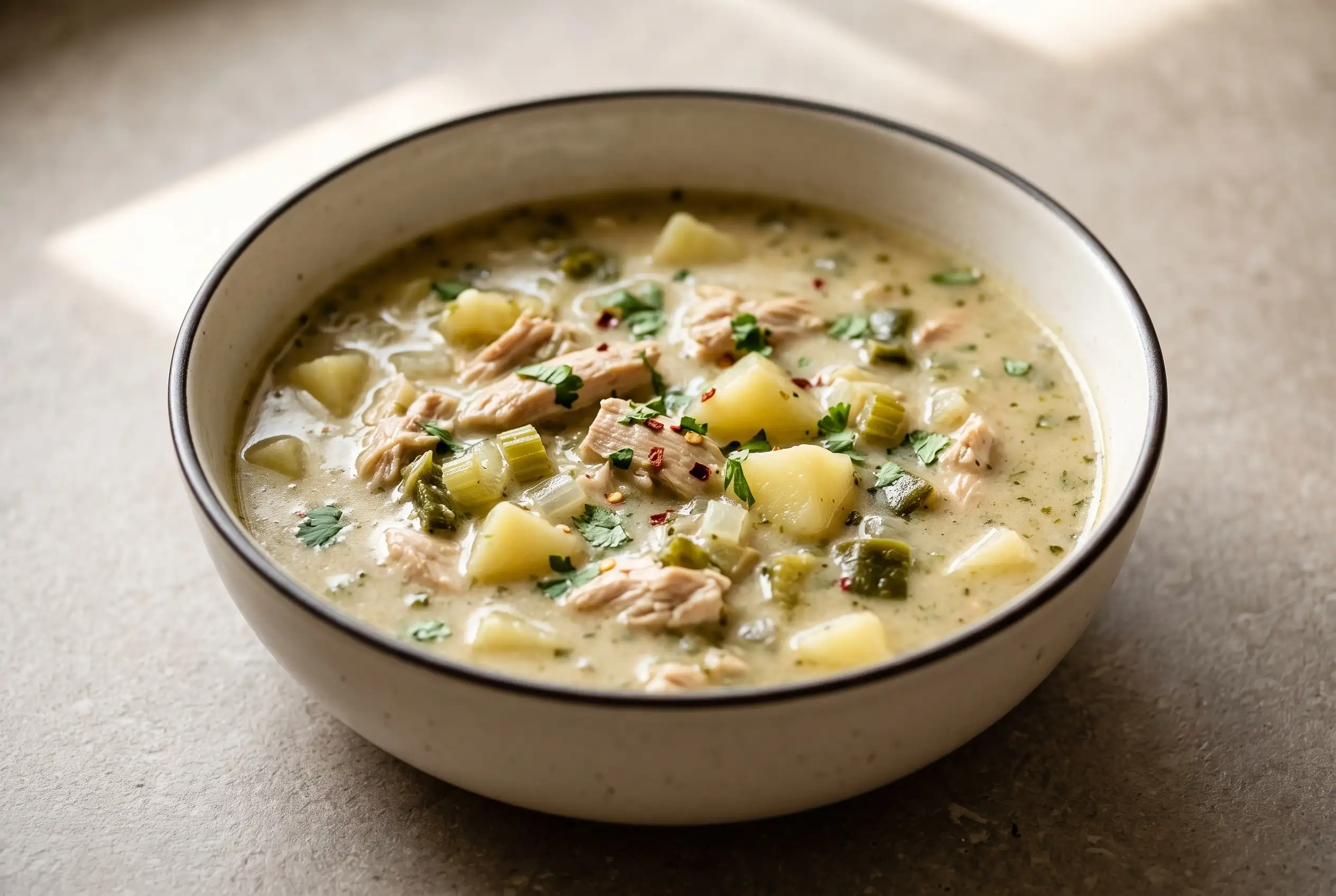
Roasted Poblano Soup with Chicken, Potatoes and Cream
Ingredients
Method
- Roast the poblano peppers over an open flame or in an oven until the skins are blackened. Transfer them to a bowl, cover with plastic wrap, and steam for 10 minutes.
- Remove and discard the skins and seeds from the roasted peppers, then chop the peppers.
- Warm the olive oil and butter in a large pot over medium heat. Add the onion, celery, and garlic and cook for about 5 minutes, until softened.
- Add the potatoes, cumin, red pepper flakes, kosher salt, and black pepper. Stir until the vegetables are evenly coated with the seasonings.
- Add the chicken broth and chopped roasted poblanos. Bring the soup to a boil, then lower the heat and simmer for about 15 minutes, until the potatoes are tender.
- Add the chicken pieces and cook for about 10 minutes, until the chicken reaches an internal temperature of 165°F / 74°C.
- Stir in the heavy cream and warm the soup through. Taste and adjust the salt and black pepper as needed.
- Ladle the soup into bowls and finish each serving with minced fresh cilantro.