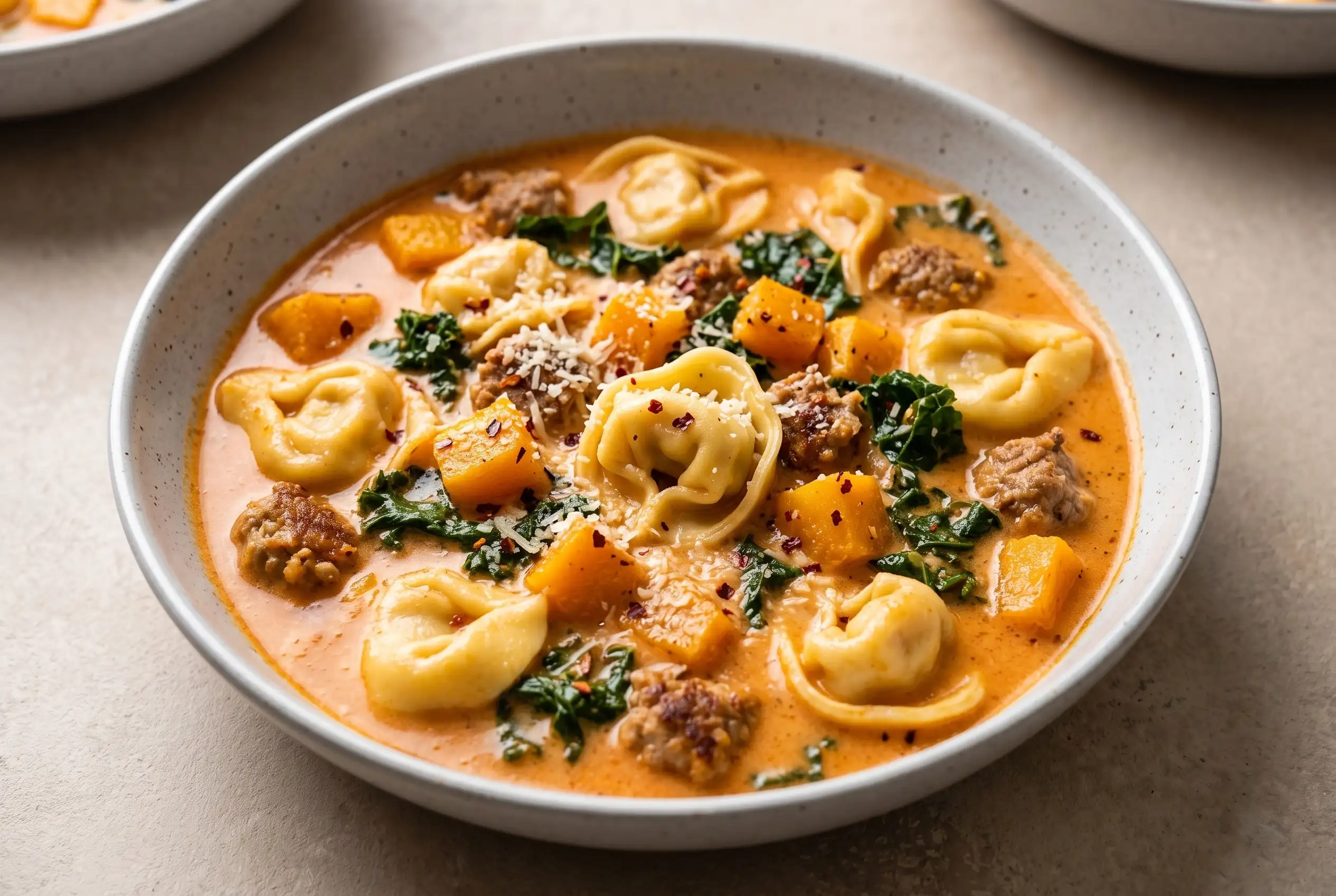
Autumn Tortellini Soup with Italian Sausage and Spinach
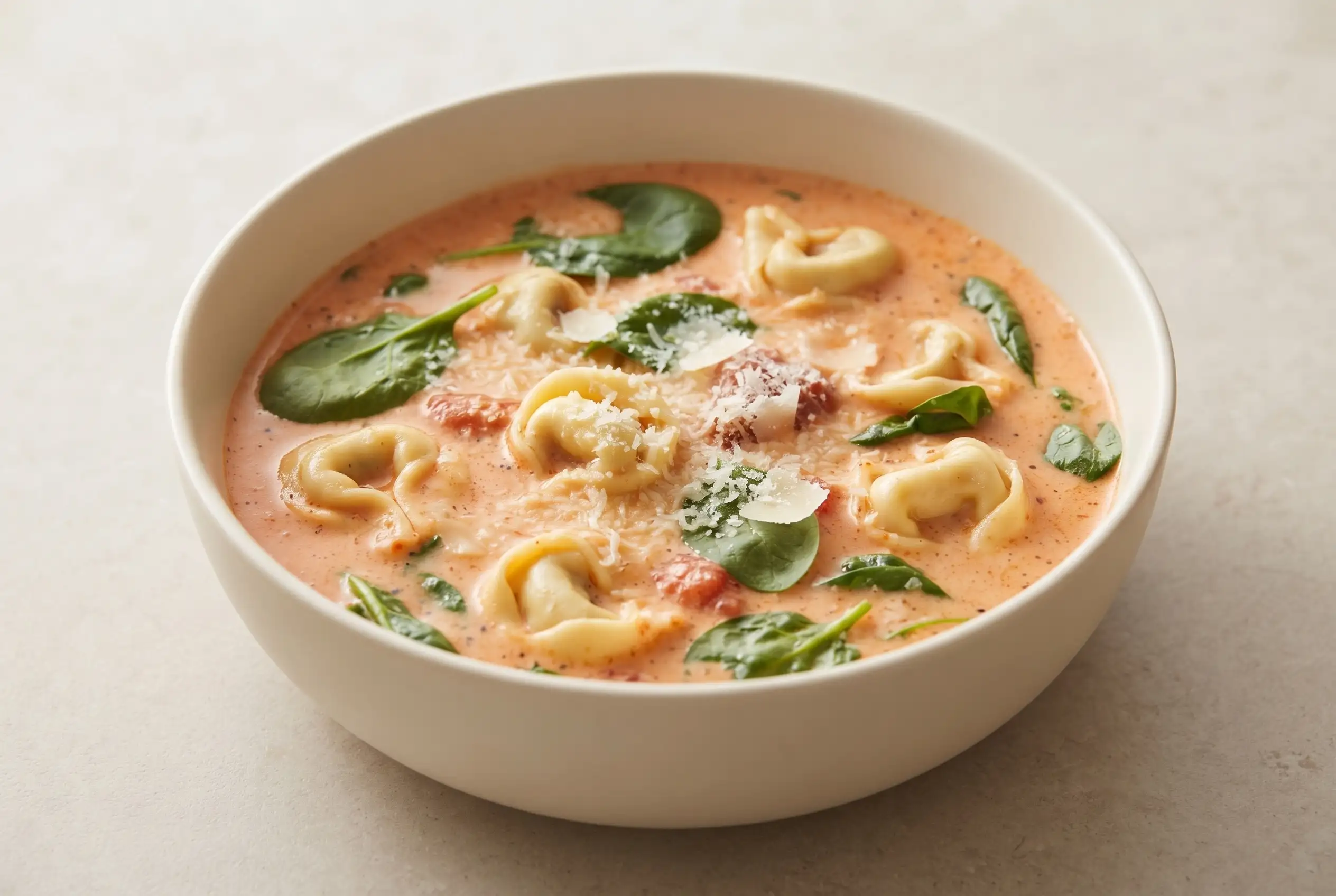
Autumn tortellini soup brings Italian sausage, tender vegetables, cheese-filled tortellini, and baby spinach together in a hearty broth that feels especially fitting for cool-weather meals. Butternut squash and carrots give the bowl a seasonal character, while garlic, onion, thyme, and Parmesan keep the flavors savory and comforting.
For a weeknight meal, the combination is especially practical because the sausage and vegetables build the base in one pot before the tortellini and spinach finish the soup. The result is a satisfying bowl with plenty of texture, and the cooking process leaves room for small adjustments based on what you have available.
What Makes Autumn Tortellini Soup So Satisfying
Italian sausage gives the broth a substantial savory foundation, while cheese tortellini makes each serving more filling. The vegetables balance those richer elements with carrots, butternut squash, and spinach, creating a soup that feels complete without requiring a complicated preparation.
Seasonal ingredients also shape the character of autumn tortellini soup. Cubed butternut squash becomes tender during the simmer, carrots soften alongside it, and baby spinach needs only a brief time in the hot soup before it wilts. Each component has a clear role without requiring a long ingredient list.
A bowl served hot with grated Parmesan has a particularly cozy finish. Crusty bread can accompany it when you want something alongside the soup, while a simple salad keeps the meal straightforward.
Butternut Squash and Tortellini Need Different Timing
Butternut squash and carrots need time in the broth to become tender, whereas cheese tortellini cooks much faster. Keeping those cooking needs separate is one of the most useful details in autumn tortellini soup, and the timing is especially important in a butternut squash and sausage tortellini soup, where the squash must soften before the pasta finishes cooking.
| Ingredient group | When it needs attention | What to look for |
|---|---|---|
| Onion and garlic | During the initial vegetable sauté | They should cook with the carrots and squash as the vegetables begin to soften. |
| Carrots and butternut squash | During the broth simmer | They should be tender before the tortellini is added. |
| Cheese tortellini | After the vegetables have simmered | Cook until tender according to the package directions. |
| Baby spinach | At the very end | One to two minutes is enough for the leaves to wilt. |
Following that progression keeps the soup from becoming a single prolonged cooking stage. The vegetables get enough time to soften, while the tortellini receives a shorter cooking window suited to its texture.
Italian Sausage Sets the Savory Base
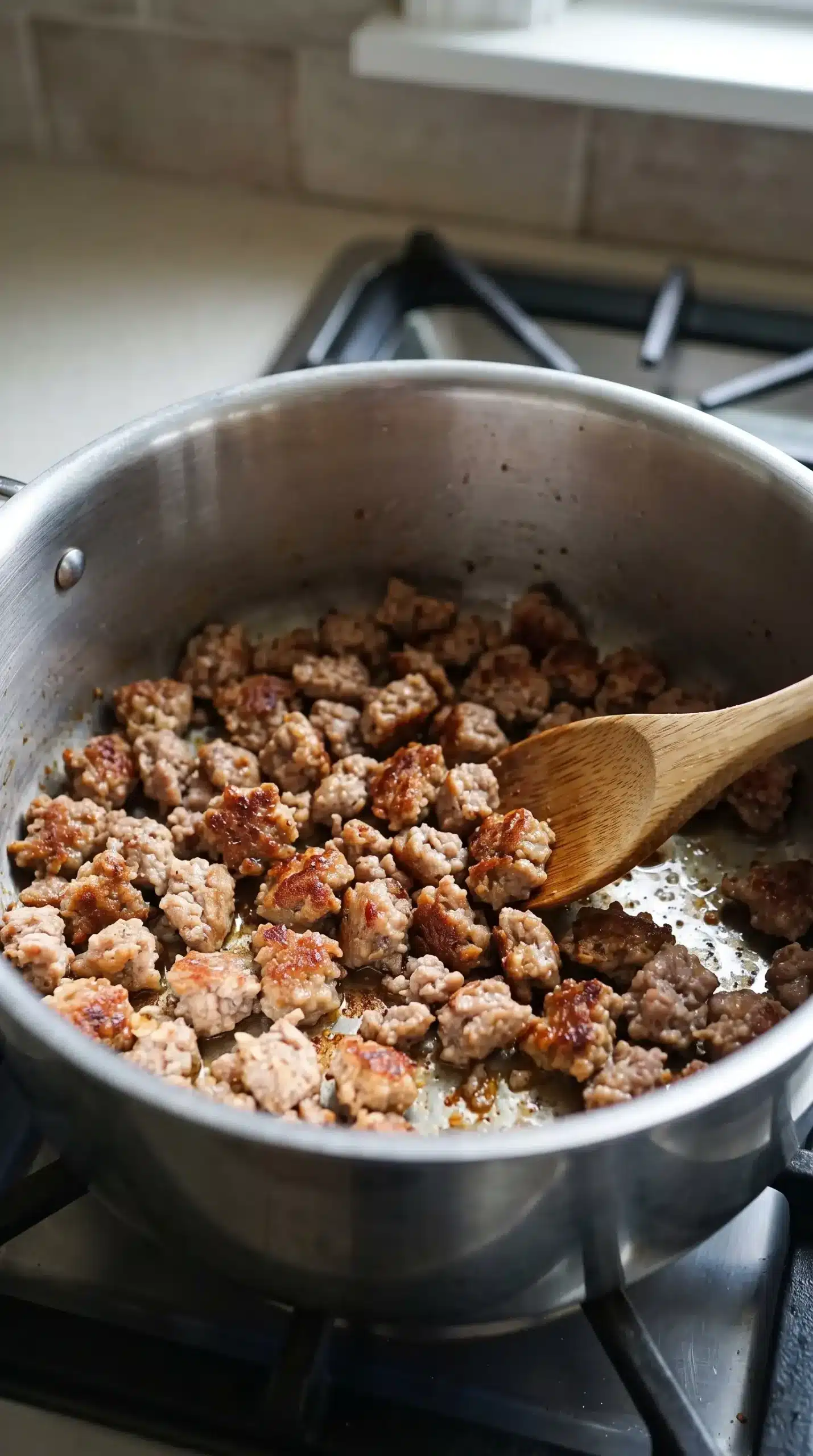
Removing the sausage casings allows the meat to brown as crumbled pieces in the pot. Breaking it up with a spoon helps distribute the sausage through the soup instead of leaving large pieces that dominate individual spoonfuls.
Once the sausage is browned and cooked through, any excess fat can be removed if needed. That small decision helps keep the broth from feeling unnecessarily heavy while retaining the savory character created during browning.
For a tortellini soup with Italian sausage, the sausage also means seasoning should be handled thoughtfully later. Salt and pepper are added according to taste after the spinach has wilted, giving you a chance to judge the finished broth instead of automatically adding a fixed amount of salt at the beginning.
Build the Broth Around Tender Vegetables
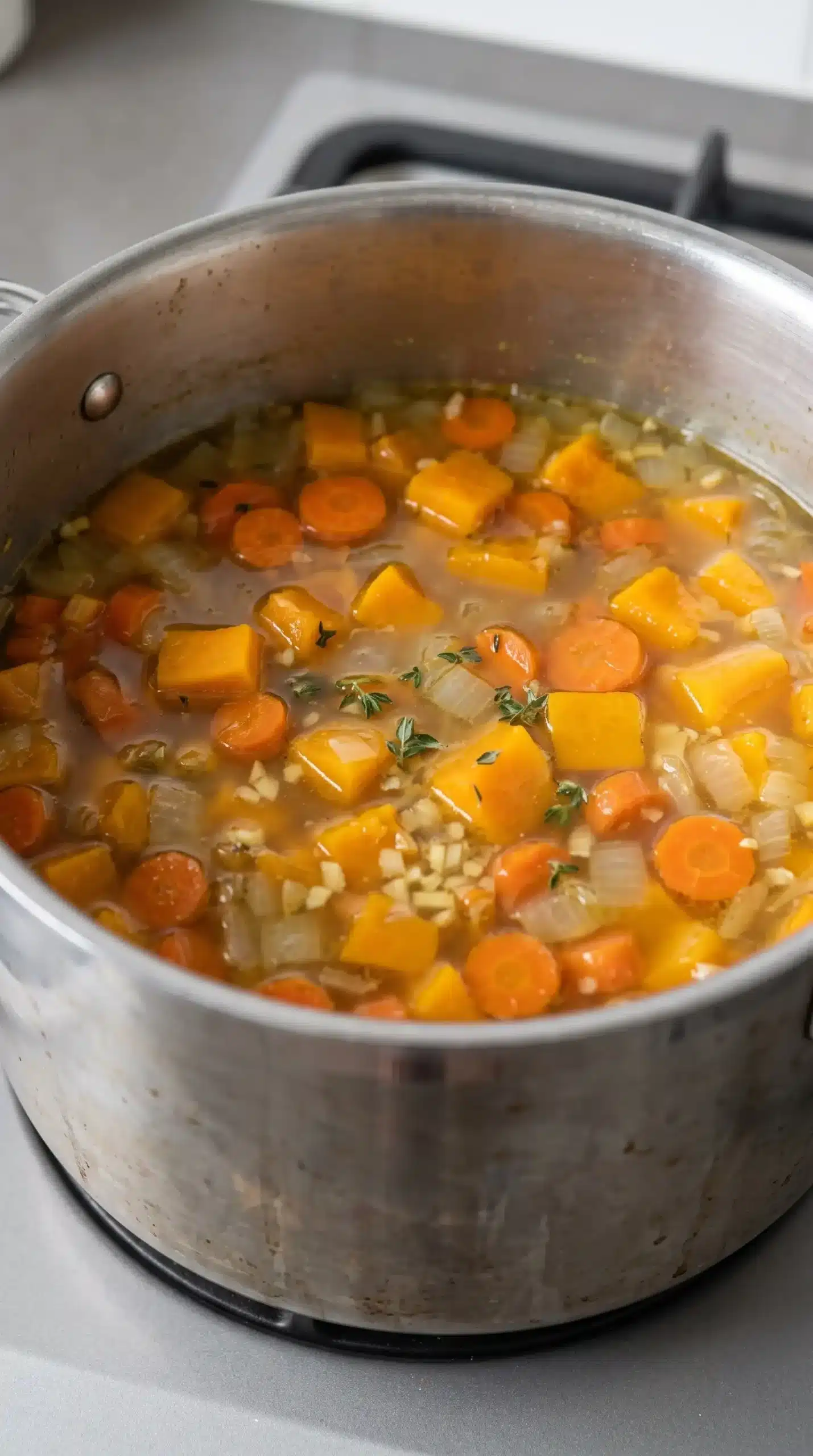
The onion, garlic, carrots, and butternut squash are sautéed after the sausage has cooked. Five minutes gives the vegetables a head start before the chicken broth is added, which matters because the squash and carrots still need to become tender during the simmer.
Chicken broth supplies the liquid base, while dried thyme adds a simple herbal note. Once the broth reaches a boil, lowering the heat for the simmer lets the vegetables continue cooking without rushing the process.
Vegetable size affects how evenly the soup cooks. Keeping the butternut squash cubed and the carrots sliced as directed gives both vegetables a manageable shape for the simmering stage. The useful visual cue is tenderness: the vegetables should be ready before the tortellini enters the pot.
Keep Autumn Tortellini Soup Brothy and Balanced
The amount of chicken broth provides the liquid framework for the sausage, vegetables, tortellini, and spinach. As the tortellini cooks, it becomes part of the finished soup rather than simply being an added topping, so the broth should remain sufficient to surround the ingredients.
Soup consistency can also change after cooking. When reheating stored autumn tortellini soup, a little water or broth can loosen it if it has become too thick. Gentle reheating helps bring the soup back to serving temperature without treating it as though it needs another full cooking cycle.
- Check the vegetables first: Their tenderness determines when the faster-cooking tortellini can be added.
- Watch the tortellini: Follow the package instructions so the cheese-filled pasta reaches tenderness without unnecessary extra cooking.
- Finish with spinach: Give the leaves only the short cooking time needed to wilt.
Cheese Tortellini Should Stay a Late Addition
Cheese tortellini is the ingredient that changes the soup from a vegetable-and-sausage broth into a more substantial pasta meal. Because the package provides the cooking guidance, the tortellini should enter once the vegetables are tender and then cook for the stated time, usually around five to seven minutes.
Frozen tortellini can also be used. The important adjustment is to follow its package instructions and add it during the last few minutes of cooking, keeping its shorter cooking window separate from the longer simmer needed by the vegetables.
Spinach and Parmesan Finish the Bowl
Baby spinach needs only one to two minutes once stirred into the hot soup. The leaves should be wilted before the soup is seasoned and served, making spinach one of the quickest finishing ingredients in autumn tortellini soup.
Grated Parmesan belongs at serving time. A little over each bowl provides a salty, savory finish that complements the sausage, broth, vegetables, and cheese tortellini without changing the basic preparation.
Common Autumn Tortellini Soup Mistakes to Avoid
Adding tortellini before the vegetables are tender can create a timing problem because the pasta may spend too long in the hot broth while the squash and carrots continue cooking. Waiting until the vegetables are ready gives each component a more appropriate cooking window.
Overcooking spinach is another avoidable issue. The leaves only need a brief period in the soup, so keeping the finishing stage short prevents unnecessary cooking after they have already wilted.
Excess fat can also affect the finished broth. After browning the sausage, check the pot and remove excess fat if needed. That simple step keeps the liquid from becoming heavier than intended.
Simple Vegetable Changes Still Fit the Soup
Spinach, kale, or zucchini can be used when you want to change the vegetable combination. Bell peppers, peas, and green beans are also suitable additions based on the supplied variations, allowing the vegetable portion to shift without changing the basic identity of the soup.
A vegetarian version can use plant-based sausage together with vegetable broth. This changes the sausage and broth components while preserving the general combination of vegetables, tortellini, and greens.
Whole grain or gluten-free pasta can replace the cheese tortellini when needed, although that substitution changes the texture and cooking requirements. Any replacement pasta should be cooked according to its own package directions.
When a Spicier Sausage Tortellini Soup Fits
Crushed red pepper flakes provide a straightforward way to make sausage tortellini soup spicier. They can be added while the sausage is cooking, allowing the heat to become part of the savory base instead of appearing only at the table.
The amount can be adjusted according to the desired level of heat. Since the original soup already gets substantial flavor from Italian sausage, garlic, onion, thyme, broth, and Parmesan, the pepper flakes are best treated as an optional change to the character of the dish.
Serving Autumn Tortellini Soup at Its Best
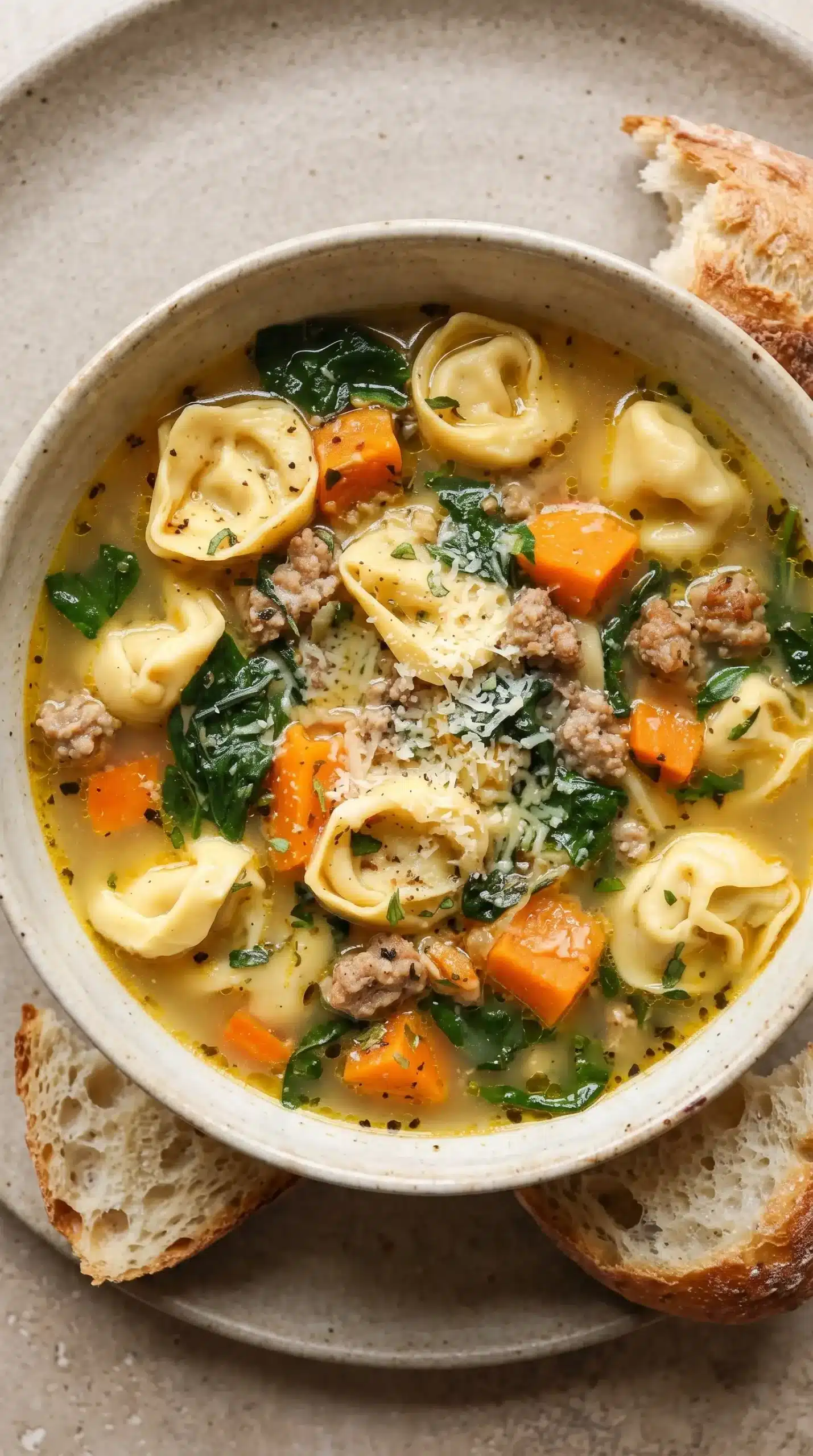
Hot bowls make the most sense for autumn tortellini soup, particularly when the soup is being served as a cozy lunch or dinner. Grated Parmesan can be added directly to each portion for a simple finishing touch.
Crusty bread gives the meal a complementary side with a contrasting texture. A simple salad is another option when you want a lighter accompaniment alongside the warm soup.
Storage and Reheating Need a Little Care
Refrigerated soup can be kept in an airtight container for three to four days. When reheating, use low heat on the stove or the microwave, warming the soup rather than subjecting it to another extended cooking period.
Freezing calls for one important adjustment: leave the tortellini out. Tortellini may become mushy after freezing and reheating, so fresh tortellini can be added when the soup is reheated instead.
Small Choices That Improve Each Batch
Homemade chicken broth can be used when available for additional flavor. The basic preparation does not require it, but it gives the broth another option without changing the vegetable, sausage, or tortellini components.
Seasoning at the end is useful because the sausage, chicken broth, and Parmesan all contribute to the overall savory character. Taste after the spinach has wilted, then adjust with salt and pepper as needed.
Keeping the finishing ingredients close at hand also makes the last stage easier to control. Tortellini needs attention according to its package directions, spinach follows shortly afterward, and Parmesan is ready once the soup reaches the bowls.
Autumn Tortellini Soup Comes Together Through Timing
Tender vegetables, browned sausage, properly cooked tortellini, and briefly wilted spinach give autumn tortellini soup its balance. The most important judgment is knowing when each component has reached its useful cooking point: the vegetables need the longer simmer, the tortellini belongs later, and the spinach needs only a short finish.
That timing keeps the broth substantial while preserving the distinct character of the ingredients. With Parmesan added at serving and an optional side of crusty bread or salad, the finished bowl has everything needed for a warm, filling meal.
Autumn Tortellini Soup Questions About Freezing and Cooking
Can autumn tortellini soup be frozen with the tortellini?
It is better to freeze the soup without the tortellini because the pasta may become mushy after freezing. Add fresh tortellini when reheating the soup instead.
How can I use frozen tortellini in sausage tortellini soup?
Frozen tortellini works well when added during the last few minutes of cooking. Use the package instructions to determine the appropriate cooking time for the frozen pasta.
What should I do if the reheated soup becomes too thick?
Add a little water or broth while reheating until the soup reaches a more suitable consistency. Warm it gently on the stove or in the microwave.
Can I make autumn tortellini soup vegetarian?
Yes. Plant-based sausage and vegetable broth can replace the Italian sausage and chicken broth, creating a vegetarian version while keeping the vegetables and pasta-centered character.
Which vegetables can replace or supplement the spinach?
Kale or zucchini can be used as alternatives, while bell peppers, peas, and green beans are additional vegetable options. These changes let you adjust the vegetable combination without abandoning the soup’s basic format.
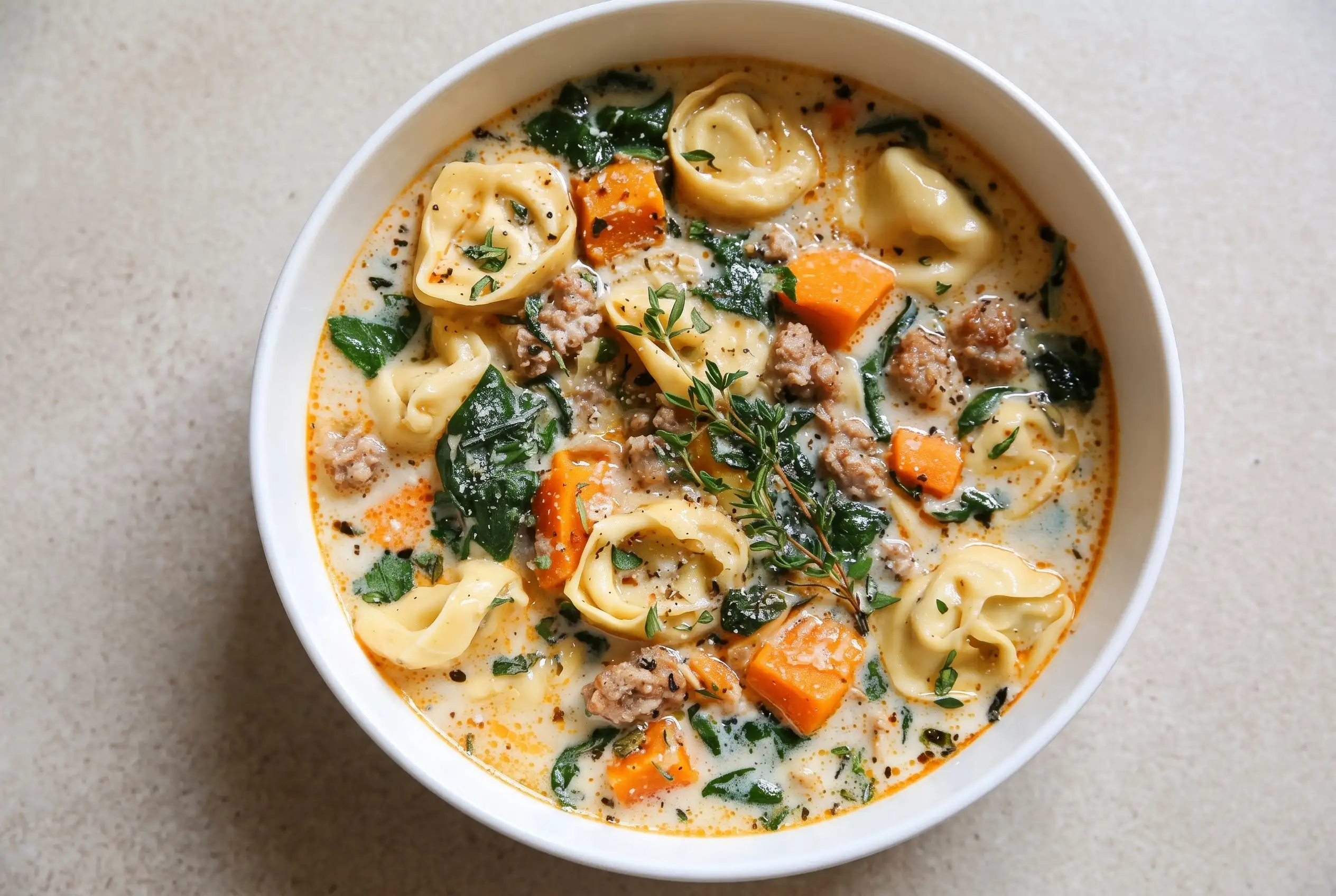
Autumn Tortellini Soup with Italian Sausage and Spinach
Ingredients
Method
- Warm the olive oil in a large pot over medium heat.
- Add the Italian sausage and break it into smaller pieces as it cooks. Continue until browned and fully cooked, then drain excess fat if necessary.
- Stir in the onion, garlic, carrots, and butternut squash. Cook for 5 minutes, stirring occasionally, until the vegetables start to soften.
- Add the chicken broth and dried thyme. Bring the soup to a boil, then lower the heat and simmer for 15 minutes, or until the vegetables are tender.
- Add the cheese tortellini and cook according to the package instructions, usually 5-7 minutes, until tender.
- Mix in the baby spinach and cook for 1-2 minutes, just until wilted. Season with salt and pepper to taste.
- Ladle the soup into bowls and finish each serving with grated Parmesan cheese.