Stuffed Italian Meatloaf with Mozzarella and Spinach
Stuffed Italian Meatloaf brings together ground beef, Italian sausage, Parmesan, herbs, marinara sauce, and a mozzarella-filled center for a comforting baked dinner with an Italian-inspired flavor profile. The cheese tucked inside gives each slice a distinct molten center, while the marinara and Parmesan on top create a savory finish.
The preparation is straightforward, but the filling makes shaping and sealing especially important. A well-formed loaf keeps the mozzarella, spinach, and sauce enclosed as it bakes, while a short resting period helps the meatloaf slice more cleanly.
The mozzarella center makes Stuffed Italian Meatloaf distinctive
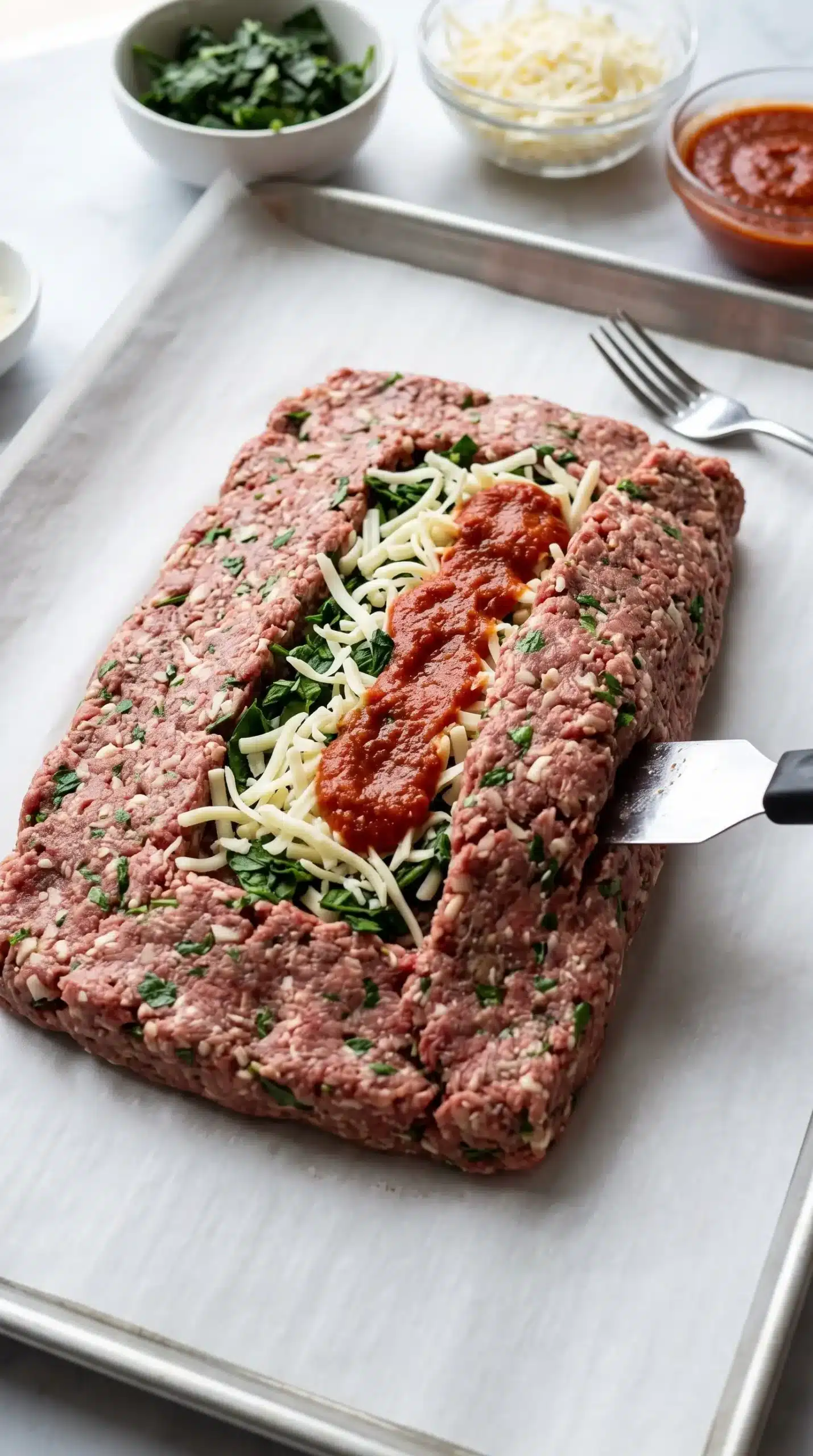
Stuffed Italian Meatloaf gets its defining feature from the filling rather than from the meat mixture alone. Shredded mozzarella is placed into a well in the center of the shaped beef-and-sausage mixture, with chopped spinach and a spoonful of marinara added when desired. That arrangement creates a filled middle instead of simply distributing cheese throughout the loaf.
Keeping the mozzarella concentrated in the center also makes the filling easy to see when the loaf is sliced. The spinach is optional, so the center can stay focused on cheese and marinara when a simpler filling is preferred.
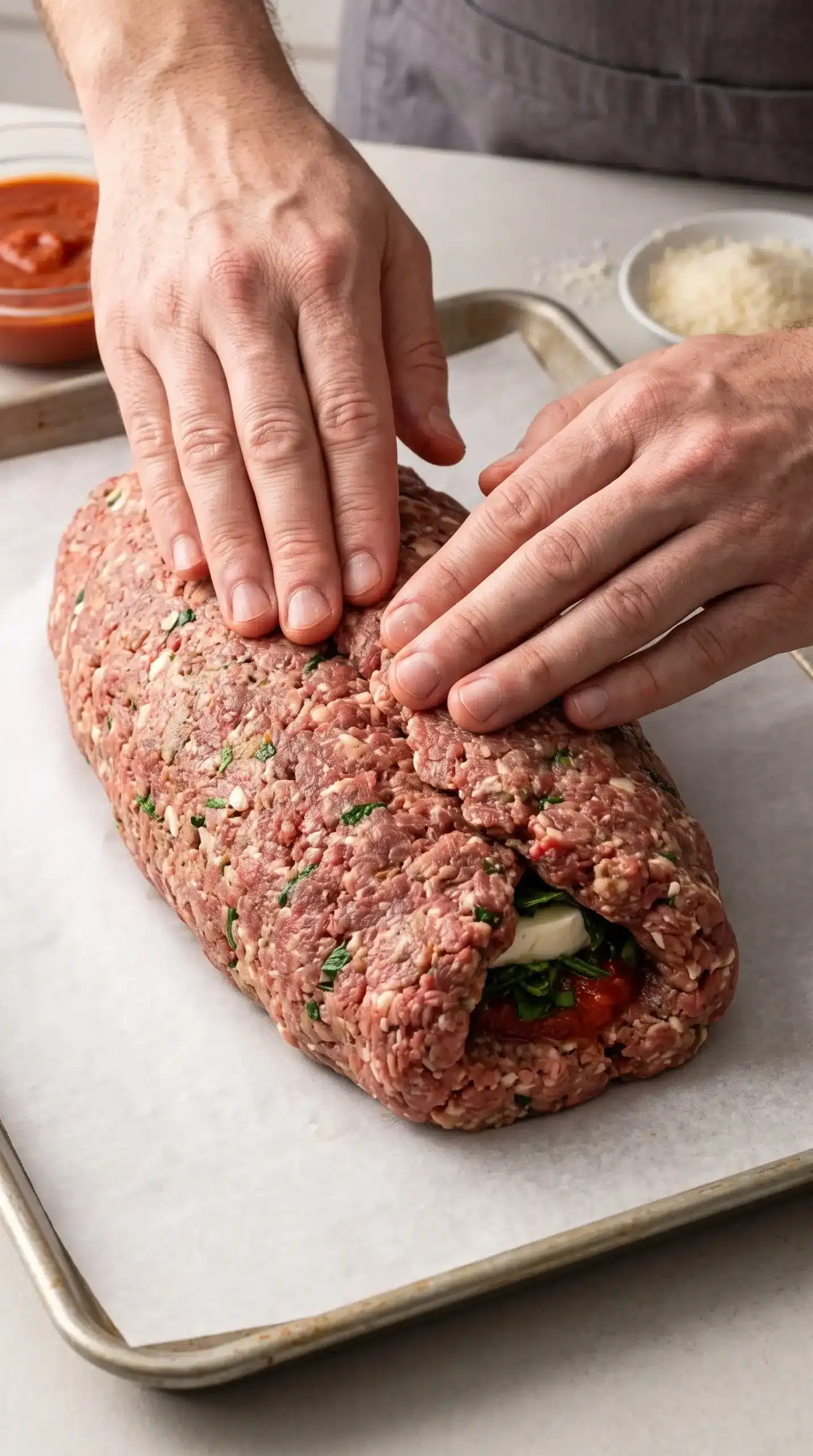
Careful sealing matters because the filling needs to remain enclosed during baking. Once the center has been filled, the surrounding meat is folded over it and shaped back into a loaf. Pressing the meat together around the filling gives the interior a continuous barrier.
Ground beef and Italian sausage build the savory base
Ground beef forms the larger portion of the mixture, while ground Italian sausage supplies an additional layer of seasoned character. Together, they create the substantial base needed to surround the mozzarella filling and hold the loaf together.
Finely chopped onion and minced garlic are incorporated directly into the meat mixture, along with bread crumbs, eggs, milk, Parmesan, Italian seasoning, parsley, salt, and pepper. The bread crumbs and eggs help give the mixture structure, while the milk contributes moisture to the combined ingredients.
Mixing everything thoroughly is important because the loaf depends on an even distribution of the binding and seasoning ingredients. Large pockets of one ingredient can make the mixture harder to shape consistently, so the bowl should contain a cohesive mixture before it is formed on the baking sheet.
Fresh parsley can be used when available, matching the supplied recommendation to use fresh herbs for stronger flavor. The seasoning is incorporated into the meat itself, while additional Parmesan and marinara remain available for the exterior.
Marinara and Parmesan define the Italian-style finish
Marinara serves two separate purposes in the preparation. A smaller portion goes into the center with the mozzarella and optional spinach, while the remaining sauce is spread over the formed loaf before baking.
| Component | Where it goes | Practical purpose |
|---|---|---|
| Shredded mozzarella | Center filling | Creates the cheese-filled middle |
| Marinara sauce | Center and top | Connects the filling and exterior flavors |
| Grated Parmesan | Meat mixture and top | Adds savory cheese flavor in both layers |
| Chopped spinach | Optional center filling | Adds a vegetable element to the filling |
That separation keeps the top sauce from replacing the interior filling. The surface receives a layer of marinara and a sprinkle of Parmesan, giving the baked loaf a sauced exterior while the mozzarella remains concentrated inside.
Shaping the loaf determines how well the filling stays inside
After the meat mixture is combined, it is shaped into a rectangle measuring about 9×12 inches on a baking sheet. Creating a defined well in the middle provides space for the mozzarella, optional spinach, and marinara without spreading the filling across the entire surface.
Once the filling is positioned, the surrounding meat must be folded over it carefully. The edges should meet securely so that the loaf returns to a single, enclosed shape. This is the point where taking a little extra care has a direct effect on the finished slices.
A weak seal gives the filling an opening through which melted cheese or sauce can escape during baking. Checking the loaf all around before adding the topping helps identify gaps while they are still easy to close.
Oven temperature and internal temperature control the bake
The oven is preheated to 375°F (190°C), and the shaped meatloaf is baked for about 45–55 minutes. Because the loaf contains both a meat mixture and an enclosed filling, appearance alone is not the most dependable way to judge doneness.
An internal temperature of 160°F (70°C) is the specified doneness point. A meat thermometer provides a direct way to check the center of the loaf instead of relying only on the outside appearance.
After baking, the loaf rests for 10 minutes before slicing. That pause is particularly useful for a stuffed preparation because cutting immediately into the hot loaf can make the filling harder to manage. Waiting also gives the loaf time to settle before it is portioned.
- Check the center: Use the thermometer to confirm 160°F (70°C).
- Protect the filling: Keep the meat sealed around the mozzarella and sauce.
- Rest before cutting: Give the baked loaf 10 minutes before slicing.
Common Stuffed Italian Meatloaf mistakes to avoid
One frequent problem is failing to seal the meat completely around the filling. Any visible opening can become a path for mozzarella or marinara to escape as the loaf cooks. Closing the seam firmly before adding the exterior sauce is the simplest prevention.
Overlooking the center temperature can create another problem. The loaf may look sufficiently baked on the outside while the interior has not reached the specified 160°F (70°C). Checking with a meat thermometer removes that uncertainty.
Cutting too soon can also make serving less tidy. The 10-minute resting period is part of the finished preparation, not merely an optional pause between the oven and the table.
Italian meatloaf with mozzarella pairs well with simple sides
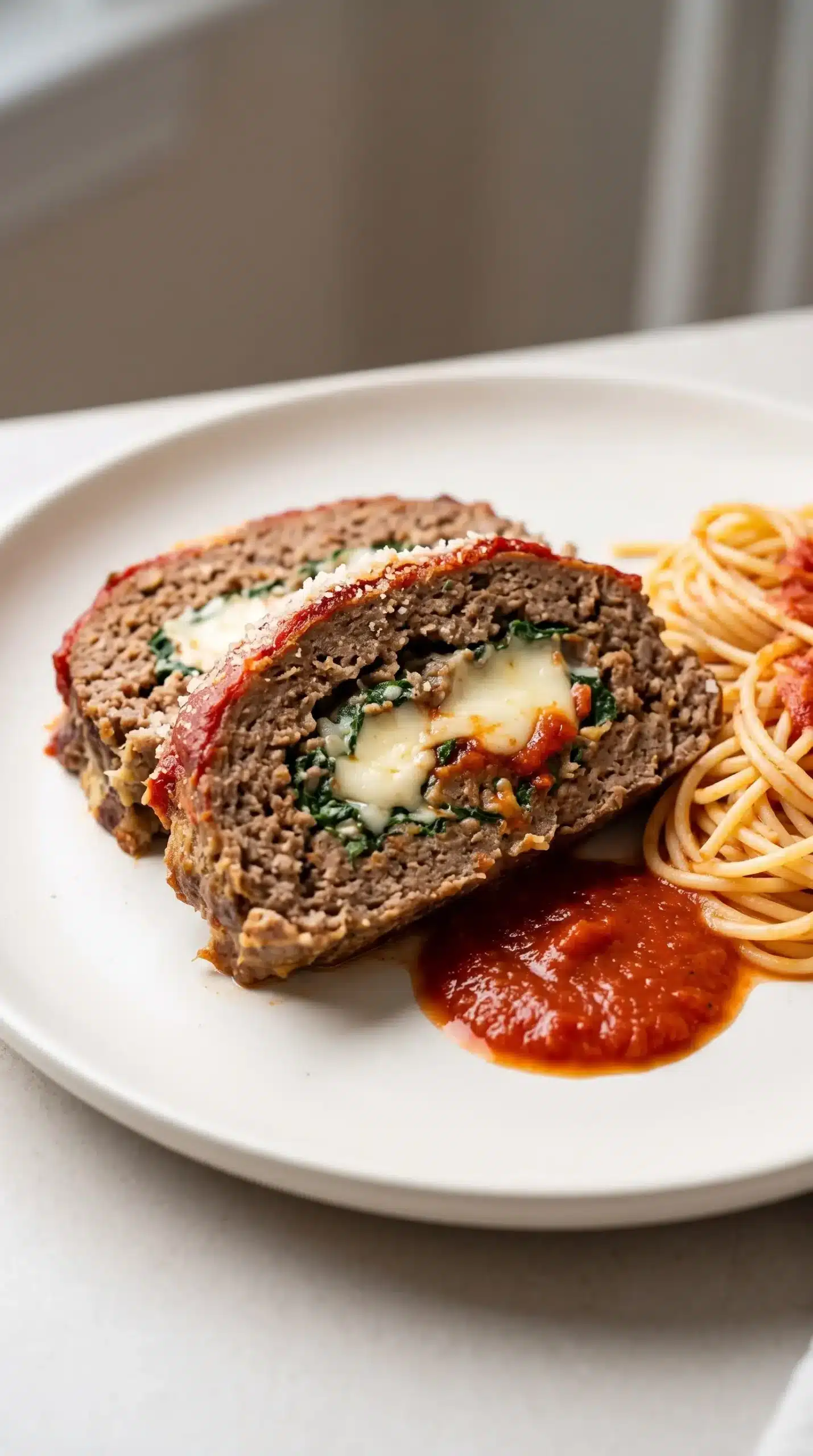
Stuffed Italian Meatloaf already contains meat, cheese, marinara, and an optional vegetable filling, so straightforward accompaniments fit naturally alongside it. Pasta makes a familiar pairing, while a fresh salad provides a lighter contrast to the hearty loaf.
Garlic bread can be added when a more substantial meal is wanted. Extra marinara sauce may also be served at the table for anyone who wants more of the tomato-based flavor with each slice.
For a different side combination, mashed potatoes or rice can stand in for pasta. The important serving decision is to choose sides that complement the sauced meatloaf without competing with the mozzarella-filled center.
Leftover slices keep their quality with proper storage
Once the meatloaf has cooled, leftovers should be placed in an airtight container and refrigerated. The supplied storage guidance gives refrigerated leftovers a window of about 3 to 4 days.
For longer storage, the baked meatloaf can be frozen for up to 3 months. Wrapping it tightly in plastic wrap and aluminum foil provides the stated freezer-storage method.
Simple changes create new versions without changing the structure
Ground turkey or chicken can replace the ground beef for a lighter variation while keeping the Italian sausage and stuffed format. The cheese can also be changed, with cheddar or provolone suggested as alternatives to mozzarella.
Cooked vegetables can be incorporated into the filling when a more vegetable-forward version is desired. Bell peppers or mushrooms are specifically suitable additions, while the supplied spinach can remain as an optional part of the original filling.
Advance preparation fits the stuffed loaf format
The meatloaf can be assembled before baking and kept in the refrigerator until it is ready to go into the oven. This makes the shaping and filling work possible ahead of the meal instead of requiring every preparation step immediately before baking.
When preparing ahead, the important detail is to keep the assembled loaf properly refrigerated before it is baked. The baking stage should still be completed according to the specified oven temperature and internal temperature requirement.
Protein and vegetables give the meal a balanced foundation
The combination of beef, Italian sausage, mozzarella, and Parmesan makes Stuffed Italian Meatloaf a protein-rich main dish. The supplied nutrition information describes each serving as containing about 25 grams of protein and 20 grams of fat.
Onion contributes vegetables to the meat mixture, while optional spinach adds another vegetable component to the filling. The sauce and cheese can also be adjusted in amount when a different balance is preferred, while still keeping the defining stuffed format.
A sealed center and measured doneness make the loaf work
The enclosed mozzarella filling is the feature that demands the most attention during shaping, while the thermometer provides the clearest check during baking. Together, those two controls protect the recipe’s defining qualities: a contained cheese-filled center and a properly cooked meatloaf.
Once the loaf reaches 160°F (70°C), the 10-minute rest completes the handling process before slicing. The result can then be served with marinara and a simple side that lets the stuffed center remain the focus of the meal.
Stuffed Italian Meatloaf questions about filling and baking
Can the spinach be left out?
Yes. Spinach is optional in the center filling, so the loaf can be made with mozzarella and marinara alone.
How do I keep the mozzarella from leaking out?
Fold the surrounding meat completely over the filling and seal the loaf carefully before spreading marinara on top. Pay particular attention to seams or openings around the filled center.
What temperature should the meatloaf reach?
The center should reach 160°F (70°C). A meat thermometer is the practical way to verify that internal temperature.
Can I use another cheese?
Yes. Cheddar or provolone can be used as variations when you want a different cheese flavor while retaining the stuffed-meatloaf structure.
How long should the baked meatloaf rest?
Let it rest for 10 minutes before slicing. That gives the cooked loaf time to settle and makes the stuffed center easier to portion cleanly.
What sides work best with Italian stuffed meatloaf recipe?
Pasta, a fresh salad, garlic bread, mashed potatoes, or rice can all accompany the meatloaf. Extra marinara sauce is also suitable for serving alongside the slices.
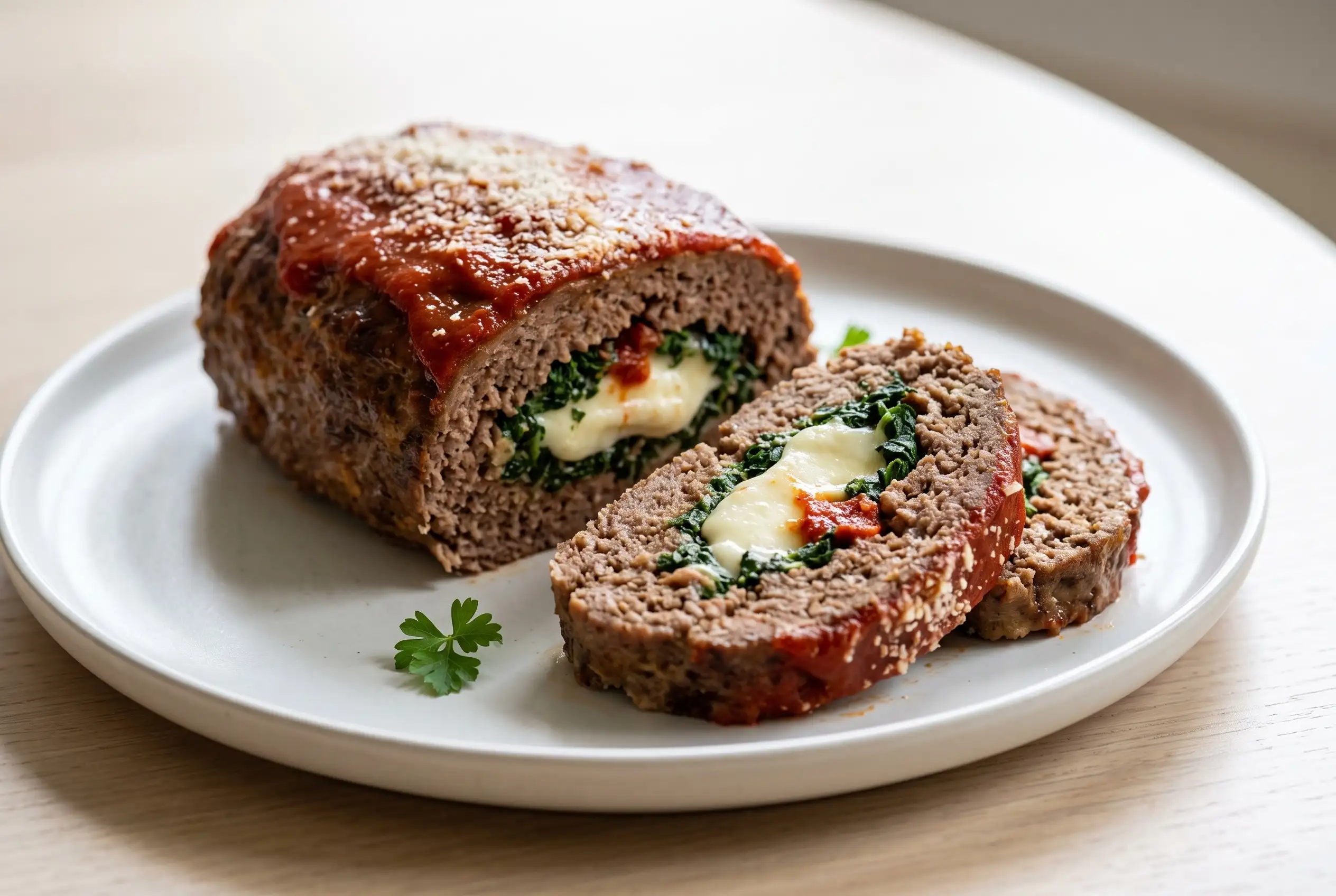
Stuffed Italian Meatloaf with Mozzarella and Spinach
Ingredients
Method
- Preheat the oven to 375°F / 190°C.
- Place the ground beef, Italian sausage, onion, garlic, bread crumbs, eggs, ½ cup Parmesan, Italian seasoning, and parsley in a large bowl. Add the milk, salt, and pepper, then mix until the ingredients are evenly incorporated.
- Transfer the meat mixture to a baking sheet and form it into a 9×12-inch rectangle.
- Create a lengthwise well through the center of the meat mixture. Add the mozzarella, spinach if using, and ¼ cup marinara sauce to the well.
- Bring the meat over the filling and press the edges together firmly to enclose it completely. Shape the sealed mixture into a loaf.
- Coat the top of the loaf with the remaining ½ cup marinara sauce and scatter ¼ cup Parmesan cheese over it.
- Bake for 45-55 minutes, or until the internal temperature reaches 160°F / 70°C.
- Remove the meatloaf from the oven and allow it to rest for 10 minutes before slicing.
- Slice the rested meatloaf and serve with extra marinara sauce if desired.