Boursin Chicken with Creamy Fine Herbs and Garlic Sauce
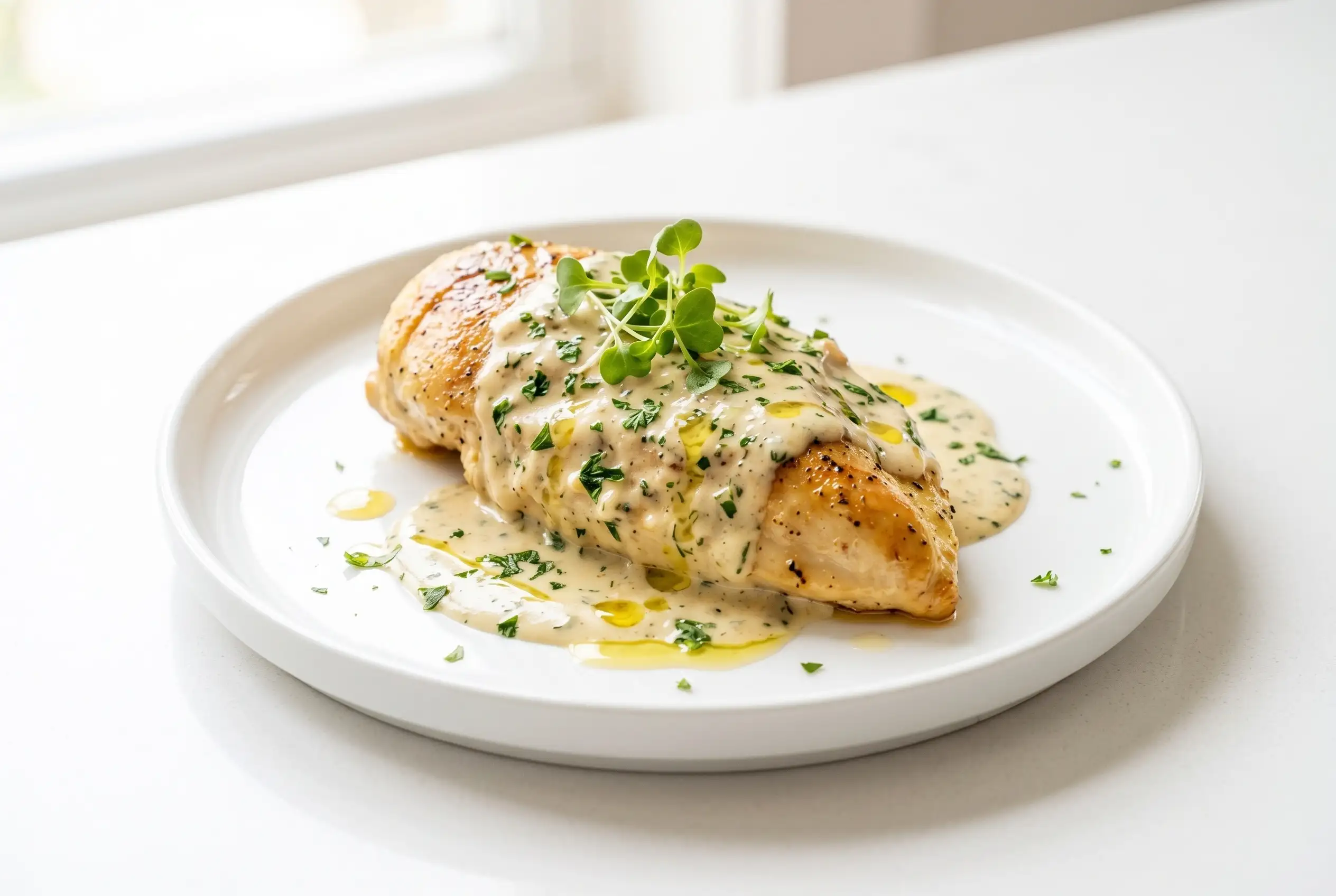
A boursin chicken recipe turns thinly sliced chicken breasts, softened Boursin Fine Herbs & Garlic cheese, and a few skillet staples into a creamy, savory dinner with very little fuss. The chicken gets a golden sear before joining a smooth sauce built from chicken broth, onion, and Boursin, while optional parsley adds a fresh finish. The result is a comforting one-pan boursin chicken dinner that feels especially rich without requiring a complicated technique.
What Makes Creamy Boursin Chicken Work
Thin chicken cutlets are the key to keeping the cooking time manageable while giving the meat enough surface area to develop a browned exterior. Cutting each large breast horizontally creates four thinner pieces that cook more evenly than thick breasts would in the skillet.
Boursin Fine Herbs & Garlic supplies several important flavors at once, so the sauce can stay focused and uncomplicated. Its creamy texture melts into chicken broth after the onions have softened, creating a sauce that is rich, tangy, garlicky, and herbaceous.
Meanwhile, the browned bits left in the skillet become part of the sauce when the broth is added. Scraping the browned bits from the skillet is a form of deglazing that loosens the fond into the cooking liquid, bringing those concentrated browned flavors into the creamy Boursin chicken without adding another cooking vessel or a long list of ingredients.
The Boursin Choice That Shapes the Sauce
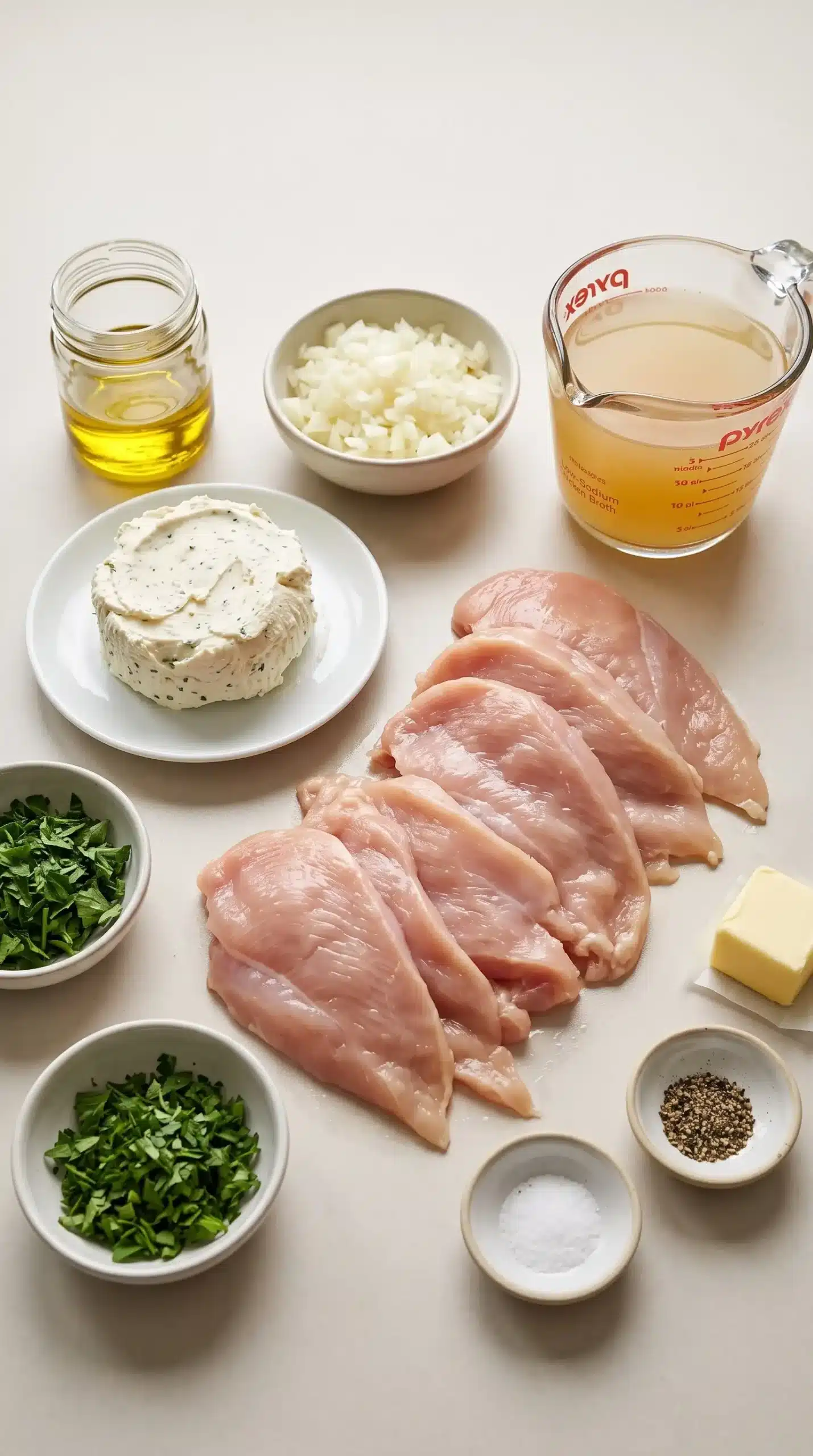
Fine Herbs & Garlic Boursin is particularly well suited to the dish because its existing garlic and herb seasoning becomes part of the sauce as it melts. Softening the cheese before cooking also helps it incorporate smoothly into the warm broth.
Low-sodium chicken broth is useful when salt levels need closer control. Boursin itself can be salty, so seasoning the chicken before cooking and tasting the finished sauce before adding more salt keeps the balance easier to manage.
Fresh parsley is optional, but the small amount used at the end can brighten the rich sauce. It belongs near the finish because its purpose is freshness, not prolonged cooking.
Why Cutting the Chicken Into Cutlets Matters
Large chicken breasts become four thinner pieces when sliced horizontally. The thinner shape gives the heat a shorter distance to travel, which supports even cooking while allowing the exterior to brown during the skillet sear.
Skillet Searing Sets Up Better Flavor
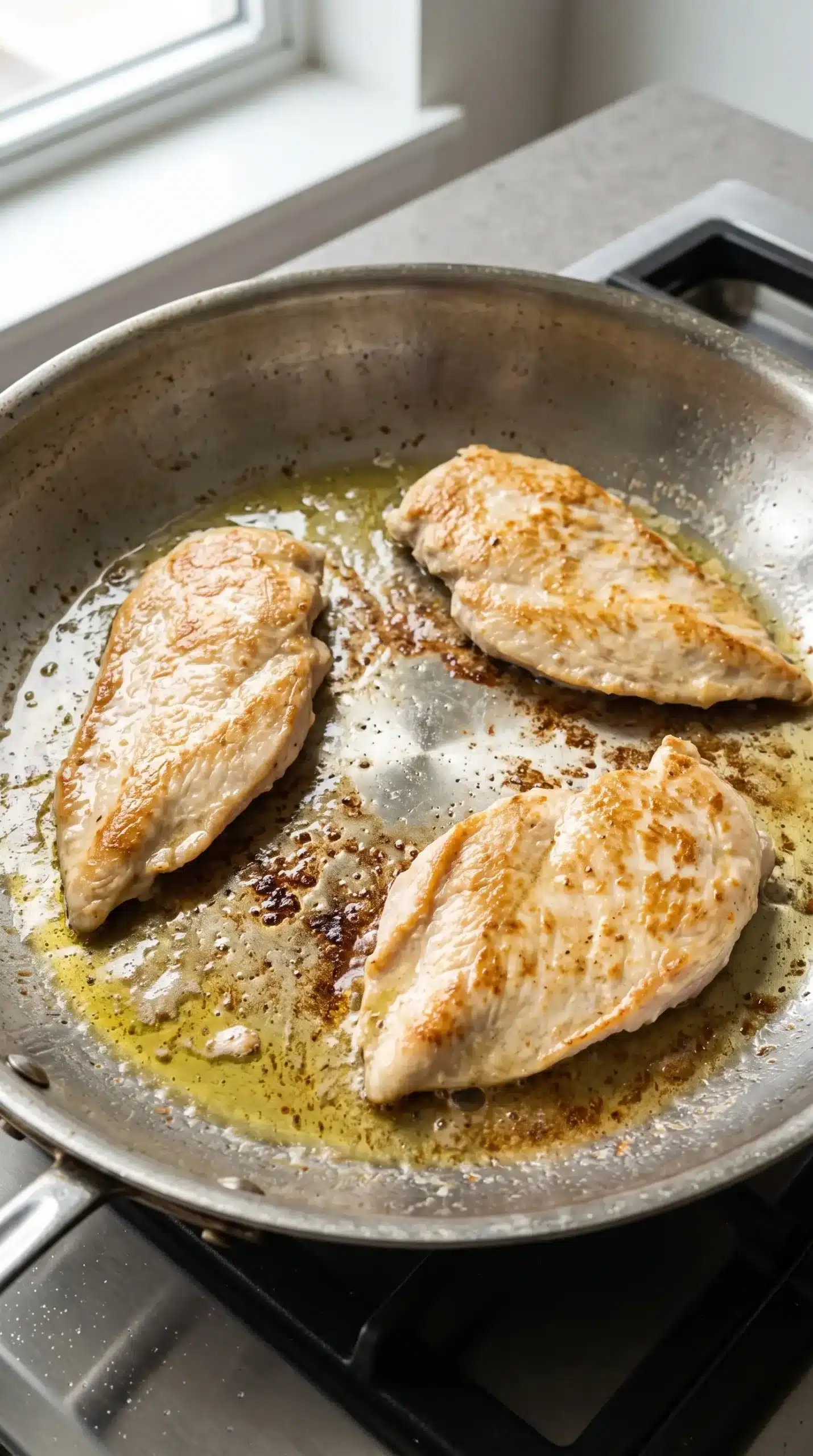
Olive oil and butter work together during the chicken sear. The butter contributes richness and browning, while the olive oil helps keep the mixture from burning too quickly over medium-high heat.
Space between the cutlets matters as they cook. Crowding the skillet can interfere with browning, so working in a way that leaves the pieces room to sear helps develop the golden exterior that later contrasts with the pale, creamy sauce.
After the chicken is cooked through, moving it to a clean plate creates an important pause in the process. The skillet is then available for the onion and broth, while the juices that collect on the plate can be returned with the chicken near the end.
| Cooking decision | What to watch for | Useful response |
|---|---|---|
| Chicken spacing | Cutlets are crowded in the skillet | Leave enough room for the pieces to brown instead of steam |
| Onion cooking | Pieces remain firm and opaque | Continue sautéing until softened and translucent with light golden color |
| Boursin incorporation | Cheese has not fully melted | Stir gently until the broth and cheese form a smooth sauce |
| Sauce consistency | Sauce becomes too thick while simmering | Whisk in a small splash of chicken broth |
Onion Timing Gives the Sauce Its Foundation
Finely chopped onion has a specific role in the skillet. Cooking it in the remaining chicken-searing fat softens its texture and develops a subtle sweetness before the broth is introduced.
About five minutes of sautéing allows the onion to become translucent and lightly golden. If the skillet looks dry during this stage, a small splash of olive oil can help the onion continue cooking without sticking.
Chicken broth follows the onion and loosens the browned fond from the bottom of the pan. Scraping the skillet as the liquid goes in brings those concentrated browned flavors into the sauce instead of leaving them behind.
Five Minutes of Simmering Changes the Texture
Once the softened Boursin has melted into the broth, the sauce benefits from a short bubbling simmer. The cooking time gives it an opportunity to thicken slightly and become cohesive enough to coat the chicken.
A gentle eye on the skillet is more useful than trying to force the sauce thicker. If it starts becoming overly dense, a small amount of additional broth can loosen it while preserving the savory character.
How to Finish One Pan Boursin Chicken Without Overworking It
Parsley goes into the sauce after the Boursin has melted and the mixture has simmered. Because it is optional and used in a small amount, it should remain a fresh accent instead of becoming a dominant flavor.
Returning the chicken with its accumulated juices lets the meat warm through in the finished sauce. A couple of minutes is enough for the pieces to reconnect with the sauce without turning the finishing stage into another long cooking period.
Seasoning belongs at the end because the Boursin contributes its own salt. Taste first, then decide whether additional salt and pepper are actually needed.
Boursin Chicken Mistakes That Can Dull the Finish
- Crowded skillet: Too little space around the chicken can compromise the desired golden sear. Give the cutlets room to brown.
- Cold Boursin: Firm cheese is less convenient to blend into the broth. Let it soften before it reaches the skillet.
- Skipped fond: Pouring in broth without scraping the pan leaves useful browned flavor behind. Work the liquid across the skillet surface.
- Early extra salt: The cheese already contributes saltiness. Taste the sauce before making a final seasoning adjustment.
- Over-thick sauce: A sauce that tightens too much can be corrected with a small splash of chicken broth stirred in gradually.
Temperature Is the Important Chicken Check
Thickness is an unreliable way to judge whether the chicken is ready, especially when individual cutlets may not be identical. A meat thermometer provides a more dependable check, with 165°F (74°C) as the target internal temperature for the chicken.
Serving Choices That Catch the Boursin Sauce
Mashed potatoes are a natural match because their soft texture can carry the creamy sauce alongside each piece of chicken. White rice offers another simple base when you want the skillet sauce to remain the main source of richness.
Pasta also works well with the sauce, particularly when the chicken is served with plenty of the creamy mixture from the skillet. The starch gives the sauce somewhere to collect instead of leaving it on the plate.
For a fresher contrast, steamed broccoli or tender asparagus can sit alongside the chicken. Their simpler preparation keeps the meal balanced against the richness of the Boursin-based sauce.
A Richer Sauce Is an Easy Optional Adjustment
A splash of heavy cream can be added with the chicken broth when a richer sauce is desired. Since the existing sauce already gets its creaminess from Boursin, the additional dairy is best treated as an optional enhancement rather than a required ingredient.
Leftovers Need Gentle Reheating
Refrigerated chicken and sauce can be kept in an airtight container for up to three days. Keeping the components together makes it easy to reheat the chicken in the same sauce in which it was finished.
Low heat is the better approach when warming leftovers because the dairy-based sauce can become less smooth if it is heated aggressively. Stirring gently as the sauce warms helps distribute the heat.
Should the refrigerated sauce look separated or become noticeably thicker, a splash of chicken broth or water can be whisked in to loosen it. The added liquid helps restore a smoother consistency without changing the basic character of the dish.
What the Finished Boursin Chicken Should Look Like
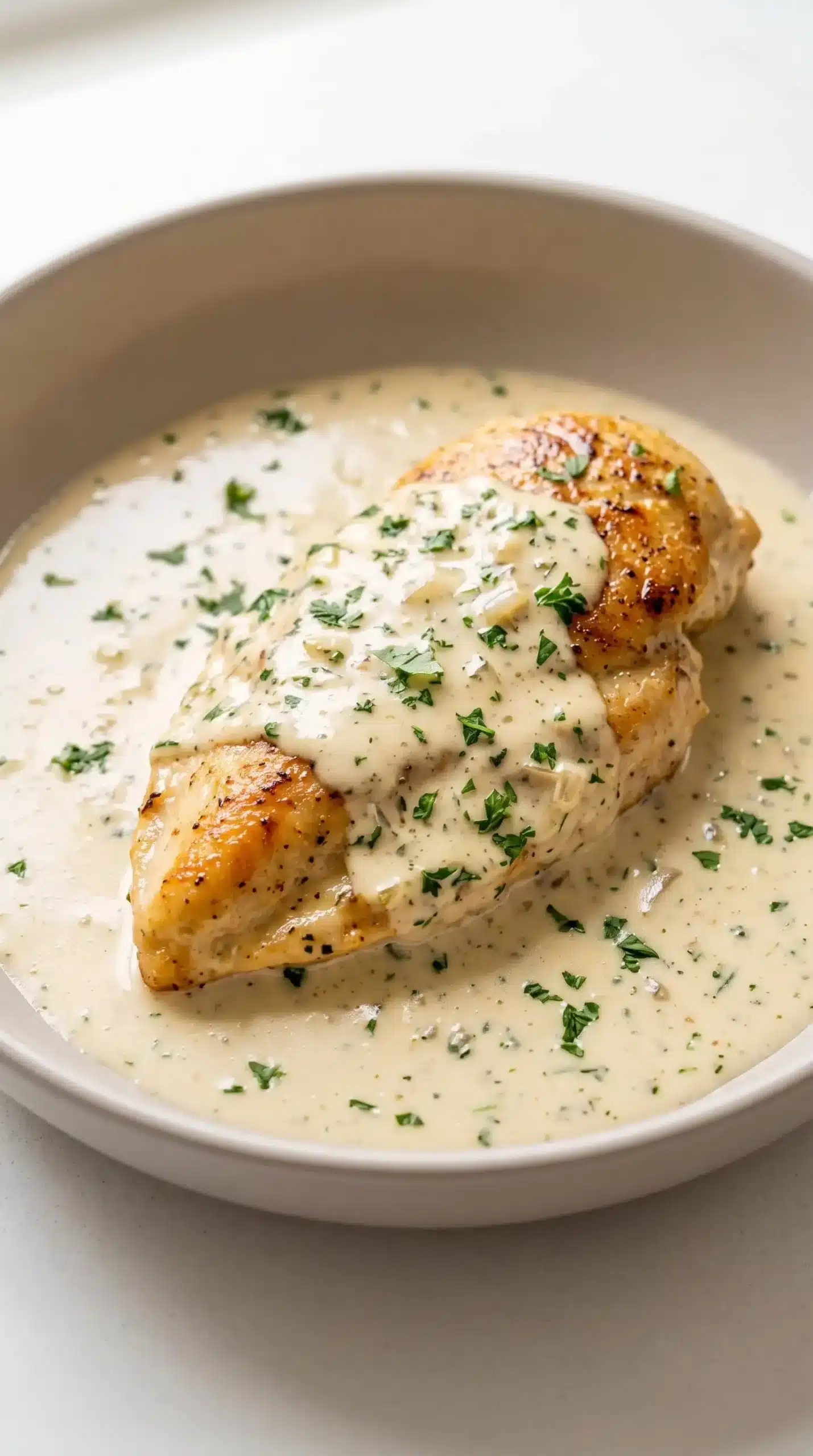
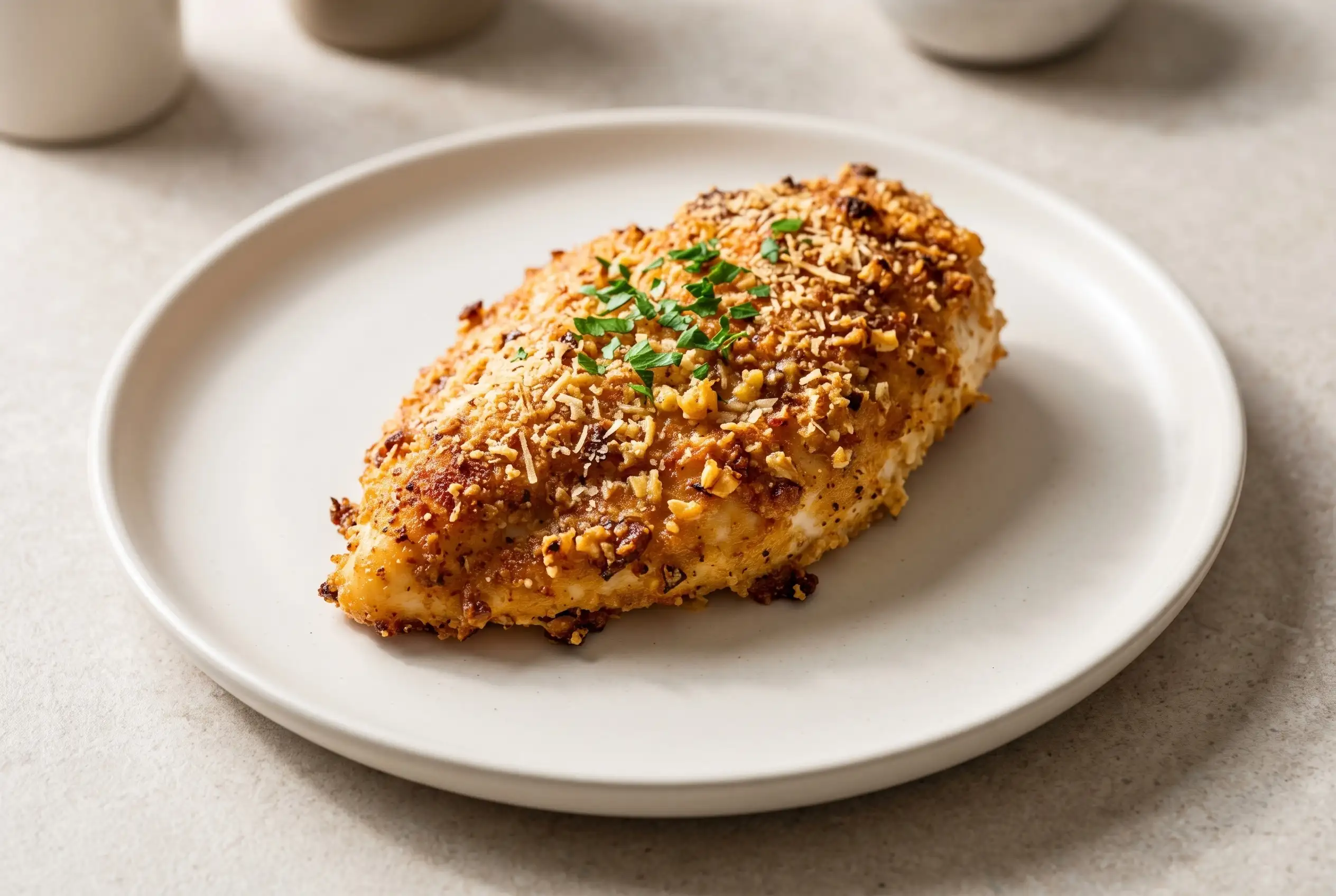
Golden chicken cutlets should sit beneath or partly within a smooth, creamy sauce that clings to the meat without becoming excessively thick. The sauce should carry visible freshness from optional parsley while retaining the garlic and herb character of the Boursin.
Why the Short Finish Matters for Creamy Boursin Chicken
Once the sauce has reached a smooth, lightly thickened consistency, the most important judgment is knowing when to stop. The chicken has already been seared and cooked through, while the sauce has already developed its flavor during the onion and broth stages.
That restraint keeps the one-pan boursin chicken focused: browned cutlets, a creamy garlic-and-herb sauce, and enough finishing time for everything to come together. A short final warm-through preserves the distinction between tender chicken and the rich sauce surrounding it.
Boursin Chicken Questions About Sauce and Substitutions
Can chicken thighs replace the chicken breasts?
Boneless, skinless chicken thighs can replace the breasts. They tend to remain moist during cooking, but they may need somewhat more time in the skillet to reach 165°F (74°C), so use temperature as the deciding check.
What can I do if the Boursin sauce gets too thick?
Whisk a small splash of chicken broth into the sauce while it is warm. Add only enough to loosen the consistency, since the desired result is a creamy sauce that still coats the chicken.
Can I make the sauce richer?
A splash of heavy cream can be added along with the chicken broth for a richer variation. Boursin already provides the main creamy element, so the extra cream is optional.
Is low-sodium chicken broth necessary?
Low-sodium broth is helpful when you want more control over seasoning because Boursin contributes salt to the finished sauce. Regular broth can also be used, but tasting before adding additional salt becomes especially important.
Can creamy Boursin chicken be frozen?
Freezing is not recommended for the best texture because the dairy-based Boursin sauce can separate and become grainy after thawing. Refrigeration is a better choice for keeping the sauce smooth.
What is Boursin cheese?
Boursin is a soft, creamy, crumbly Gournay cheese, and the Fine Herbs & Garlic variety used here combines that texture with garlic and herbs. Its creamy consistency makes it particularly convenient for melting into the chicken broth to form the sauce.
Boursin Chicken with Creamy Fine Herbs and Garlic Sauce
Ingredients
Method
- Cut each chicken breast horizontally into 2 thin cutlets, creating 4 pieces total. Season both sides with garlic powder, salt, and freshly ground black pepper.
- Warm the olive oil and butter in a large skillet over medium-high heat. Once the butter has melted and the skillet is hot, add the chicken without crowding the pan.
- Cook the cutlets for 5–6 minutes per side, until browned and the internal temperature reaches 165°F / 74°C. Move the chicken to a clean plate.
- Lower the heat to medium. Add the chopped onion and cook for about 5 minutes, stirring occasionally, until softened and lightly golden. If the skillet is dry, add a small splash of olive oil.
- Pour the chicken broth into the skillet. Scrape the browned bits from the bottom of the pan as the broth comes to a gentle simmer.
- Add the softened Boursin Fine Herbs & Garlic cheese. Stir continuously until the cheese has melted and the broth has become smooth and creamy.
- Let the sauce simmer for about 5 minutes, allowing it to thicken slightly. Stir in the chopped parsley if using.
- Place the chicken and any accumulated juices back into the skillet. Simmer for a couple of minutes, turning the cutlets as needed so they are warmed through and coated in sauce.
- Taste the sauce and add more salt or pepper if needed. Serve.