Sticky Chicken Rice Bowls with Honey Soy Sauce and Ginger
Sticky Chicken Rice Bowls bring together tender diced chicken, warm rice, and a glossy honey-soy sauce in an easy meal built for busy evenings. Garlic, ginger, rice vinegar, and sesame oil give the sweet-savory coating enough depth to keep every bite interesting, while green onions and sesame seeds add a fresh, nutty finish. The simple skillet approach also makes these easy chicken rice bowls straightforward to assemble without a complicated cooking process.
Sweet-Savory Sauce Sets the Flavor
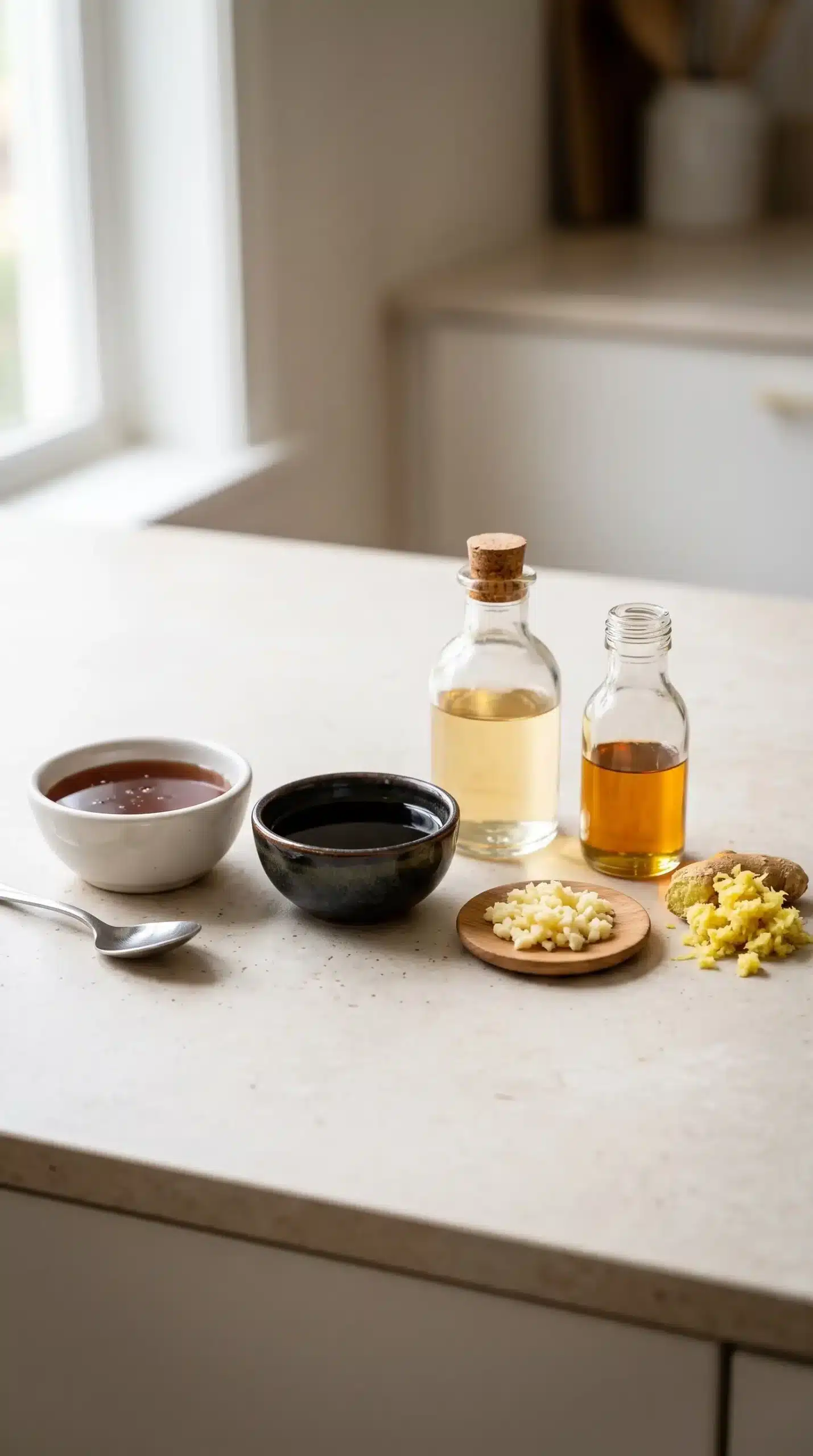
The sauce is the defining feature of sticky chicken rice bowls. Honey supplies the sweetness, while soy sauce provides a savory foundation. Rice vinegar keeps the mixture from tasting overly heavy, and sesame oil brings a distinctive toasted note; a honey and sesame chicken preparation can guide the balance of sweetness and toasted sesame flavor when adjusting the bowl’s sauce.
Garlic and ginger round out the combination with aromatic flavor. Because all six sauce ingredients are mixed together before they reach the skillet, their flavors come together evenly instead of leaving individual pieces of chicken heavily seasoned in one spot.
A honey soy chicken rice bowl works especially well when the sauce is allowed to cook briefly after it coats the chicken. The short cooking period concentrates the mixture and creates the sticky texture that makes the dish different from plain seasoned chicken served over rice.
Chicken Size Matters for Even Browning
Diced chicken breast cooks efficiently in a skillet because smaller pieces expose more surface area to the heat. Keeping the pieces reasonably similar in size helps them cook at a similar rate, which makes it easier to achieve golden-brown surfaces without leaving some pieces behind.
The golden-brown surface is more than a visual cue: the Maillard reaction creates new flavor compounds as proteins and sugars react under high heat, which is why good browning adds depth to the chicken.
Thigh meat can also be used when a richer chicken flavor is preferred. Whichever cut you choose, the important visual cue is a cooked, golden-brown exterior before the sauce is added.
Rice Gives the Bowl Its Practical Base
Cooked rice provides a mild foundation for the strongly flavored chicken and sauce. Warm rice is especially suitable because it can be portioned directly into bowls and topped while the chicken is freshly coated.
White rice is the stated pairing, but brown rice can be used when more fiber is desired. Quinoa is another supported alternative, giving the bowl a different grain-like base while keeping the saucy chicken at the center.
| Rice Base | Best Use | What Changes |
|---|---|---|
| White rice | Classic bowl | Mild, familiar base for the sauce |
| Brown rice | Higher-fiber option | Heartier texture and more fiber |
| Quinoa | Alternative grain-style base | Different texture and added nutrients |
Keep the Skillet Hot Enough for Color
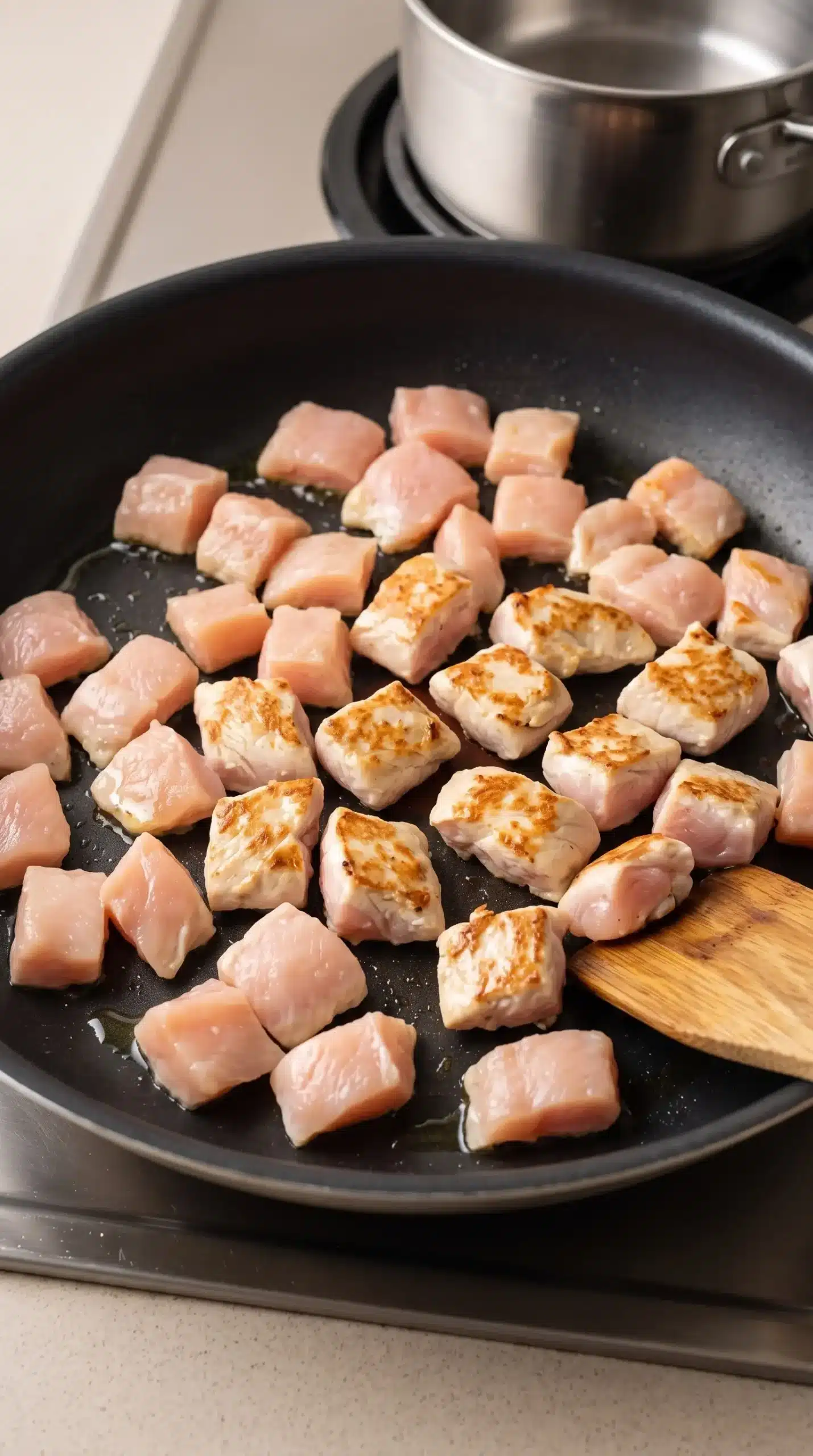
A little oil and medium heat create the setting for browning the diced chicken. Give the pieces enough contact with the skillet to develop a golden surface before moving on to the sauce.
Once the chicken is cooked through, the sauce can be poured directly over it. Stirring at that point distributes the honey-soy mixture across the pieces and starts the transition from browned chicken to sticky chicken.
Cooking the coated chicken for another 2–3 minutes is enough for the sauce to thicken according to the supplied method. Watch the texture closely during this short stage: the sauce should become noticeably thicker and cling to the chicken instead of remaining thin around the pieces.
Watch the Sauce During Its Short Finish
The sauce changes quickly once it meets the hot skillet. Honey helps it become glossy and thick, so the short finishing stage deserves more attention than its small amount of time might suggest.
Stir frequently enough to coat the chicken without letting the sauce sit untouched. A sticky coating should gather around the chicken pieces, giving them a visibly glazed appearance before serving.
Build Each Bowl Around the Glazed Chicken
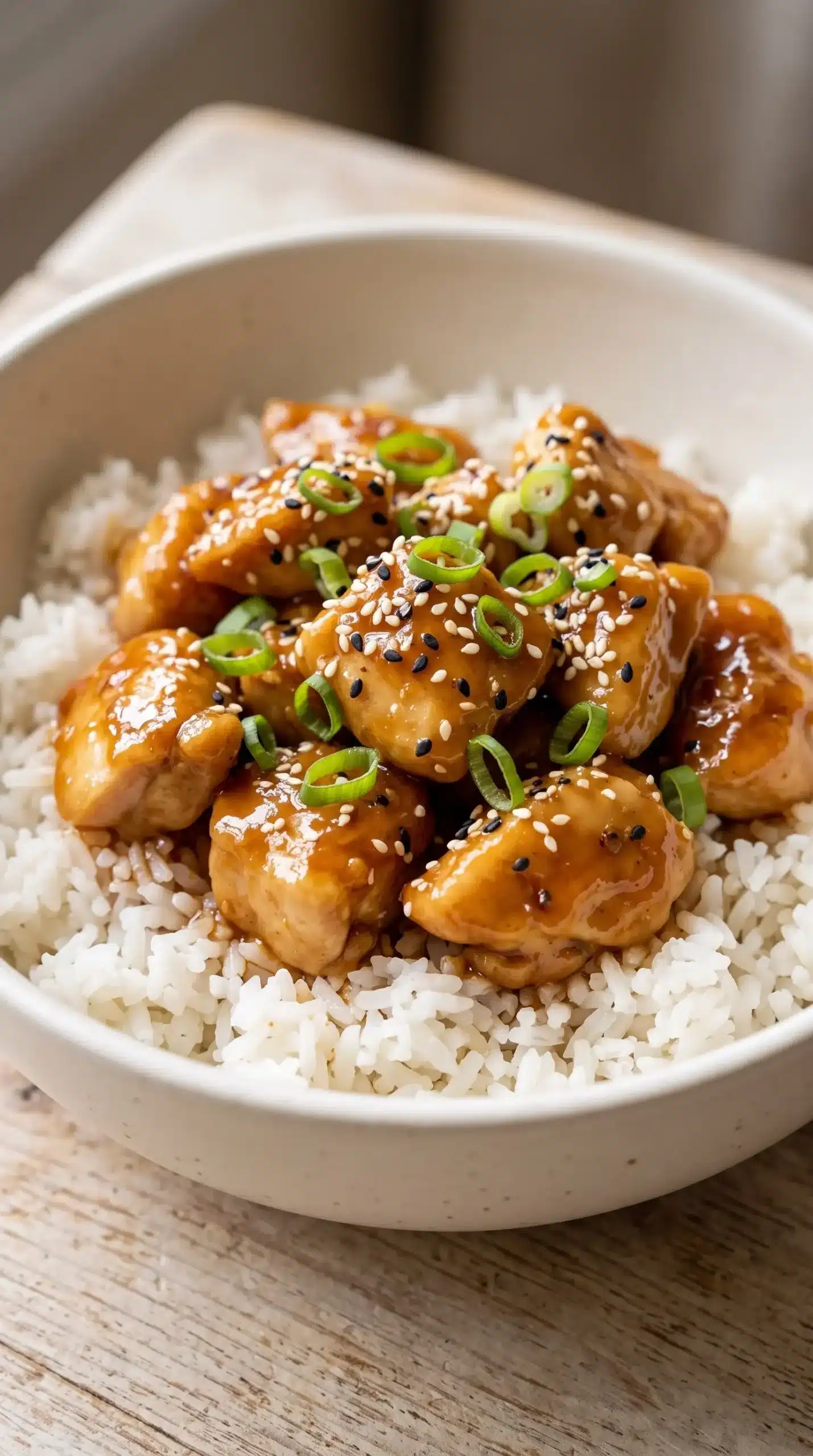
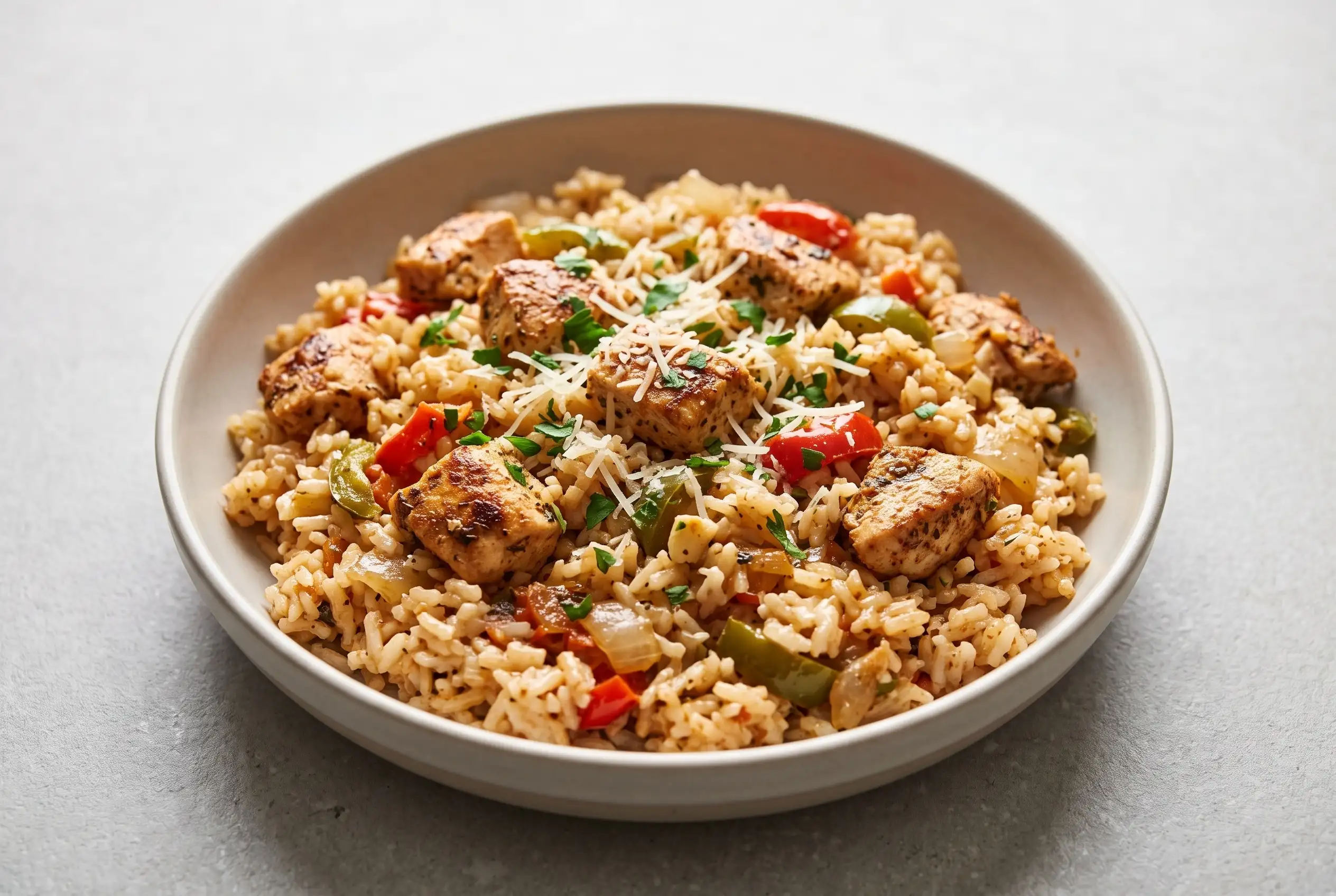
Warm cooked rice should form the base, with the freshly coated chicken spooned over the top. Keeping the chicken above the rice lets the glossy sauce remain visible and gives the bowl its characteristic presentation.
Green onions and sesame seeds work as finishing toppings. Their placement at the end keeps them distinct from the cooked sauce and adds contrast to the tender chicken and rice.
- Fresh finish: Scatter green onions over the chicken immediately before serving.
- Nutty accent: Add sesame seeds as a simple finishing garnish.
- Extra crunch: Serve steamed vegetables or pickled carrots alongside the bowl.
Vegetables Change the Bowl Without Changing Its Core
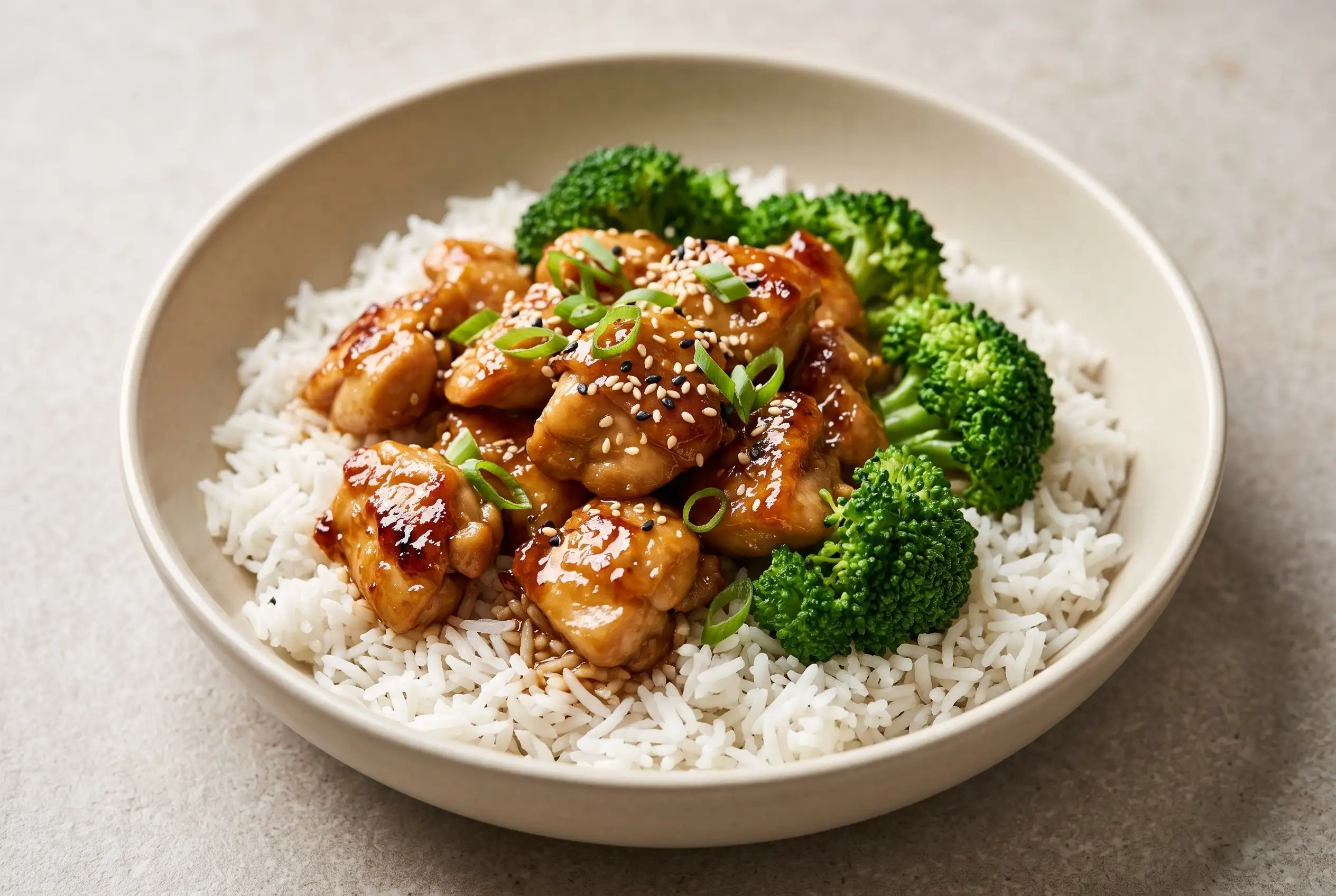
Broccoli, bell peppers, and snap peas can be incorporated when a more vegetable-forward bowl is wanted. The supplied approach is to stir-fry the vegetables along with the chicken, allowing them to become part of the same skillet meal.
Steamed vegetables offer another serving option when you want to keep the chicken preparation focused on the sauce. Pickled carrots can instead be served on the side for a contrasting flavor and crunch.
Marinating Adds an Optional Flavor Step
For a deeper seasoning effect, the chicken can be marinated in the prepared sauce for 30 minutes before cooking. That option fits naturally into the existing flavor profile because the same sauce is already designed to coat the chicken.
If using the marinade approach, reserve the cooking sequence for the skillet stage and focus on getting the chicken browned before finishing it with the sauce. The important distinction is that marinating is an optional preparation choice, not a requirement for making the bowls.
Sticky Chicken Rice Bowls Avoid These Common Pitfalls
Several problems can be prevented by paying attention to the visual changes in the skillet. The supplied ingredients and method point to a few specific areas where execution matters most.
Adding the sauce before the chicken has browned can interfere with the intended golden surface. Let the diced chicken cook first, then introduce the sauce after the chicken is cooked through.
Another issue is stopping the sauce stage too early. If the mixture has not thickened after coating the chicken, the signature sticky finish has not fully developed. Continue the short finishing stage while stirring and watching for a thicker coating.
| What You See | Likely Issue | Useful Correction |
|---|---|---|
| Chicken lacks a golden surface | Sauce was introduced before browning | Brown the chicken before adding the sauce |
| Sauce remains thin | Finishing stage ended too soon | Continue cooking for the stated 2–3 minute thickening stage |
| Chicken is not cooked through | Pieces need more cooking | Continue cooking until the chicken reaches 165°F (75°C) |
Gluten-Free Swaps Keep the Sauce Flexible
Tamari or coconut aminos can replace soy sauce when a gluten-free alternative is needed. Both substitutions preserve the savory role of the soy sauce in the bowl without requiring a completely different sauce concept.
Make-Ahead and Leftover Portions Stay Simple
The chicken and sauce can be prepared ahead of mealtime and heated when needed. That makes the dish useful when dinner needs to come together with less active cooking at the last moment.
Leftover portions belong in an airtight container in the refrigerator for up to 3 days. Reheat them in the microwave before serving, keeping the rice and saucy chicken together for a convenient leftover meal.
Tofu and Tempeh Turn the Bowl Vegetarian
Diced tofu or tempeh can replace the chicken for a vegetarian variation. The sweet-savory sauce remains the central flavor element, while the alternative protein changes the texture and character of the bowl.
For the base, quinoa or brown rice can replace white rice. These substitutions make the bowl more adaptable without changing the basic idea of pairing a flavorful coated protein with a cooked grain.
One Skillet Decision Defines the Best Finish
Golden chicken followed by a brief sauce-thickening stage gives sticky chicken rice bowls their most important textural contrast. The chicken needs enough skillet time to brown and cook through, while the sauce needs only a short finish to become thick enough to cling to each piece.
Once that coating has formed, serving it over warm rice with green onions and sesame seeds completes the bowl without adding unnecessary complexity. The result depends less on complicated technique than on recognizing when the chicken is browned and when the sauce has reached the right consistency.
Questions About Sticky Chicken Rice Bowls and Cooking Details
Can I use chicken thighs instead of chicken breast?
Yes. Chicken thighs are a supported substitution when you prefer a richer taste. Dice the meat so the pieces remain suitable for the same skillet preparation.
How can I tell when the chicken is fully cooked?
The chicken should reach an internal temperature of 165°F (75°C) and should no longer be pink inside. A food thermometer provides the clearest check when you are unsure.
Can the sauce be prepared before dinner?
Yes. The sauce can be mixed ahead of time, and the chicken can also be prepared in advance. Heat the prepared components when you are ready to assemble the bowls.
What can replace honey in the sauce?
Maple syrup or agave nectar can replace honey when needed. Either option changes the specific sweetness slightly while keeping the sauce’s sweet element intact.
Are vegetables necessary for the bowls?
No. The core bowl uses chicken, sauce, rice, and the listed garnishes. Broccoli, bell peppers, or snap peas are optional additions that can be stir-fried with the chicken.
Can I make the rice bowl with brown rice?
Brown rice is a suitable alternative to white rice and provides more fiber. Quinoa is another supported option when you want a different base.
Sticky Chicken Rice Bowls with Honey Soy Sauce and Ginger
Ingredients
Method
- In a bowl, whisk the soy sauce, honey, rice vinegar, sesame oil, garlic, and ginger until combined.
- Warm the neutral cooking oil in a skillet over medium heat. Add the diced chicken and cook until browned and the internal temperature reaches 165°F / 74°C.
- Add the honey-soy mixture to the cooked chicken and stir until evenly coated. Continue cooking for 2–3 minutes, until the sauce has thickened.
- Portion the cooked rice into serving bowls. Spoon the sticky chicken over the rice and finish with green onions and sesame seeds.