Hungarian Mushroom Soup with Sour Cream and Dried Dill
Hungarian mushroom soup is a warm, creamy bowl built around browned mushrooms, onion, garlic, vegetable broth, and dill. A spoonful of sour cream and a piece of crusty bread turn the finished soup into a cozy lunch or dinner with a distinctly comforting character.
Rich mushrooms provide the earthy foundation, while milk or cream softens the broth and gives the soup its velvety texture. The preparation is straightforward, yet a few choices especially how the mushrooms are cooked and when the dairy is added make a noticeable difference in the finished bowl.
Why Hungarian Mushroom Soup Feels So Comforting
Warm broth and tender mushrooms create the heart of the dish, but the creamy finish makes the experience especially satisfying. Onion and garlic establish a savory base before the mushrooms are browned, allowing the soup to develop a deeper character without requiring a complicated cooking process.
Dried dill gives the broth its distinctive herbal note, keeping the flavor from becoming too heavy once milk or cream is stirred in. Hungarian mushroom soup works well when a simple pot of food needs to feel substantial enough for lunch or dinner while still remaining easy to prepare.
Choosing Mushrooms for the Best Earthy Flavor
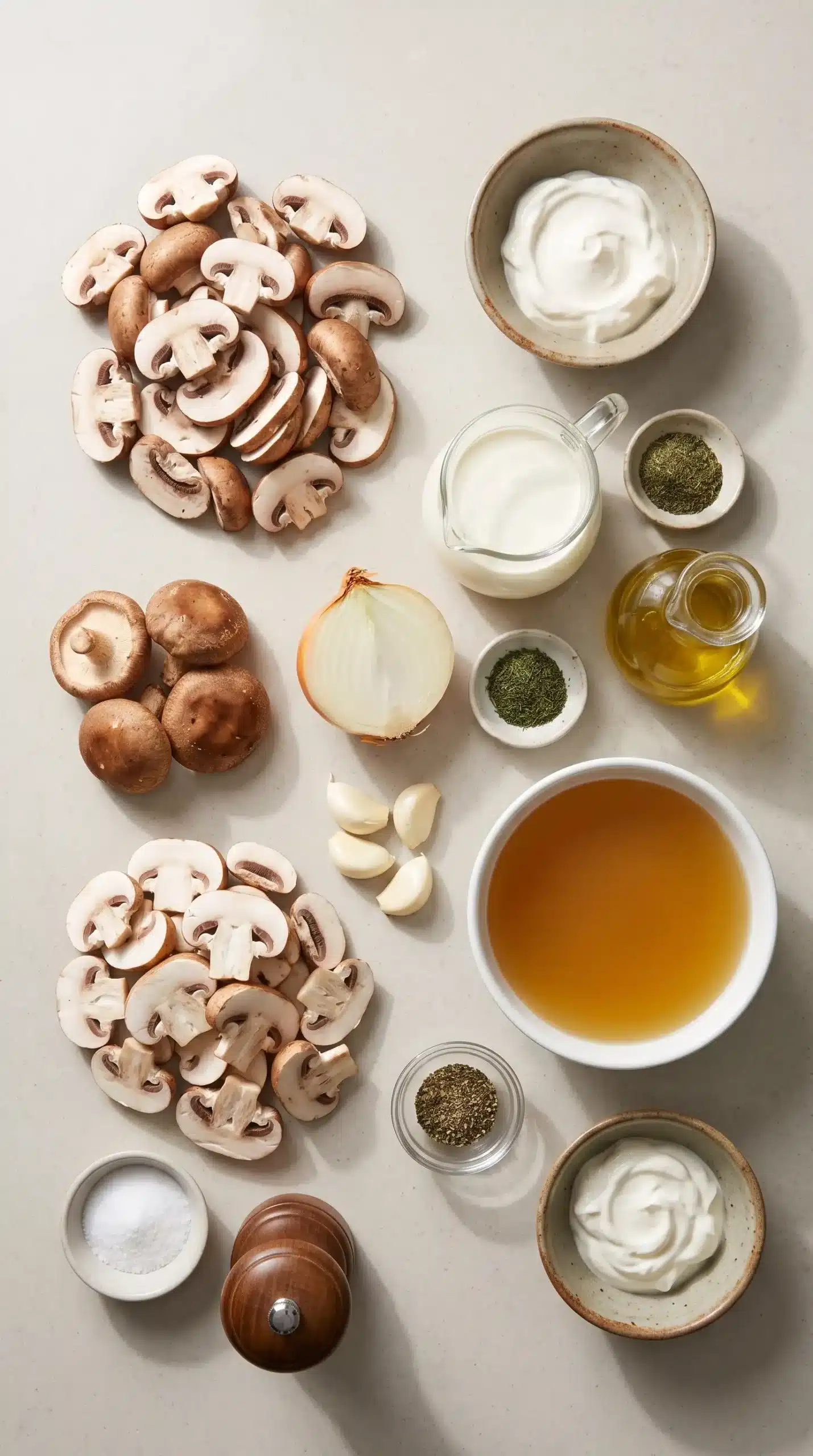
The mushroom selection can be adjusted according to what is available. Button, cremini, and shiitake mushrooms are all suitable choices, so the important consideration is choosing fresh mushrooms that can be sliced and browned before they meet the broth. That browning stage is particularly useful because it gives the soup a more developed mushroom character.
| Mushroom choice | Best use in the soup |
|---|---|
| Button | A straightforward choice for a familiar mushroom flavor |
| Cremini | A good option when a more robust mushroom character is desired |
| Shiitake | A suitable variation when you want to change the mushroom profile |
Dried mushrooms can also be used when fresh ones are unavailable. They should be soaked in hot water for about 20 to 30 minutes before being added, giving them time to soften before they become part of the soup.
How the Creamy Base Comes Together
Milk or cream is added after the vegetable broth and dill have had time to simmer with the mushrooms. This timing keeps the dairy from being subjected to the initial boiling stage and allows the mushroom and broth flavors to develop first.
For a lighter creamy impression, milk provides the dairy component; cream gives the soup a richer texture. Either choice fits the supplied Hungarian mushroom soup recipe, so the decision can follow the kind of finish you want in the bowl.
Browned Mushrooms Give the Soup More Character
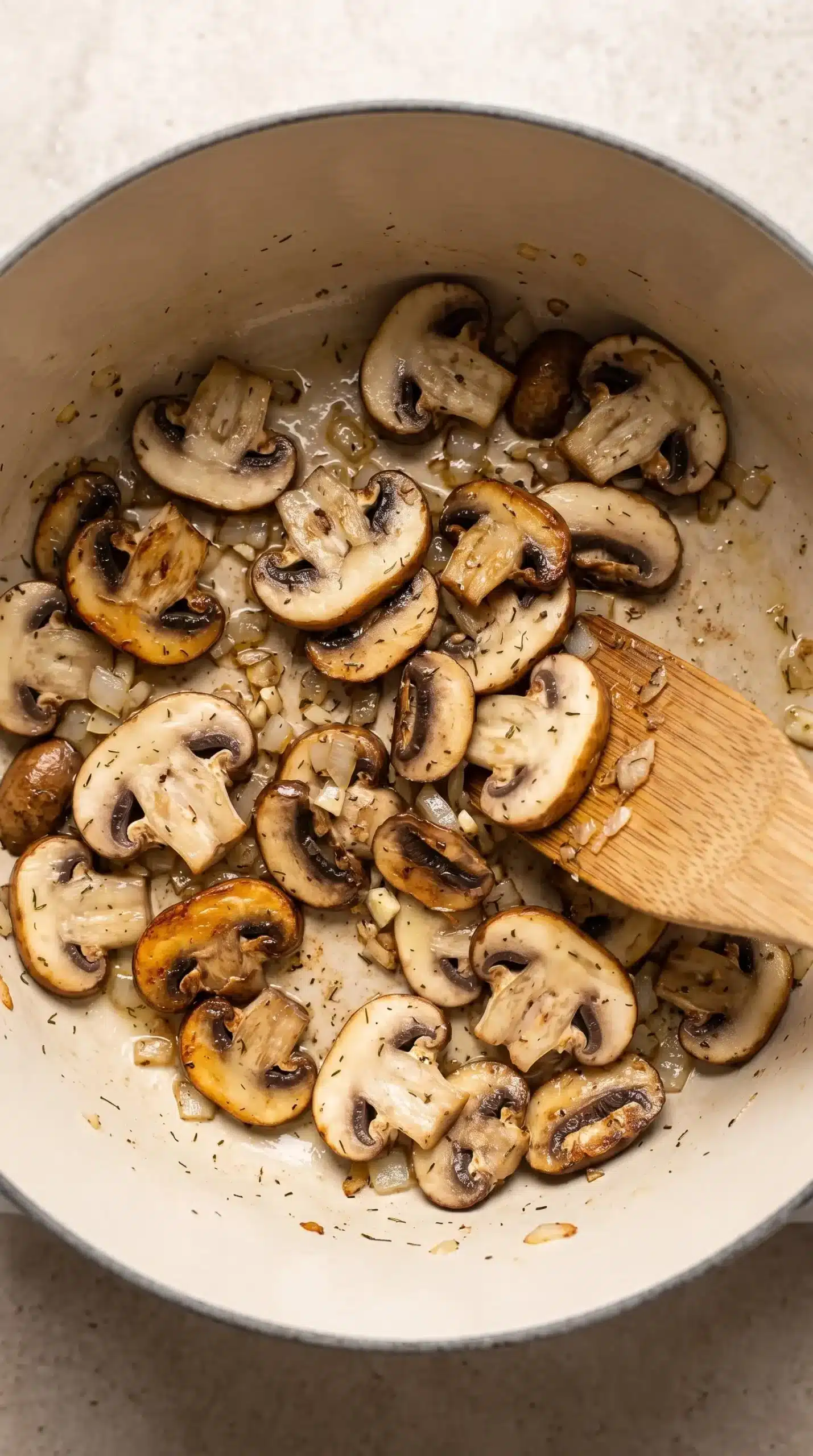
Once the onion and garlic have become translucent, the sliced mushrooms need enough cooking time to brown. That visual change is an important cue: pale, recently added mushrooms have not reached the same stage as mushrooms that have taken on color from cooking.
The color change is more than a visual cue because Maillard reactions occur as the mushrooms brown, creating new flavor and aroma compounds that deepen their cooked character.
Medium heat is useful during this part of the process because the mushrooms need direct contact with the heated pot while the onion and garlic have already softened. Watching their appearance is more helpful than rushing immediately to the broth. When the mushrooms are browned, the vegetable broth and dried dill can be added.
Keeping the Creamy Texture Smooth
After the broth is brought to a boil, the heat is reduced and the soup simmers for about 15 minutes. Milk or cream is added afterward, followed by salt and pepper, and the soup is heated through before serving. This sequence keeps the creamy element associated with the finished soup instead of making it part of the initial simmer.
Blending Changes the Character of Hungarian Mushroom Soup
A smooth texture is an optional direction rather than a requirement. The soup can be blended when you prefer a more unified consistency, turning the cooked mushrooms and broth into a smoother bowl while retaining the same core ingredients and seasoning.
Leaving the soup unblended preserves more of the mushroom pieces and gives each spoonful a more varied texture. Either approach works with Hungarian mushroom soup, so the choice comes down to whether you prefer visible mushroom slices or a more integrated creamy soup.
Common Hungarian Mushroom Soup Mistakes to Avoid
Several problems can be prevented simply by paying attention to the cooking cues already built into the method. Mushrooms that are not browned miss an important flavor-building stage, while rushing the simmering period can leave the broth without enough time to develop its combined mushroom, onion, garlic, and dill character.
- Skipping the browning: Cook the sliced mushrooms until they are visibly browned before adding the vegetable broth.
- Boiling after adding dairy: Add milk or cream after the broth has simmered, then heat the soup through instead of returning it to a prolonged boil.
- Overlooking seasoning: Taste and adjust with salt and pepper after the milk or cream has been incorporated.
- Choosing the wrong broth: Use vegetable broth when preparing a vegetarian version, as the supplied recipe specifies.
Keeping these points in mind makes the process easier to control without adding extra steps to the recipe. The visible stages translucent onion, browned mushrooms, simmered broth, and heated creamy finish provide useful signals throughout cooking.
Vegetarian Hungarian Mushroom Soup Starts with the Right Broth
Vegetable broth is the key broth choice for keeping the soup vegetarian. The combination of mushrooms, onion, garlic, vegetable broth, and dill already supplies the savory foundation, so there is no need to introduce chicken broth for the version described here.
A vegan variation can go one step further by replacing the milk or cream with non-dairy milk and leaving off the sour cream. The result changes the creamy component and garnish while preserving the mushroom-centered character of the soup.
Simple Variations That Fit the Mushroom Base
A little extra heat can shift the flavor without changing the basic preparation. Red pepper flakes or a dash of hot sauce can be added when a spicier bowl is preferred. Fresh herbs can also accompany the dried dill when a more herb-forward flavor is wanted.
Additional vegetables such as carrots, celery, or spinach can be included when you want more variety in the bowl. These additions work as optional changes to the supplied preparation, while the mushroom, broth, dill, and creamy finish remain the defining elements.
Storing Leftover Hungarian Mushroom Soup
Leftover soup should be allowed to cool before being transferred to an airtight container and placed in the refrigerator. It can be kept there for about 3 to 4 days, making the pot useful for another meal without requiring the soup to be prepared again immediately.
For longer storage, a freezer-safe container allows the soup to be frozen for up to 3 months. Reheating can be done on the stove or in the microwave, with the soup warmed until hot. Portioning leftovers into suitable containers can make reheating easier when only part of the batch is needed.
Serving Hungarian Mushroom Soup with the Right Finish
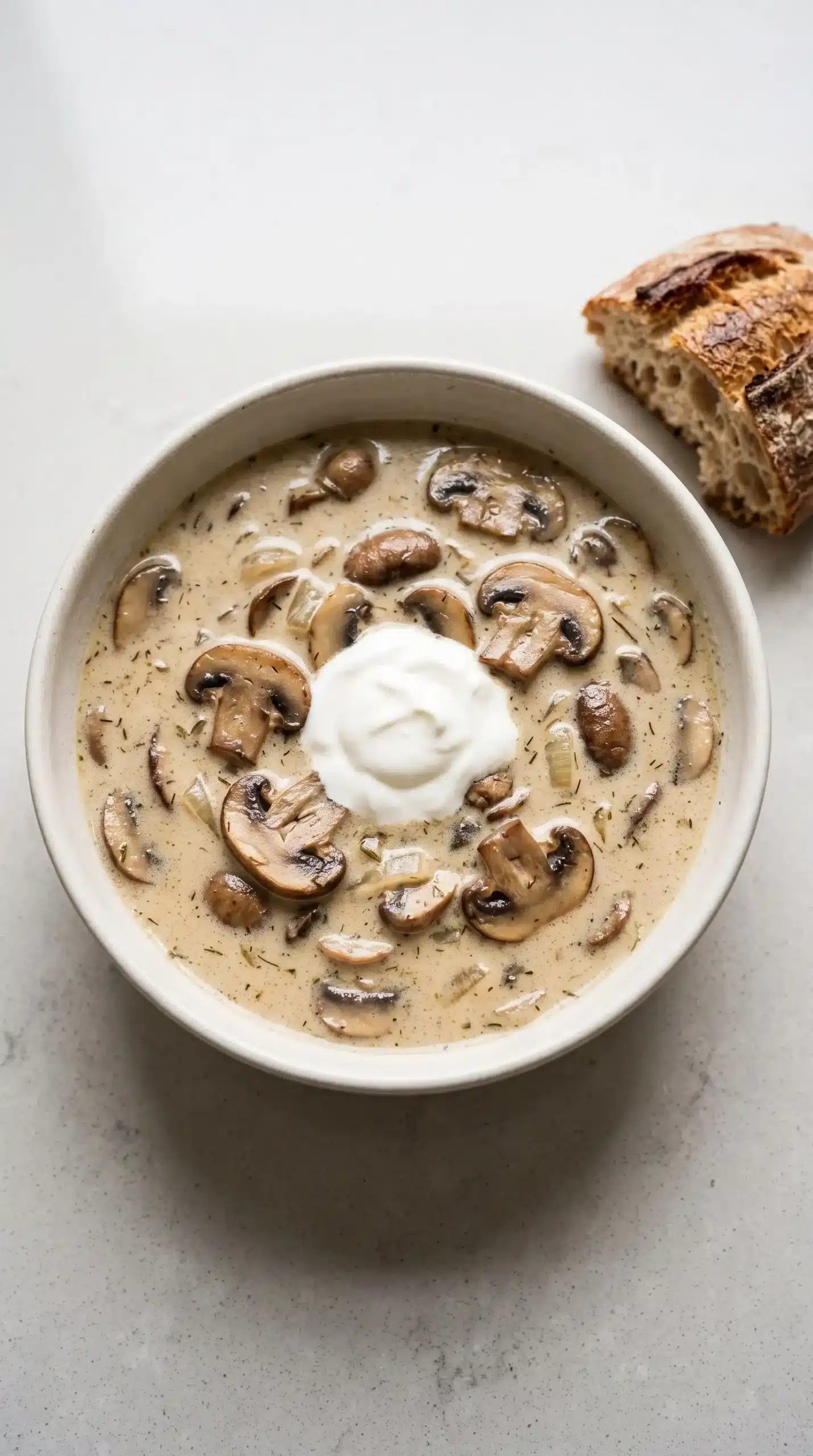
A warm bowl becomes especially inviting with a generous dollop of sour cream on top. The cool, creamy garnish complements the soup’s already creamy base and adds another layer of richness without requiring additional cooking.
Crusty bread is a natural partner for the soup because it can be used for dipping into the creamy broth. For a fuller meal, chicken and wild rice soup adds tender grains and chicken to a creamy mushroom-based bowl, giving you a heartier direction when bread alone is not enough.
What the Mushroom Soup Contributes to a Balanced Meal
Mushrooms are described as low in calories and sources of vitamins and minerals, including vitamin D and B vitamins. The soup also contains protein from the milk or cream, while olive oil contributes fats to the meal.
Those ingredients give Hungarian mushroom soup a combination of vegetables, dairy, mushrooms, broth, and fat in one dish. The supplied nutritional information places the serving at about 350 calories, with approximately 10 grams of protein and 15 grams of fat, providing a useful general picture of the finished soup.
Hungarian Mushroom Soup Is Best Guided by Texture and Browning
Browned mushrooms and a carefully timed creamy finish are the two most useful cooking cues in Hungarian mushroom soup. Letting the mushrooms develop color before adding the broth builds the foundation, while adding milk or cream after the simmer keeps the soup’s creamy character tied to the finishing stage.
Questions About Hungarian Mushroom Soup and Texture
Can dried mushrooms replace fresh mushrooms?
Yes. Soak dried mushrooms in hot water for about 20 to 30 minutes before adding them to the soup. This gives them time to soften and makes them suitable for the mushroom-based preparation.
Can Hungarian mushroom soup be made gluten-free?
Yes, provided the vegetable broth used is gluten-free. Checking the broth is the important consideration for the gluten-free version described in the supplied recipe.
What can make the soup smoother?
Blending the finished soup provides a smoother texture. If you prefer more texture in each spoonful, leave the mushrooms unblended so their pieces remain visible throughout the bowl.
How can the soup be made vegan?
Replace the milk or cream with non-dairy milk and omit the sour cream. Using vegetable broth also keeps the broth choice aligned with the vegetarian preparation.
Can extra vegetables be added?
Carrots, celery, and spinach are suitable additions when you want more vegetables in the soup. They provide a simple way to vary the bowl while keeping mushrooms as the central ingredient.
What can add heat to the soup?
Red pepper flakes or a dash of hot sauce can make the soup spicier. Add either according to the level of heat you want while keeping the mushroom and dill flavors present.
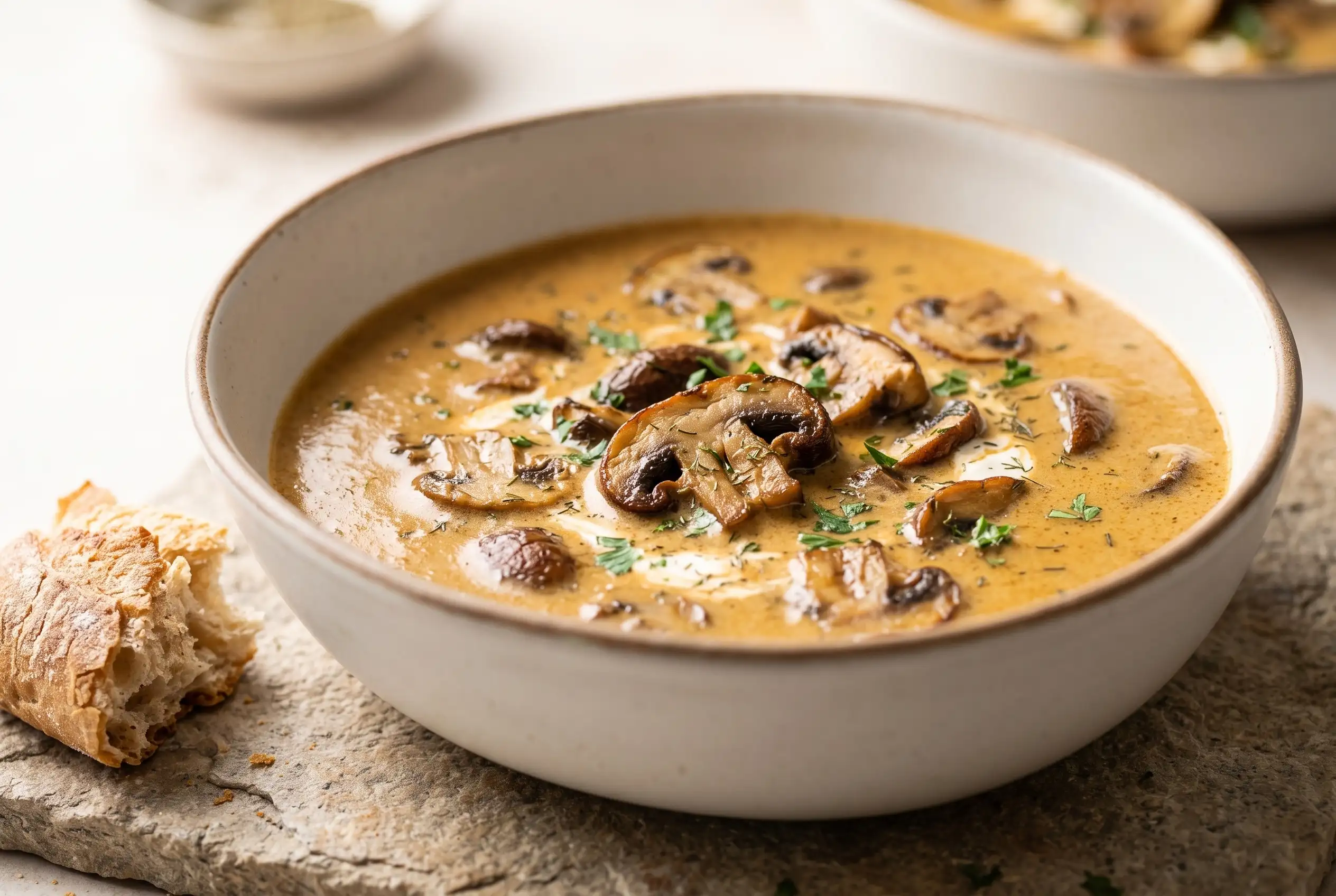
Hungarian Mushroom Soup with Sour Cream and Dried Dill
Ingredients
Method
- Warm the olive oil in a large pot over medium heat.
- Add the chopped onion and minced garlic, then cook until the onion becomes translucent.
- Add the sliced mushrooms and cook until browned.
- Pour in the vegetable broth and add the dried dill, stirring to combine.
- Bring the soup to a boil, lower the heat, and simmer for about 15 minutes.
- Stir in the milk or cream, then season with salt and pepper.
- Continue heating until the soup is warmed through, then serve with a dollop of sour cream and crusty bread.