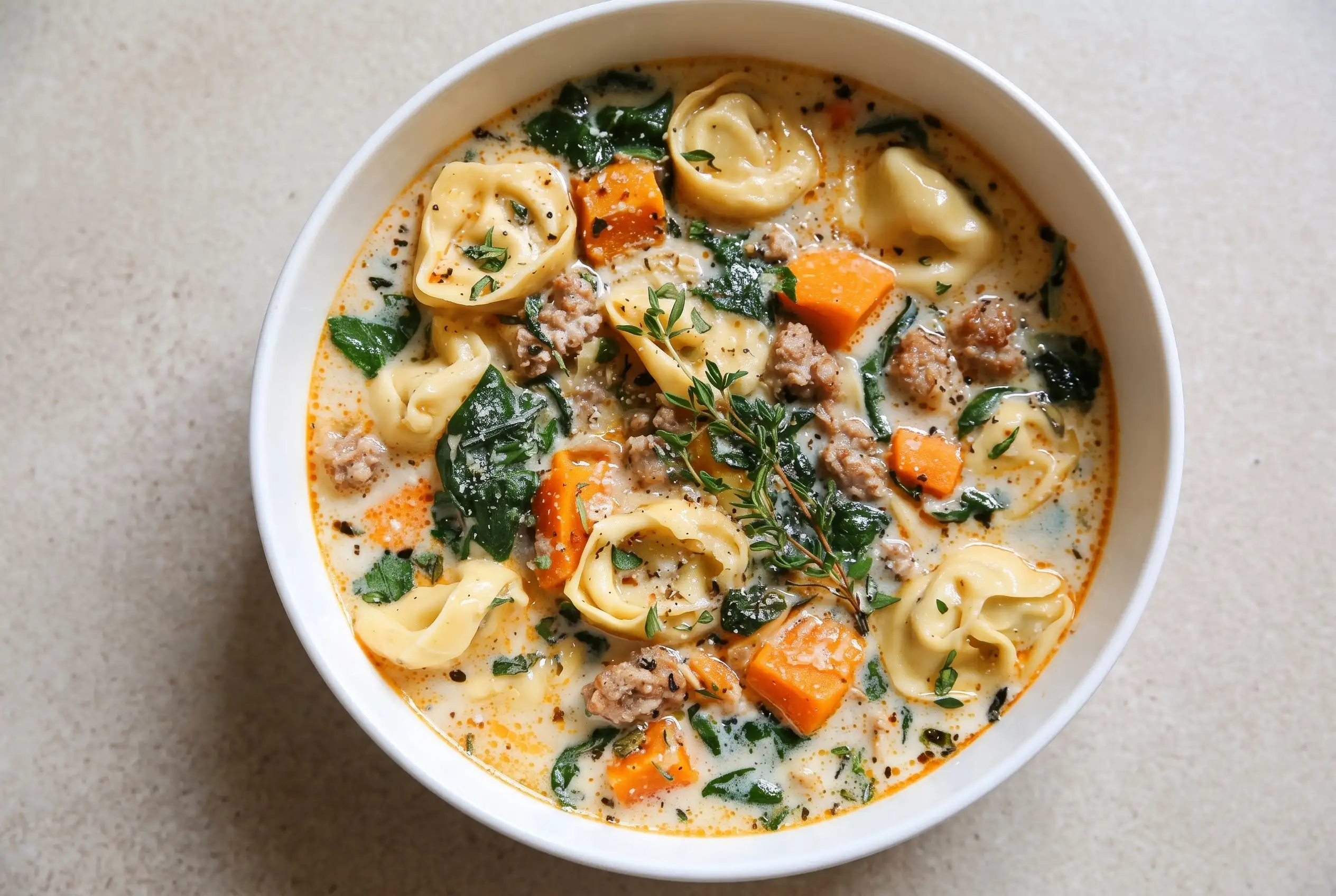
Cajun Potato Soup with Andouille Sausage
Why Cajun Potato Soup Works for a Cozy Dinner

Cajun potato soup brings together browned andouille sausage, tender russet potatoes, aromatic vegetables, Cajun seasoning, cream, and cheddar in a hearty bowl with plenty of character. The creamy broth carries the smoky sausage and warm spices while potatoes make the soup substantial enough to serve as a satisfying meal.
What makes cajun potato soup especially useful for a cold evening is the balance between richness and adjustable heat. Cayenne pepper supplies the spicy edge, while the amount can be changed to suit the people at the table. A little chopped parsley at the end adds a fresh contrast to the creamy, savory base.
The combination also stays practical without requiring complicated cooking techniques. The sausage is browned first, the vegetables soften in the same pot, and the potatoes simmer directly in the seasoned broth. Cream and cheese are added once the potatoes are tender, creating a smooth finish without turning the preparation into a lengthy project.
The Sausage and Potato Balance Defines the Bowl
Andouille sausage gives cajun potato soup its most distinctive savory foundation. Slicing the sausage into thin rounds allows the pieces to brown in the pot before the vegetables are added, building flavor directly into the cooking process. Keeping that browned sausage at the center of a creamy sausage and potato soup helps the smoky meat remain noticeable alongside the tender potatoes. Smoked sausage or turkey sausage can stand in when needed, although the character of the finished soup will change with the substitution.
Russet potatoes are particularly useful here because they become tender during the simmering stage and can also be mashed slightly after cooking when a thicker texture is desired. Cutting the potatoes into similarly sized cubes helps them cook at a similar rate, so the pot reaches a consistent texture without some pieces becoming soft long before others.
The dairy ingredients determine how the broth finishes. Heavy whipping cream gives the soup its creamy character, while shredded mild cheddar adds both richness and a subtle cheese flavor. Half-and-half or coconut milk can replace the cream, and Monterey Jack can replace the cheddar if a different cheese is preferred.
Seasoning Choices Keep the Cajun Heat Adjustable
Cajun seasoning, paprika, black pepper, salt, and cayenne work together to create the soup’s seasoned profile. Cayenne is the easiest element to adjust when different diners prefer different levels of heat. Keeping the quantity modest at first leaves room to increase the spice later, while hot sauce can also be added when serving.
| Seasoning | Role in the soup | Adjustment point |
|---|---|---|
| Cajun seasoning | Provides the main Cajun character | Keep the amount aligned with the desired overall seasoning |
| Paprika | Adds warm pepper flavor | Use alongside the Cajun seasoning for balanced seasoning |
| Cayenne pepper | Raises the heat level | Increase or decrease according to heat preference |
| Black pepper | Adds another layer of peppery flavor | Adjust with the salt to taste |
Vegetables Build the Savory Base Before the Broth
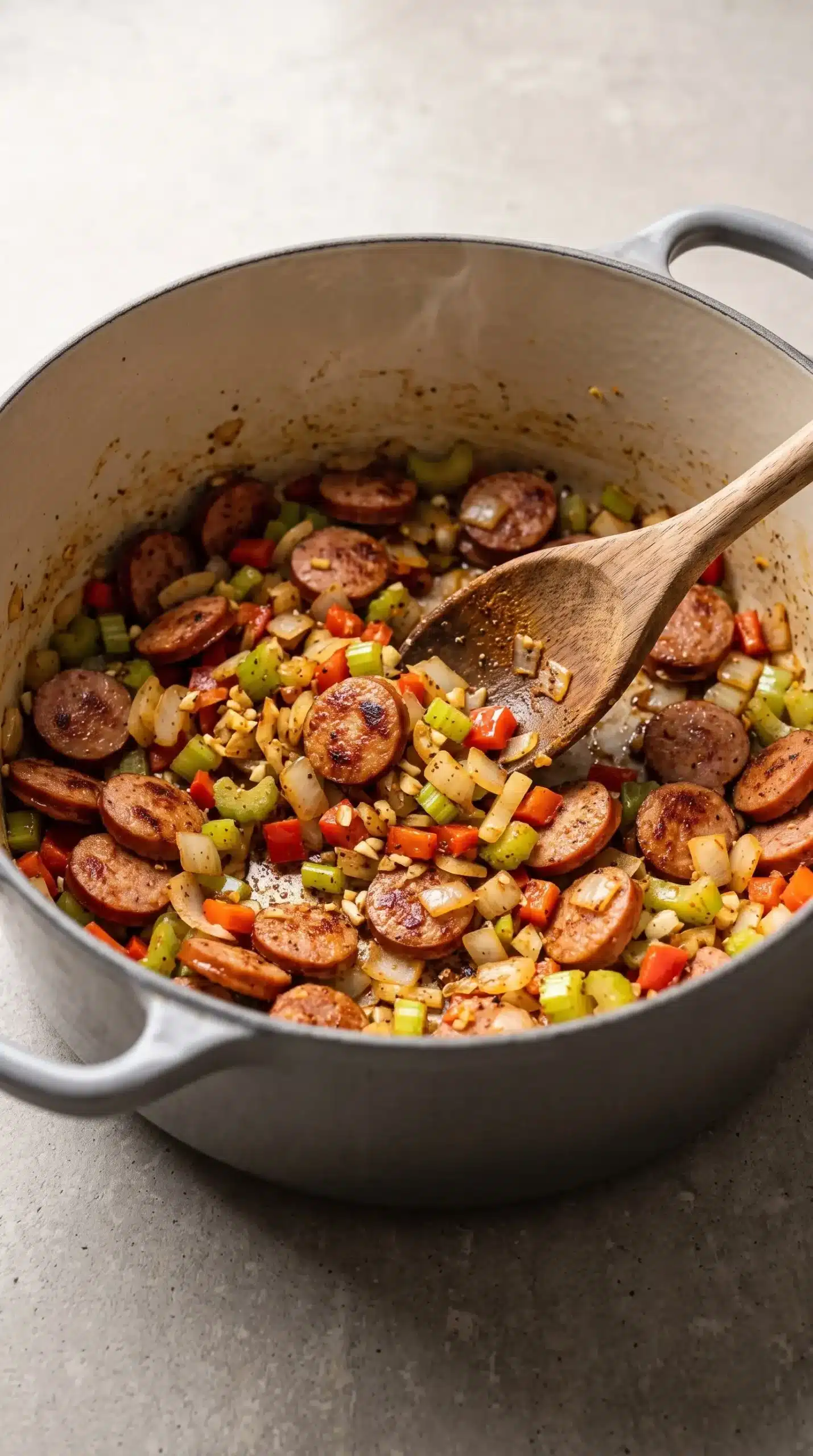
Onion, celery, red bell pepper, and garlic form the vegetable base of cajun potato soup. Cooking these ingredients after the sausage has begun to brown gives them time to soften before the broth and potatoes enter the pot. The combination also keeps the soup from relying on sausage and dairy alone for its overall flavor.
Red bell pepper brings a mild sweetness and vivid color, while celery and onion round out the savory base. Garlic is added with the vegetables, allowing its flavor to become part of the seasoned mixture before the liquid is introduced.
Those vegetables need to soften before the broth goes in, but there is no need to push them far beyond that stage. Once they are tender, the seasonings can be stirred through the mixture so the spices are distributed before the potatoes begin their simmer.
Managing the Potato Simmer for the Right Texture
The potato stage is where texture becomes the main cooking decision. After the chicken broth and cubed potatoes are added, the soup is brought to a boil and then reduced to a simmer. The potatoes should be tender before the cream and cheese are incorporated.
Checking a potato piece for tenderness is more useful than relying only on the clock. A fork should pass into the cooked potato easily. If the pieces are still firm, give them additional simmering time; adding the dairy before they are tender does not solve an undercooked potato.
Small Adjustments Can Thicken Cajun Potato Soup
Potatoes provide a simple way to change the consistency without introducing another thickener. Once the cubes are cooked, some can be mashed with a fork directly in the pot because potato starch thickens the broth. This creates a thicker texture while leaving other pieces intact for a more substantial bite.
Cheese and Cream Belong Near the End
Heavy cream and shredded cheddar are stirred in after the potatoes have reached the desired tenderness. Keeping the dairy additions toward the end preserves the intended finishing stage and makes it easier to judge the soup’s consistency before serving.
Once the cream and cheese are added, the soup only needs to heat through. A final taste provides the opportunity to adjust the seasoning. This is also the point when the heat can be balanced if the Cajun seasoning and cayenne need a small correction.
For a creamy cajun potato soup with a smooth, hearty character, allow the cheese to become incorporated while the pot heats through. Avoid treating the dairy stage as another long simmering period; the potatoes have already completed the main cooking work by then.
Common Cajun Potato Soup Mistakes to Avoid
- Skipping the sausage browning: Add the sliced sausage to the heated oil and let it begin to brown before moving on to the vegetables. This keeps the first cooking stage from being rushed.
- Adding dairy too early: Wait until the potatoes are tender before stirring in the cream and cheese. The dairy belongs in the finishing stage.
- Overcommitting to cayenne: Cayenne can be adjusted to taste, so a measured approach makes the heat easier to control. Hot sauce can provide another serving-time option.
- Leaving potatoes uneven: Similar-sized cubes are easier to cook consistently, reducing the chance that some pieces are tender while others remain firm.
Serving Cajun Potato Soup Beyond the Pot

Hot bowls of cajun potato soup can be finished with chopped parsley for a simple garnish. Extra shredded cheese or a dash of hot sauce can be offered at the table, allowing each serving to be adjusted without changing the whole pot.
Crusty bread makes a natural companion because it gives the creamy soup something substantial to accompany. The bread also works well for a meal where the soup itself remains the main focus.
Simple Swaps Keep the Soup Flexible
Several ingredients can be changed without abandoning the basic character of the dish. Vegetable oil can be replaced with olive oil or butter, while chicken broth can be replaced with vegetable broth. These substitutions are useful when the original ingredient is not available.
Smoked sausage or turkey sausage can replace the andouille. The cream can be changed to half-and-half or coconut milk, and mild cheddar can give way to Monterey Jack. Each substitution changes the finished flavor or richness, so the best choice depends on the result desired at the table.
A Meat-Free Cajun Potato Soup Variation
A vegetarian version can be made by leaving out the sausage and using vegetable broth. Additional vegetables such as zucchini or corn can take its place in the overall combination, keeping the soup centered on potatoes, vegetables, seasoning, and a creamy finish.
Storage Keeps Leftovers Ready for Another Meal
Allow leftover cajun potato soup to cool before transferring it to an airtight container and placing it in the refrigerator. The stored soup can be reheated on the stove or in the microwave when needed.
For longer storage, the cooled soup can be placed in a freezer-safe container and frozen for about 2 to 3 months. Reheating gives the soup another convenient use when a prepared meal is helpful.
The Best Texture Comes From Timing the Potatoes and Dairy
Tender potatoes, browned sausage, softened vegetables, and a properly timed dairy finish give cajun potato soup its intended balance. The most important judgment happens before the cream and cheese enter the pot: the potato pieces need to be fully tender, with some available for mashing if a thicker broth is preferred.
Once that texture is reached, the creamy finish can be added and heated through, followed by a taste for seasoning. That sequence keeps the soup hearty and adjustable, whether the preference is a milder creamy bowl or a spicy cajun potato soup with more heat at the table.
Cajun Potato Soup Questions About Heat and Storage
Can the heat level be reduced after the soup is seasoned?
Because cayenne is the main ingredient specifically identified for adjusting heat, the easiest approach is to start conservatively with it and increase the amount only when needed. Serving hot sauce separately also lets individual bowls become hotter without changing the entire pot.
How can I make the soup thicker without adding flour?
After the potatoes are tender, mash some of them with a fork directly in the pot. The mashed potato blends into the broth while the remaining cubes keep their shape, giving the soup a thicker consistency without adding another thickening ingredient.
Can another sausage be used for cajun potato soup with sausage?
Yes. Smoked sausage or turkey sausage can replace andouille sausage. Since the sausage is browned before the vegetables are cooked, whichever option you choose becomes part of the soup’s savory foundation.
What can replace the heavy cream?
Half-and-half or coconut milk can be used instead of heavy whipping cream. The choice changes the character of the finished broth, so use the substitute that best matches the richness and flavor you want.
Can cajun potato soup be made vegetarian?
A meat-free variation is possible by omitting the sausage and using vegetable broth. Zucchini or corn can be added as additional vegetables, giving the soup more variety while keeping potatoes at the center.
How long can leftovers be kept refrigerated?
Refrigerated leftovers can be kept for about 3 to 4 days in an airtight container. When you are ready to eat, reheat the soup on the stove or in the microwave until heated through.

Cajun Potato Soup with Andouille Sausage
Ingredients
Method
- Heat the vegetable oil in a large pot over medium heat. Add the sliced andouille sausage and cook until it starts to brown.
- Add the onion, celery, red bell pepper, and garlic. Cook for about 5 minutes, stirring occasionally, until the vegetables have softened.
- Add the Cajun seasoning, kosher salt, black pepper, paprika, and cayenne pepper. Stir until the seasonings are evenly distributed through the sausage and vegetables.
- Pour in the chicken broth and add the cubed potatoes. Bring the soup to a boil, then lower the heat and simmer for 15 to 20 minutes, until the potatoes are tender.
- Stir in the heavy whipping cream and shredded cheddar cheese. Continue heating until the cheese is incorporated and the soup is warmed through. Taste and adjust the seasoning if needed.
- Ladle the Cajun potato soup into bowls and garnish with chopped parsley. Serve hot.