Potsticker Soup Recipe with Fresh Ginger and Garlic
Potsticker soup turns tender dumplings, savory chicken broth, fresh ginger, garlic, greens, soy sauce, and sesame oil into a cozy bowl that comes together with very little fuss. The combination has the comforting character of a dumpling soup recipe while keeping the preparation straightforward enough for a weeknight lunch or dinner.
Warm broth carries the ginger and garlic through every spoonful, while spinach or bok choy adds freshness and texture. Pork, chicken, or vegetable dumplings can all work, making an easy potsticker soup adaptable to what you have available.
What Makes Potsticker Soup So Comforting
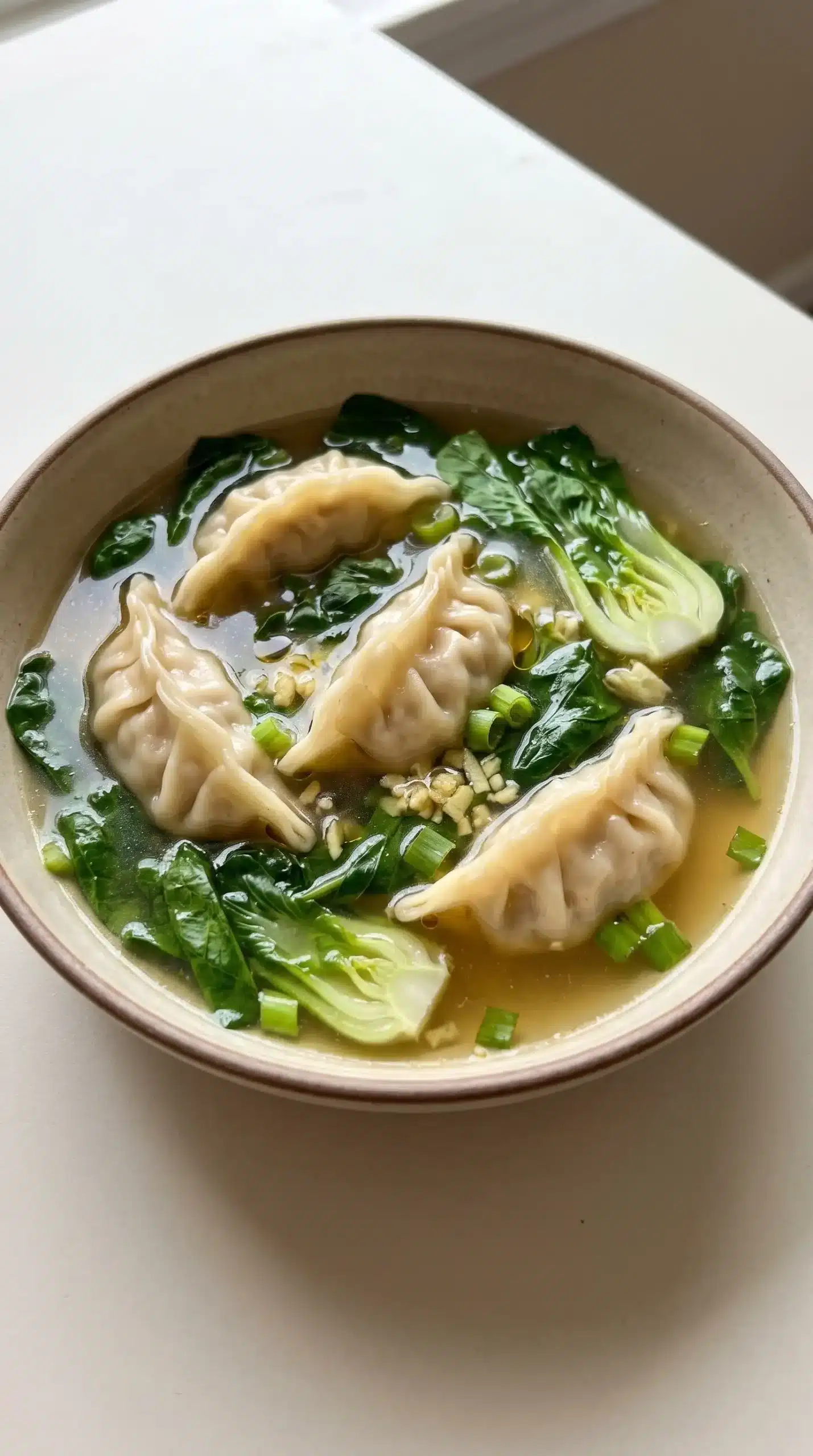
Warm broth gives potsticker soup its soothing foundation, while the dumplings make the bowl substantial enough to serve as a main dish. Fresh ginger and garlic bring a fragrant savory base, and the greens keep the finished soup from feeling overly heavy.
Another advantage is how the components come together in one pot. The dumplings cook directly in the broth, so their flavor becomes part of the soup as they become tender. A small drizzle of sesame oil at the end adds another layer of flavor without complicating the preparation.
Because the recipe uses familiar ingredients and a short cooking process, it works especially well when you want something warm without building an elaborate meal. Green onions scattered over each serving provide a fresh finishing touch and a little contrast to the hot broth.
Ginger and Garlic Set the Broth’s Direction
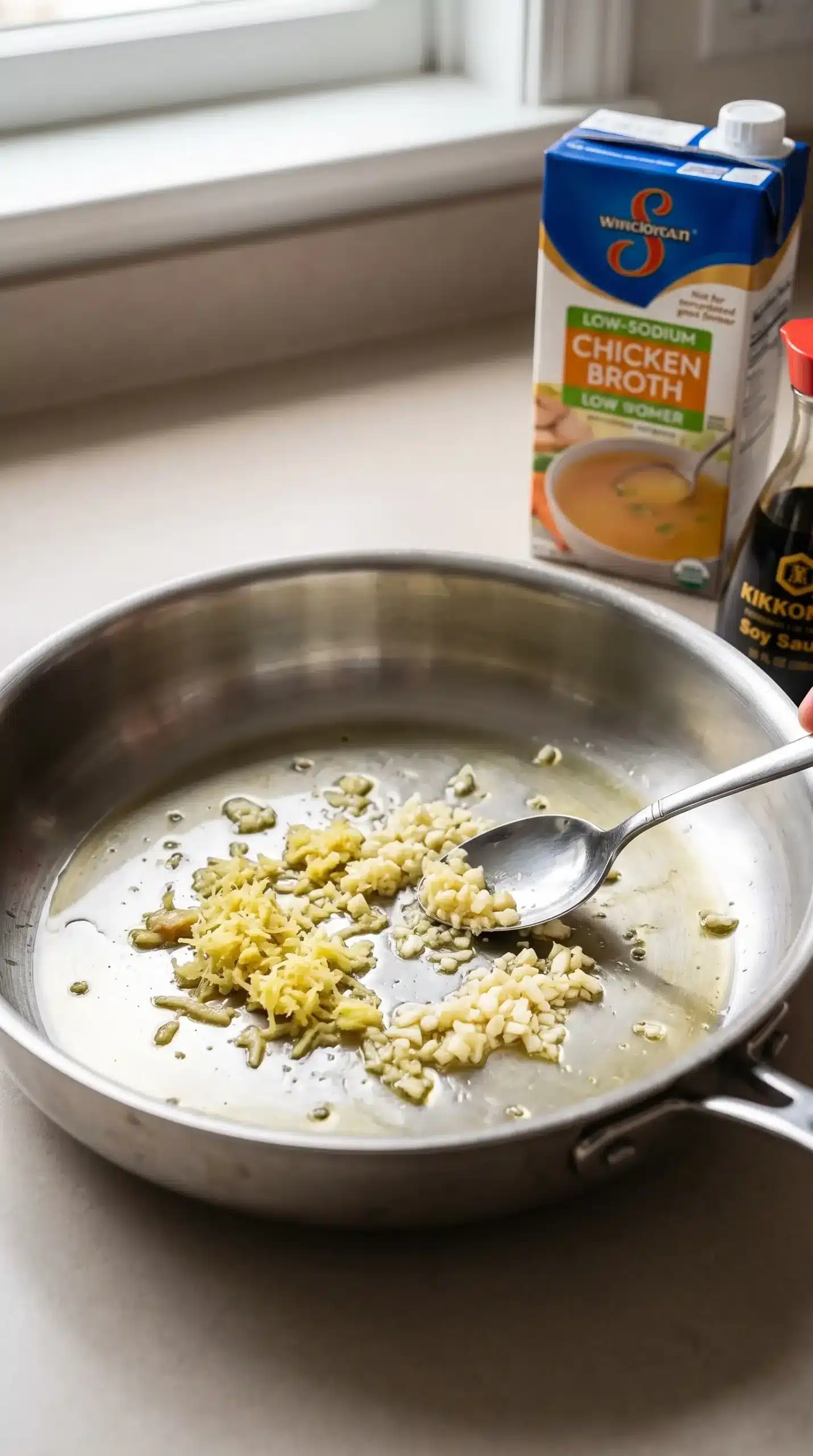
Freshly grated ginger and minced garlic deserve attention at the beginning because their flavor forms the aromatic base of the pot. Briefly sautéing both until fragrant helps release their character before the chicken broth is added.
Low-sodium chicken broth keeps the liquid flavorful while leaving room for soy sauce to provide additional savory depth. Since both broth and soy sauce contribute salt, using the lower-sodium broth specified for the soup gives you better control over the finished flavor.
| Component | Best handling | What to watch for |
|---|---|---|
| Fresh ginger | Grate before cooking | Cook briefly until fragrant |
| Garlic | Mince before adding | Avoid prolonged sautéing |
| Chicken broth | Bring to a gentle boil | Keep the soup from becoming aggressively salty |
| Soy sauce | Stir in with the greens | Account for its savory saltiness |
| Sesame oil | Drizzle before serving | Use it as a finishing flavor |
Choose Dumplings That Hold Their Shape
Dumplings are the heart of potsticker soup, and pork or chicken varieties fit naturally with the chicken broth. Vegetable dumplings are also suitable when you want a meatless bowl without changing the basic cooking approach.
Frozen dumplings are particularly convenient for this dish. They can go into the broth without thawing first, although they need a little additional cooking time to become tender. Keeping the dumplings intact matters because the soup depends on their shape and texture as well as their filling.
For a different meatless version, vegetarian dumplings can be paired with vegetable broth. Tofu can also be added to create another meat-free variation, provided the overall soup remains centered on the dumplings, broth, and greens.
When changing the flavor direction of a dumpling soup, keep the dumplings as the centerpiece and adjust the broth seasoning around them; a curry-based version such as curry dumpling soup shows how the broth can shift while the dumplings remain central.
Keep the Cooking Control Gentle
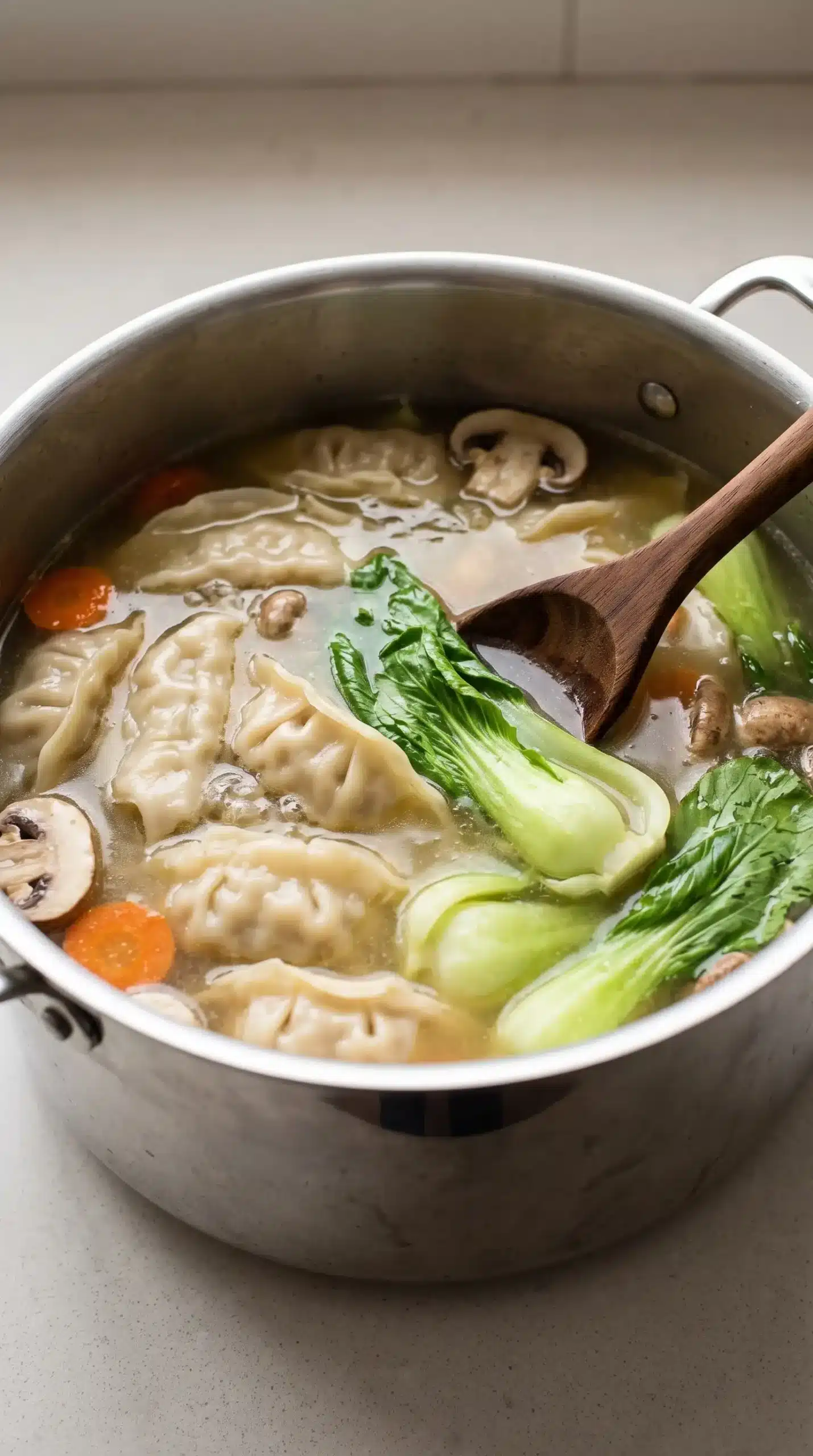
Once the broth reaches a gentle boil, add the dumplings and cook until tender. A controlled simmer gives the dumplings time to cook through without requiring an unnecessarily aggressive boil.
Spinach or bok choy needs only enough cooking to wilt and soften. Stirring the greens into the hot soup after the dumplings have had time to cook keeps the greens from spending more time in the broth than necessary.
Sesame oil belongs near the end of the process. Adding it just before serving preserves its distinct flavor, while chopped green onions provide the fresh garnish that completes each bowl.
Spinach and Bok Choy Change the Finished Bowl
Spinach creates a softer, delicate green element that wilts readily in the hot broth. Bok choy gives the soup a somewhat more substantial vegetable presence, making either choice useful depending on the texture you prefer.
Two cups of fresh spinach or bok choy provide a generous vegetable component without taking attention away from the dumplings. Additional vegetables such as carrots or mushrooms can also be included when you want more variety in the bowl.
Build Flavor Without Overcomplicating the Soup
A successful potsticker soup does not require a long list of seasonings. Ginger and garlic establish the aromatic foundation, chicken broth supplies the main liquid, soy sauce deepens the savory character, and sesame oil provides a fragrant finish.
Chopped green onions add a fresh accent at the table. Extra green onions can be scattered over individual bowls if you enjoy a stronger fresh onion flavor.
For heat, a little chili sauce or red pepper flakes can be added. Start with a modest amount so the added spice complements the ginger, garlic, and sesame flavors instead of overwhelming them.
Common Potsticker Soup Mistakes to Avoid
- Overcooking the dumplings: Cook them only until tender. Keeping them in the hot broth longer than needed can make their texture too soft, especially if the soup will be reheated later.
- Adding the greens too early: Spinach and bok choy only need a short period in the soup to wilt. Adding them toward the end keeps their texture more appealing.
- Burning the aromatics: Garlic and ginger should become fragrant during the brief sauté. Excessive cooking can work against the clean flavor intended for the broth.
- Using too much seasoning: Soy sauce already contributes strong savory flavor, so adding large amounts without considering the broth can push the soup toward excessive saltiness.
Make Ahead Plans Work Best Around the Dumplings
Potsticker soup can be prepared ahead, but the dumplings are the component most worth protecting. They continue to soften as they sit in hot liquid, so preparing the soup base separately and adding dumplings close to serving gives you better control over their texture.
For planned leftovers, separating the dumplings from the soup is also useful. The stored broth and vegetables can be kept independently, with the dumplings added when you are ready to warm and serve the meal.
That approach is especially helpful when the soup will be eaten across more than one meal. It reduces the amount of time the dumplings spend absorbing liquid while waiting in storage.
Store Leftovers With Texture in Mind
Let leftover potsticker soup cool before transferring it to an airtight container and refrigerating it. Soups and stews can be refrigerated for 3 to 4 days. For the best dumpling texture during reheating, separate the dumplings from the soup when possible.
Freeze Potsticker Soup for Later
Freezing is another option when you want to save the soup for a later meal. It can be frozen for up to a month, with the dumplings separated when possible to help preserve their texture.
Once thawed and reheated, the dumplings may not have exactly the same texture as when freshly cooked. Planning storage around the dumplings is therefore the most useful consideration when deciding whether to refrigerate or freeze a batch.
Serve the Bowl While It Is Hot
Hot bowls of potsticker soup work well for lunch or dinner because the dumplings provide a filling centerpiece while the broth and greens round out the meal. Green onions can be added generously at serving for a fresh finish.
Rice makes a simple side when you want additional substance, while crusty bread offers another easy accompaniment. Either option can be served separately so the soup remains the focus of the meal.
Adjust Potsticker Soup for Different Preferences
Vegetarian dumplings provide the simplest variation when meat is not desired. Vegetable broth can replace chicken broth in that version, and tofu can also be incorporated for another meatless approach.
Extra carrots or mushrooms can broaden the vegetable selection. These additions should complement the existing greens rather than compete with the dumplings as the main component.
Spice is easy to adjust at the table or during cooking. Chili sauce or red pepper flakes can give the broth more heat, while keeping the original ginger, garlic, soy sauce, and sesame oil combination preserves the basic flavor profile.
A Balanced Bowl Comes From the Combination
Lean protein from the dumplings and vegetables such as spinach or bok choy make potsticker soup a satisfying combination. The broth remains relatively light, while low-sodium chicken broth helps keep the soup from relying on excessive salt for flavor.
Fresh ginger and garlic contribute strong flavor without requiring a complicated seasoning blend. Their presence, together with the greens and dumplings, creates a bowl that can function as a complete-feeling meal for lunch or dinner.
Potsticker Soup Rewards Careful Timing
The most important judgment in potsticker soup is knowing when each component has done enough cooking. Ginger and garlic need only a brief sauté to become fragrant, dumplings should cook until tender, and spinach or bok choy should be added late enough to wilt without unnecessary cooking.
That timing keeps the broth aromatic, the dumplings pleasantly tender, and the greens fresh enough to contribute texture. Finishing with sesame oil and green onions then gives the hot soup its intended final layer of flavor.
Potsticker Soup Questions About Storage and Cooking
Can frozen dumplings go directly into the soup?
Yes. Frozen dumplings can be added directly to the broth, but they need a couple of extra minutes of cooking compared with dumplings that are not frozen. Cook them until they are tender before moving on to the greens.
Which greens work best in potsticker soup?
Fresh spinach and bok choy are both suitable. Spinach wilts readily and creates a softer texture, while bok choy provides a more substantial vegetable bite. Use either one according to the texture you want in the finished bowl.
How can I keep dumplings from becoming too soft?
Limit the time they spend sitting in the broth. For make-ahead meals or leftovers, separating the dumplings from the soup before storage gives you more control over their texture when the components are served again.
Can potsticker soup be made vegetarian?
Vegetarian dumplings can replace pork or chicken dumplings, and vegetable broth can replace chicken broth. Tofu is another meatless addition that can work with the vegetarian version.
What can I add for more vegetables?
Carrots and mushrooms are suitable additions alongside the spinach or bok choy. They provide more variety while keeping the soup centered on its dumplings and flavorful broth.
How can I make the broth spicy?
Chili sauce or red pepper flakes can be added for a spicier bowl. Adjust the amount to suit your preference while keeping the ginger, garlic, soy sauce, and sesame oil flavors noticeable.
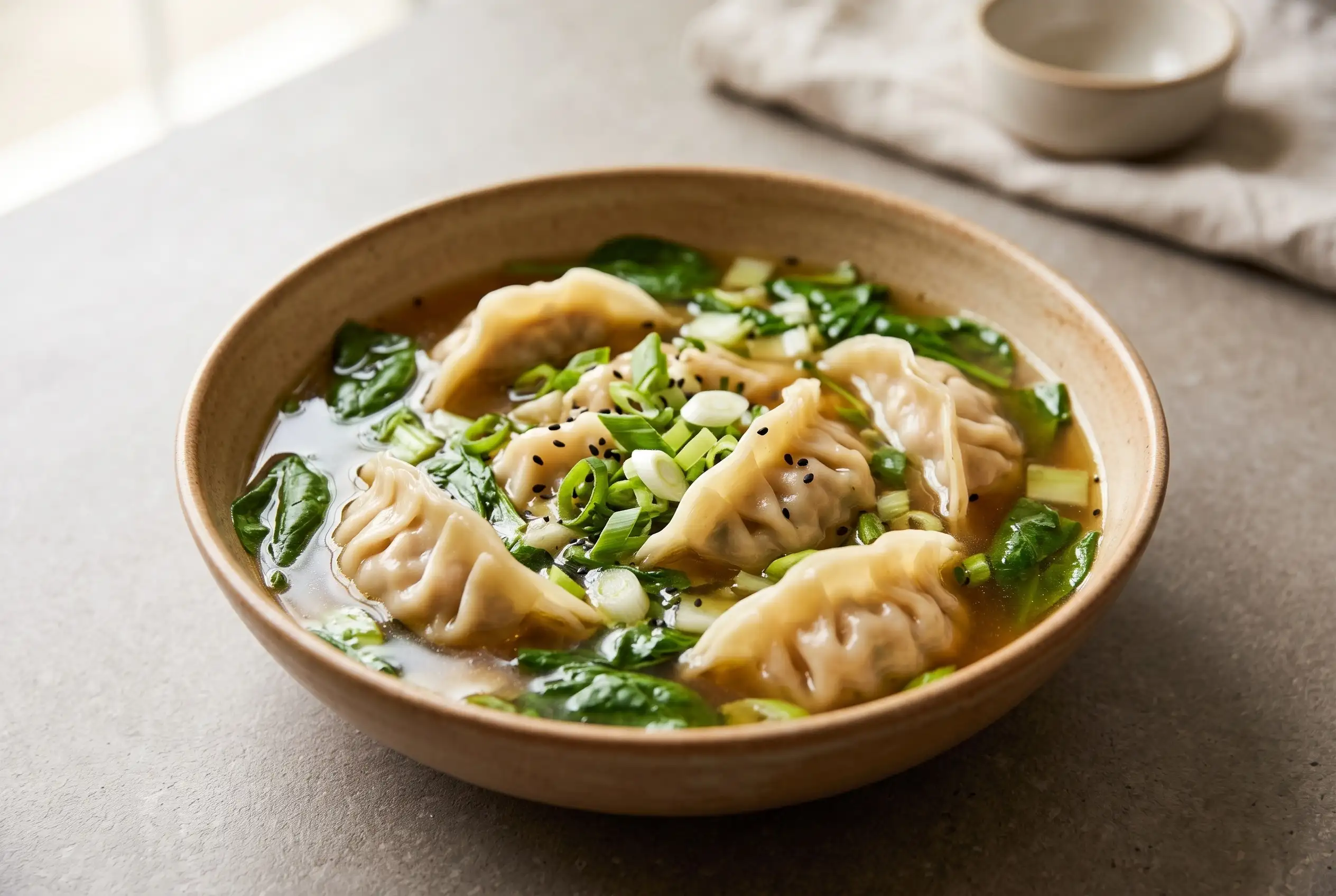
Potsticker Soup Recipe with Fresh Ginger and Garlic
Ingredients
Method
- Warm a large pot over medium heat. Add a splash of oil, then cook the minced garlic and grated ginger for about 1 minute, until fragrant.
- Add the chicken broth and bring it to a gentle boil.
- Place the pork or chicken dumplings into the simmering broth and cook until tender.
- Add the fresh spinach or bok choy and soy sauce. Cook for 2–3 minutes, until the greens have wilted.
- Stir in the sesame oil immediately before serving.
- Divide the potsticker soup among bowls and finish with the chopped green onions.