Ground Beef Philly Cheesesteaks with Green Peppers
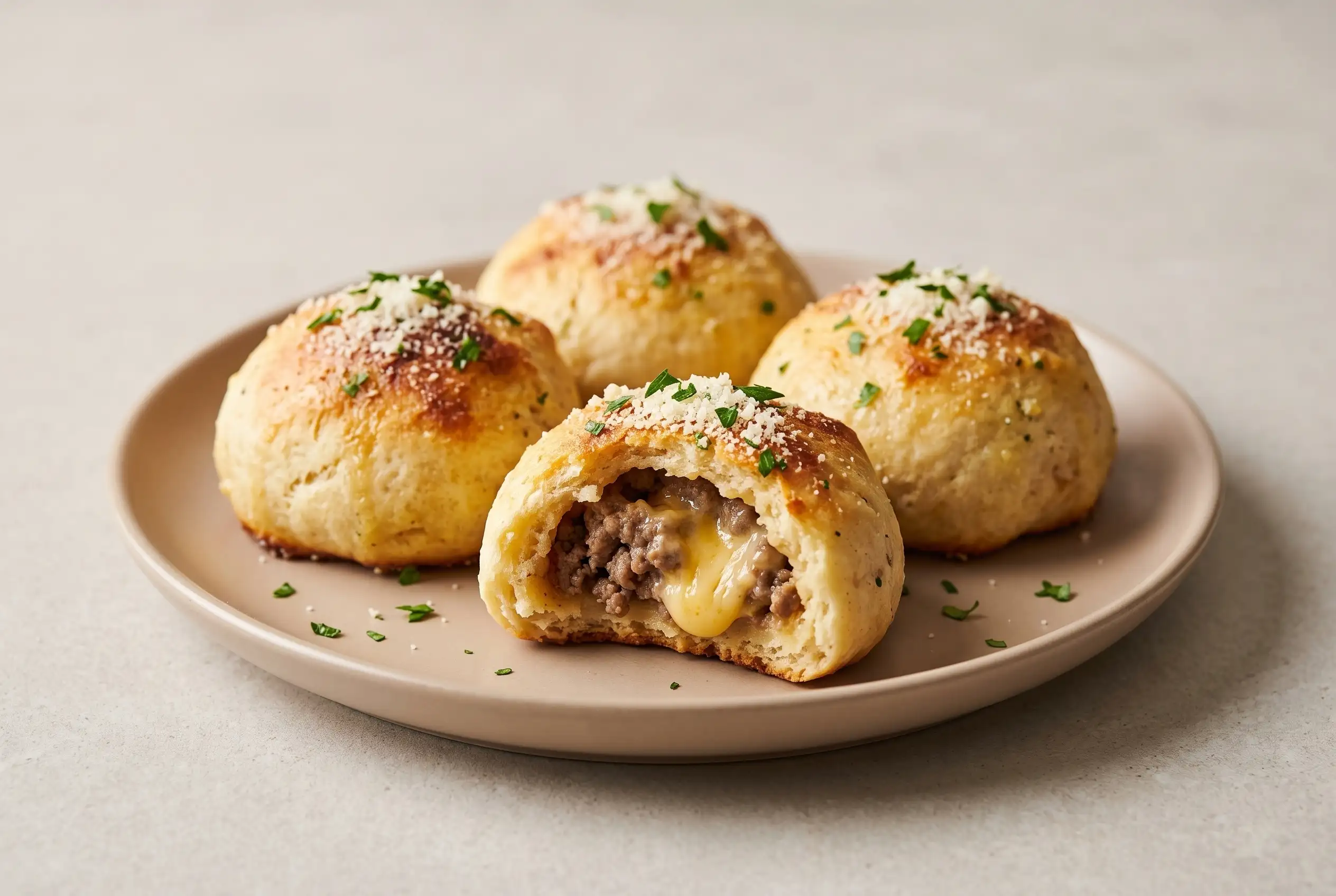
Ground Beef Philly Cheesesteaks bring the familiar comfort of a warm, cheesy sandwich together with savory ground beef, tender vegetables, and a flavorful Worcestershire-garlic seasoning. The combination is hearty enough for lunch or dinner while remaining straightforward to prepare, making it especially useful when a satisfying meal needs to come together without a complicated process.
Instead of relying on thinly sliced steak, the filling uses ground beef that browns directly in the skillet alongside onions and green bell peppers. Provolone melts over the finished mixture before everything is tucked into hoagie rolls. Optional mushrooms add another savory element, while simple toppings can change the finished sandwich to suit different preferences.
Why Ground Beef Philly Cheesesteaks Work So Well
The skillet filling has several textures working together. Ground beef provides the substantial base, while sautéed onions and bell peppers soften without disappearing into the mixture. Mushrooms can be included when a deeper vegetable component is wanted.
Seasoning stays focused and uncomplicated. Garlic powder and Worcestershire sauce give the beef mixture a savory character, with salt and black pepper allowing the flavors to remain balanced. Because the ingredients cook together in one skillet, the vegetables and beef become part of the same cohesive filling.
Provolone supplies the creamy, melted finish that makes the sandwich feel complete. Once the cheese softens over the hot beef mixture, it can be spooned directly into the rolls for a warm, substantial meal.
Build the Filling Around Tender Vegetables and Melty Cheese
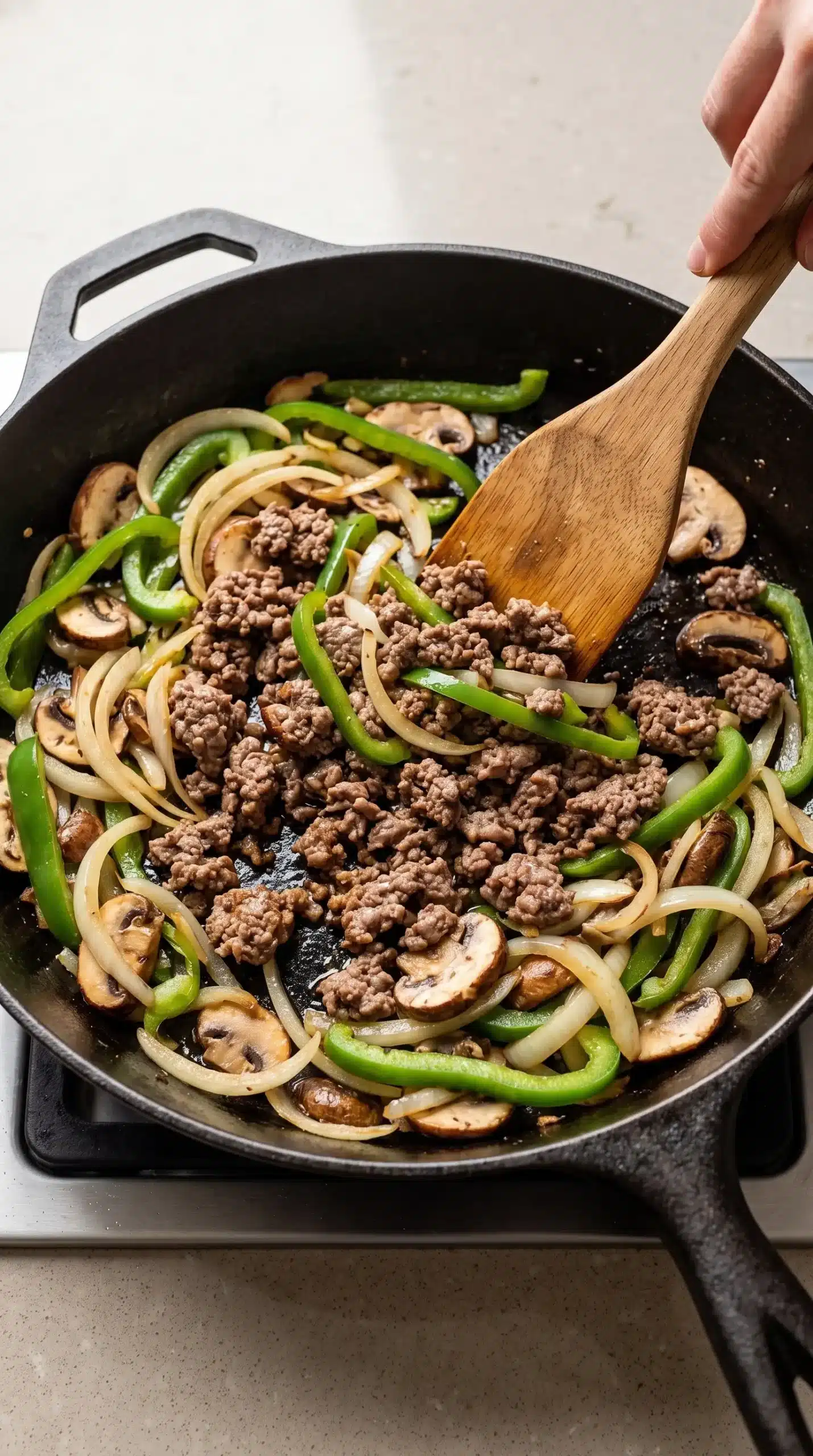
The vegetables deserve attention because their texture affects every bite. Thinly sliced onion and green bell pepper are sautéed until tender before the beef is cooked. Keeping the slices relatively thin helps them soften during their short skillet time.
Mushrooms are optional, so they can be left out when a simpler filling is preferred. When included, they receive a few additional minutes of cooking after the onions and peppers have started to become tender.
Provolone is the listed cheese, although another preferred cheese can be used. A mix of cheeses is also suggested when a richer flavor is desired. Whatever cheese is selected, adding it after the beef mixture has been seasoned gives it a chance to melt over the filling without becoming lost during the earlier cooking stages.
Skillet Control Keeps the Cheesesteak Filling Balanced
Medium-high heat is useful at the beginning because the skillet needs enough heat to sauté the vegetables and brown the beef efficiently. A small drizzle of olive oil provides the cooking fat needed for the vegetables, and a ground beef and potato skillet follows the same practical one-pan principle for building a hearty meal.
Once the vegetables are tender, pushing them to the side creates room for the ground beef. Breaking the meat into smaller pieces helps encourage browning and prevents large pieces from remaining together in the finished sandwich.
After the beef is no longer pink, the seasoning goes in and the mixture is stirred together for about two minutes. Lowering the heat before adding cheese is an important control point: gentle heat allows the cheese to melt over the filling while reducing the chance of excessive cooking underneath.
| Cooking stage | What to look for | Useful adjustment |
|---|---|---|
| Vegetables | Onions and peppers are tender | Continue sautéing briefly if they remain firm |
| Ground beef | No longer pink and broken apart | Keep breaking up larger pieces while cooking |
| Seasoning | Garlic powder and Worcestershire sauce are evenly mixed | Stir for about two minutes |
| Cheese | Provolone is melted over the filling | Reduce heat to low and cover the skillet |
Hoagie Rolls Give the Filling Its Proper Home
Hoagie rolls are more than a serving vessel here because their shape keeps the seasoned beef and vegetables together. Slice each roll lengthwise without cutting all the way through, leaving it connected along one side.
Toasting is optional, but it can provide additional texture. If the rolls are toasted, the warm filling can be added immediately afterward so the sandwich retains its hot, freshly assembled character.
Keep Ground Beef Philly Cheesesteaks From Becoming Messy
A few practical choices make assembly easier. The beef should be properly broken apart before it reaches the rolls, and the vegetables should be tender enough to sit comfortably among the smaller pieces of meat.
- Keep the rolls intact: Slice lengthwise without cutting completely through them so the filling stays contained.
- Use melted cheese as a finish: Let the provolone soften directly over the hot filling before transferring it to the rolls.
- Serve while hot: Warm filling and freshly toasted rolls give the sandwich its intended contrast of textures.
Seasoning Choices Shape the Savory Filling
Garlic powder and Worcestershire sauce form the central seasoning combination. Garlic powder distributes easily throughout ground beef and vegetables, while Worcestershire sauce adds a pronounced savory note without requiring a long list of seasonings.
Salt and black pepper should be added according to taste. Since the cheese and Worcestershire sauce also contribute flavor, seasoning the combined filling after the beef has cooked allows the finished mixture to be adjusted more deliberately.
Vegetable Add-Ins Can Change the Texture
Green bell pepper and onion are the core vegetables, but the supplied options make it easy to adjust the filling. Mushrooms provide another savory component and can be cooked after the peppers and onions have begun to soften.
For more variety, sautéed zucchini or spinach can also be incorporated. These additions work best when cooked as part of the vegetable portion so excess firmness does not distract from the tender beef filling.
Ground Beef Philly Cheesesteaks Need a Gentle Cheese Finish
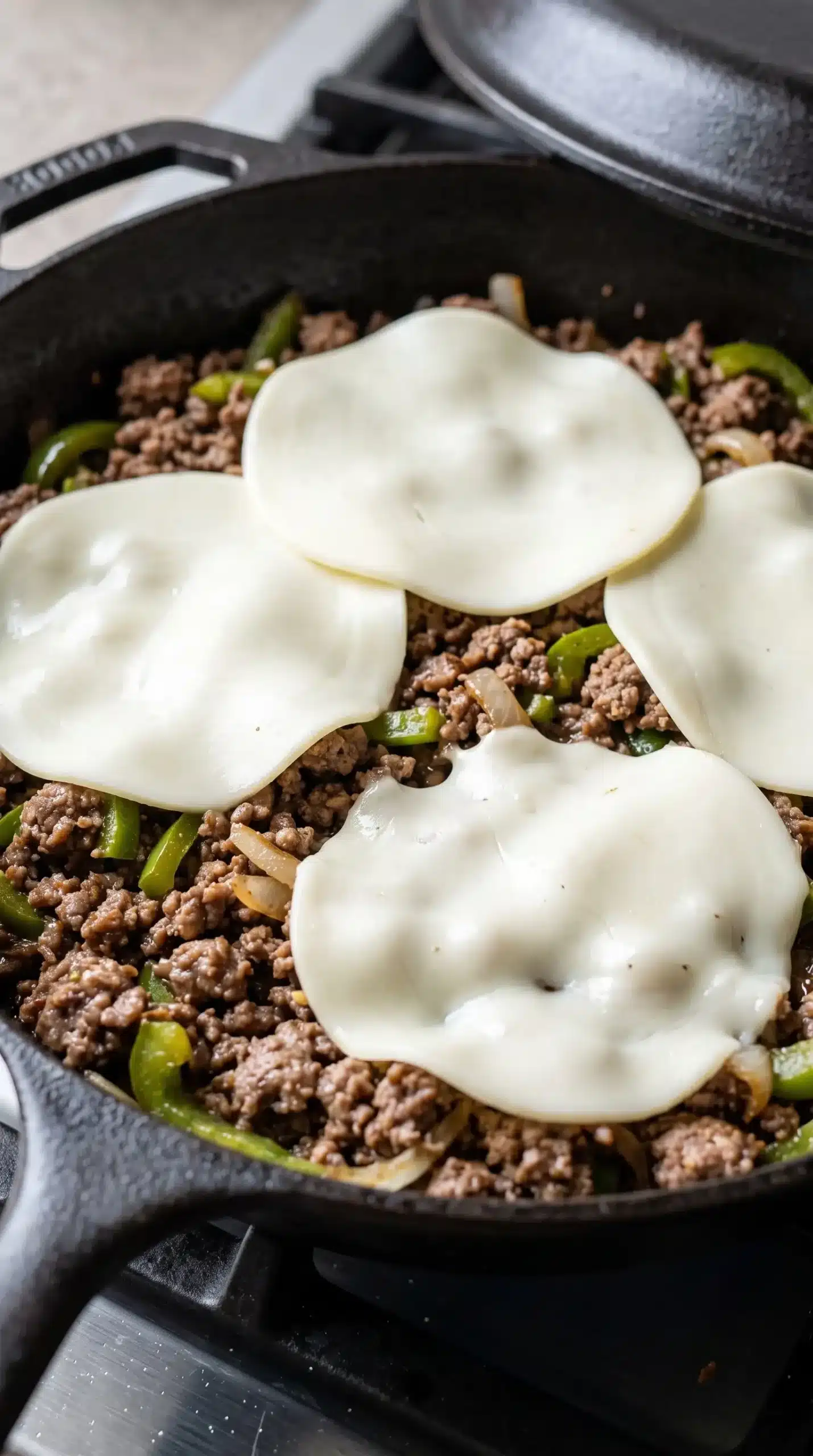
The cheese-melting stage is short but important. After seasoning, the heat should be reduced to low before the cheese is placed over the beef mixture. Covering the skillet traps heat around the cheese and helps it soften evenly.
About two to three minutes is enough for the cheese to melt according to the supplied method. Keeping the pan covered during this stage means the filling remains together while the provolone becomes soft enough to spoon into the rolls.
Avoid These Ground Beef Philly Cheesesteak Mistakes
Overlooking the order of the skillet stages can change the texture of the finished filling. Vegetables need time to become tender, while the beef needs enough room in the pan to cook properly after the vegetables are moved aside.
Leaving the heat high during the cheese stage is another avoidable issue. Lower heat gives the provolone time to melt over the filling instead of continuing to cook the beef aggressively beneath it.
Roll preparation can also affect the finished sandwich. Cutting all the way through the hoagie makes it harder to contain the filling, while skipping the optional toast simply produces a softer roll rather than the added texture available from toasting.
| Potential problem | Likely cause | Better approach |
|---|---|---|
| Firm vegetables | They were not sautéed until tender | Continue the vegetable stage until the onions and peppers soften |
| Uneven beef pieces | The ground beef was not broken apart enough | Break it apart while it cooks in the skillet |
| Cheese not fully melted | Insufficient covered melting time | Use low heat, cover the skillet, and allow about two to three minutes |
| Filling difficult to contain | Roll was cut completely through | Slice lengthwise without separating the roll |
Simple Toppings Let Each Sandwich Change Character
The finished sandwiches can be customized without changing the skillet filling. Hot sauce brings additional heat, mayonnaise creates a creamier bite, and pickles contribute a contrasting tangy element.
Sautéed mushrooms, avocado, and spicy mustard are additional topping choices. Since these are added after the filling is prepared, different sandwiches can receive different toppings without requiring separate batches of beef.
Pair Ground Beef Philly Cheesesteaks With Simple Sides
Chips are an easy pairing when the sandwich is the main attraction and a crisp side is preferred. Fries make the meal more substantial, while a simple salad provides a lighter contrast to the warm, cheesy filling.
The sandwich is best served hot so the melted cheese and skillet-warmed filling remain at their most appealing texture. Toasting the rolls is optional and can be used when a little more contrast is wanted between the bread and the soft filling.
Store the Filling Carefully for Another Meal
Leftover assembled sandwiches can be placed in an airtight container and refrigerated for up to three days. When reheating, use a skillet or microwave and warm the sandwich until heated through.
For longer storage, the beef and vegetable mixture can be frozen in a freezer-safe container. Thaw it in the refrigerator before reheating, then place the warmed filling into the rolls.
Ground Beef Philly Cheesesteaks Adapt Easily to Other Fillings
Ground chicken or ground turkey can replace the beef for a different version while retaining the vegetable, cheese, and roll format. The same basic seasoning direction can be used with the alternative ground meat.
A meatless variation can replace the ground beef with lentils or black beans and include additional vegetables. The flexibility is useful when serving different dietary preferences while keeping the overall sandwich concept recognizable.
Warm Filling and Melted Cheese Define the Best Bite
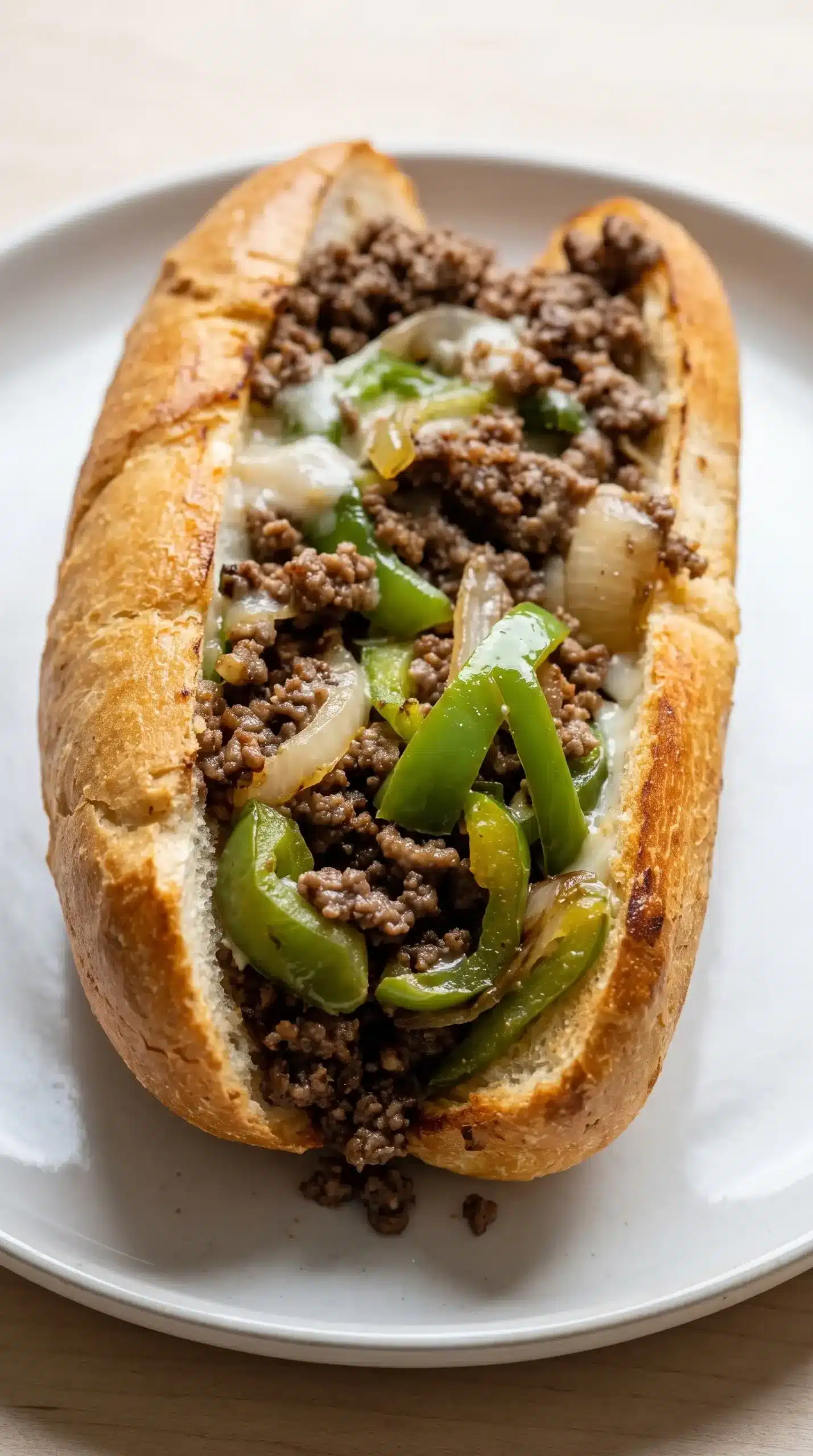
Ground beef that is fully cooked, tender vegetables, and melted cheese need to reach the rolls at the right stage. Keeping the skillet organized makes that easier: soften the vegetables, cook the beef thoroughly, season the combined mixture, then use low heat to melt the cheese.
Once assembled, Ground Beef Philly Cheesesteaks benefit from being served hot, with optional toasted rolls and toppings chosen according to taste. That balance of a savory skillet filling, soft provolone, and a warm hoagie roll is what gives the sandwich its satisfying character.
Questions About Ground Beef Philly Cheesesteaks and Storage
Can the beef and vegetable filling be prepared ahead?
Yes. Prepare the beef and vegetable mixture in advance, refrigerate it, and warm it before placing it into the hoagie rolls. Keeping the filling separate until serving can also make assembly more convenient.
Can the beef mixture be frozen?
The beef and vegetable mixture can be frozen in a freezer-safe container. Thaw it in the refrigerator before reheating, then assemble the sandwiches once the filling has been warmed through.
Which cheese can replace provolone?
Provolone is the listed choice, but the recipe allows any preferred cheese. A combination of cheeses can also be used when a richer flavor is wanted, provided the selected cheeses melt suitably over the hot filling.
How can the rolls have more texture?
Toast the hoagie rolls before filling them. Toasting is optional, but it adds a firmer, more textured surface that contrasts with the tender beef and vegetables.
What toppings work well on these sandwiches?
Hot sauce, mayonnaise, pickles, sautéed mushrooms, avocado, and spicy mustard are all suggested options. They can be added individually, allowing each sandwich to have a different finishing flavor.
Can the beef be replaced with another protein?
Ground chicken or ground turkey can be used in place of ground beef. A vegetarian version can use lentils or black beans with additional vegetables for a meatless filling.
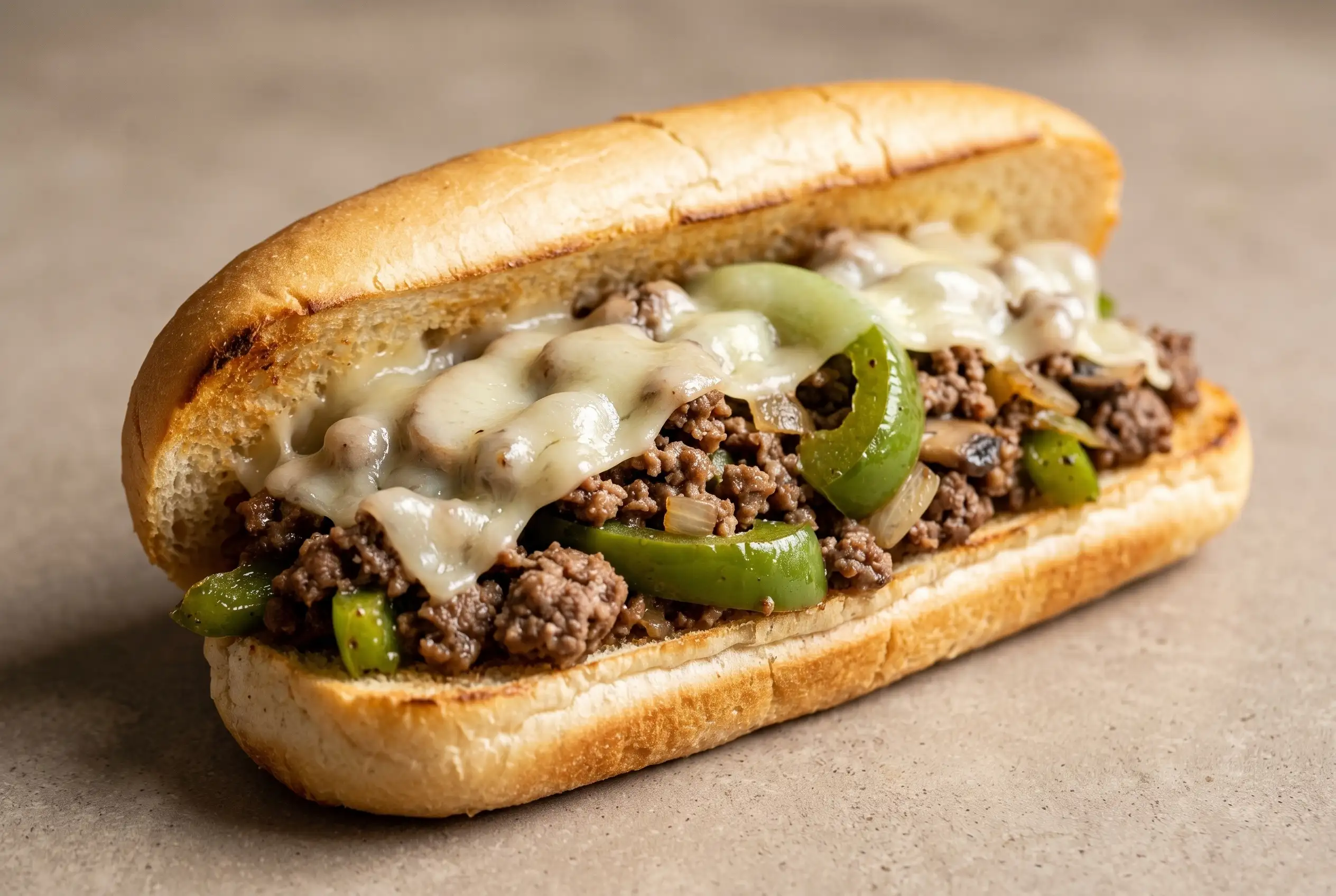
Ground Beef Philly Cheesesteaks with Green Peppers
Ingredients
Method
- Heat a drizzle of olive oil in a large skillet over medium-high heat.
- Add the onion and green bell pepper, then sauté for 3–5 minutes until tender. If using mushrooms, add them and continue cooking for 3 minutes.
- Move the vegetables to one side of the skillet. Add the ground beef to the open area and cook for 5–7 minutes, breaking it apart as it browns, until no longer pink.
- Add the garlic powder, Worcestershire sauce, salt, and black pepper. Stir everything together and cook for about 2 minutes.
- Turn the heat to low. Divide the beef mixture into four portions and top each portion with one provolone slice. Cover the skillet and cook for 2–3 minutes, until the cheese is melted.
- Cut each hoagie roll lengthwise, taking care not to slice completely through.
- Fill the four rolls with the hot beef and vegetable mixture and melted cheese.
- Toast the filled rolls briefly if desired, then serve hot.