Vegan Pumpkin Wild Rice Soup with Coconut Milk
Vegan Pumpkin Wild Rice Soup brings together pumpkin puree, wild rice, coconut milk, and everyday vegetables in a warm bowl made for chilly days. The combination creates a comforting soup with a naturally hearty texture, gentle fall flavors, and enough substance to serve as a satisfying meal.
What makes this vegan pumpkin soup especially useful for cool-weather cooking is its straightforward preparation. Onion, garlic, carrots, and celery are softened first, then cooked with wild rice, vegetable broth, pumpkin, thyme, and sage. Coconut milk is stirred in near the end to give the finished soup a creamy character without using dairy cream.
Why Pumpkin and Wild Rice Work So Well Together
Pumpkin puree gives the broth a smooth, rich base, while wild rice brings a distinct grain texture that keeps each spoonful substantial. Together, they create a pumpkin wild rice soup that feels hearty without requiring a complicated ingredient list.
Vegetable broth carries the pumpkin and herb flavors through the pot, while thyme and sage provide the seasoning direction. Carrots and celery contribute additional vegetables and help build the savory foundation alongside the onion and garlic.
Coconut milk changes the texture toward a creamier finish after the wild rice has cooked. Adding it after the rice is tender also keeps the main cooking stage focused on developing the rice and vegetables before the creamy element is introduced.
The Ingredients That Matter Most for the Soup’s Texture
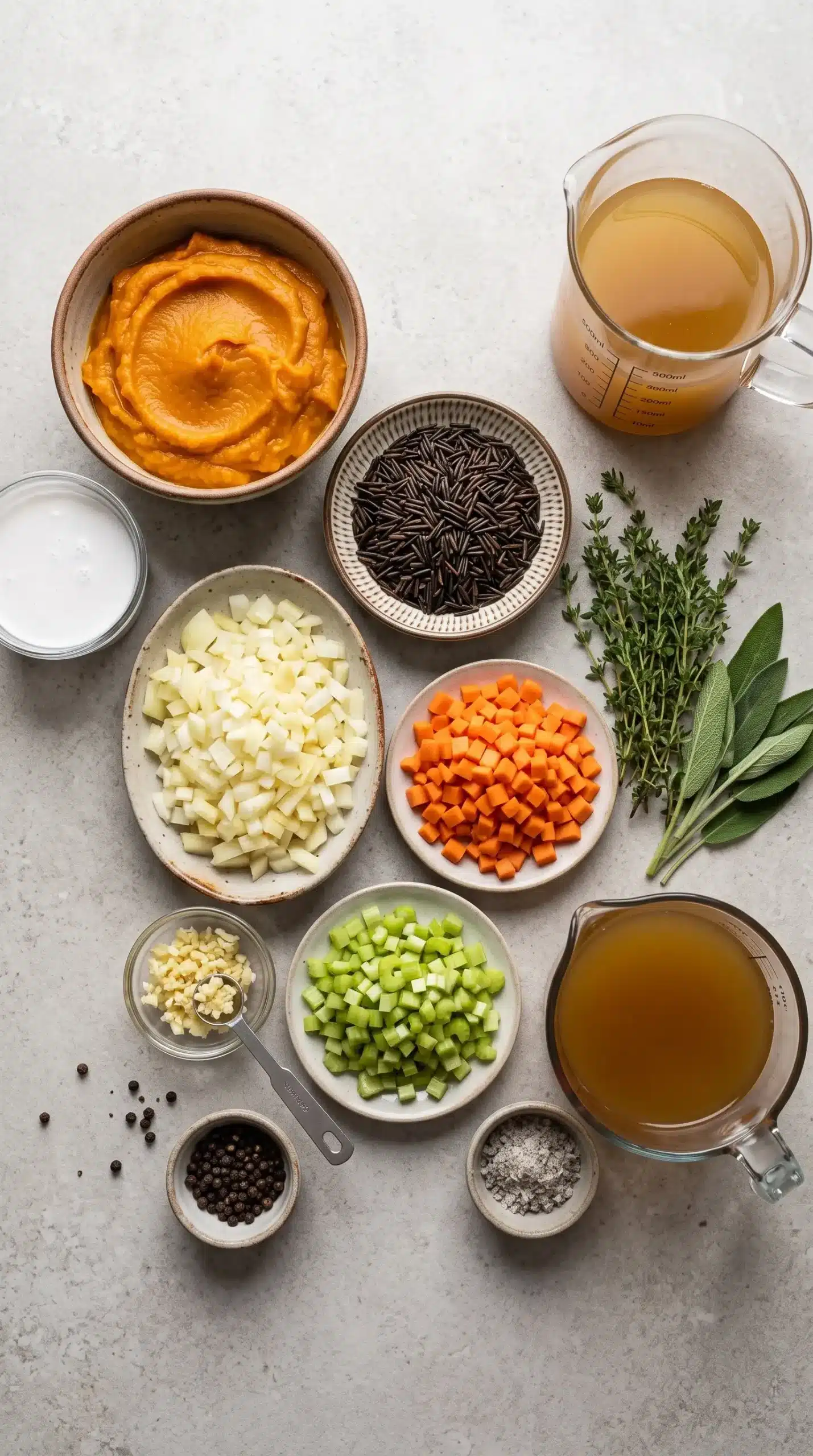
Wild rice is the ingredient that most strongly affects the body of the soup. It needs to be rinsed before cooking and simmered until tender. Pumpkin puree supplies thickness and a smooth vegetable base, while coconut milk adds another layer of creaminess near the end.
For a little more context on this distinctive ingredient, wild rice is a seed of wild water grass rather than true rice, which helps explain why its texture and flavor differ from familiar white or brown rice.
Fresh vegetables have a practical role beyond flavor. Chopped onion, minced garlic, diced carrots, and diced celery are softened together at the beginning, creating a cooked vegetable base before the liquid and rice enter the pot.
- Pumpkin puree: Use the specified canned pumpkin puree to provide the soup’s pumpkin base.
- Wild rice: Rinse it under cold water before it goes into the pot.
- Coconut milk: Stir it in after the rice has become tender for the creamy finish.
- Thyme and sage: Keep the seasoning aligned with the warm, savory character of the soup.
Rinsing Wild Rice Sets Up a Better Cook
Cold water rinsing is a small step with a useful purpose. Washing the wild rice before cooking helps remove excess starch, leaving the grains ready for their simmering stage.
A Gentle Simmer Keeps the Wild Rice on Track
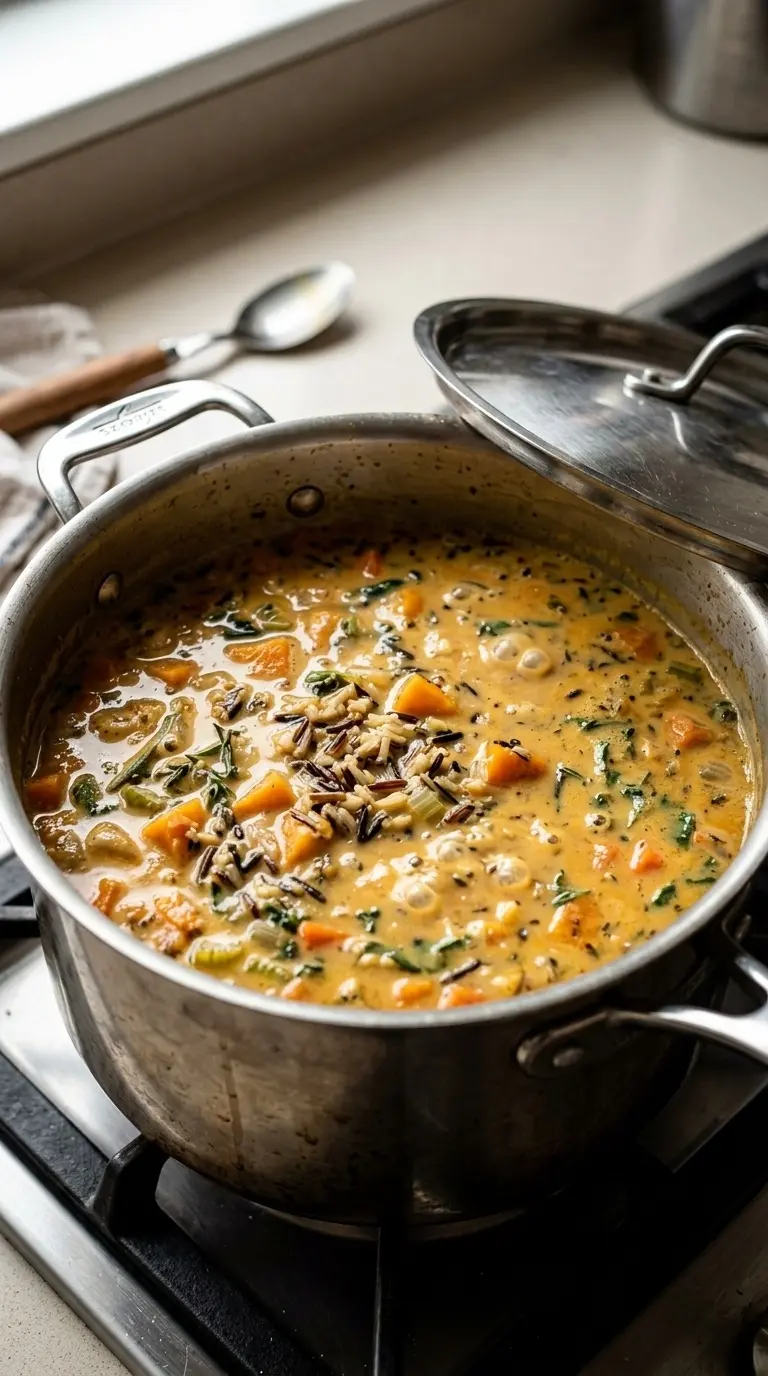
Once the wild rice, vegetable broth, pumpkin puree, thyme, and sage have been combined, the pot needs to move from a boil to a simmer. Covering the pot during the cooking stage allows the rice to cook until tender without turning the process into an uncovered reduction.
Watch the rice as the cooking time progresses instead of relying only on the clock. Tenderness is the key cue supplied by the method, so the soup should remain at a controlled simmer until the grains reach that point.
After tenderness is reached, coconut milk joins the soup and the seasoning can be adjusted with salt and pepper. Keeping that addition toward the end preserves the intended sequence and prevents the creamy component from becoming part of the long rice-cooking stage.
Vegetable Preparation Gives the Broth Its Savory Base
Five to seven minutes of sautéing is enough to soften the onion, garlic, carrots, and celery before the liquid ingredients are added. Cutting the vegetables into manageable pieces helps them cook together during this initial stage.
Medium heat provides the setting for this first phase. The useful visual cue is softness: the vegetables should no longer be raw and firm when the wild rice and broth are introduced.
From there, pumpkin puree and vegetable broth can surround the softened vegetables and rice, allowing the flavors to develop together. The herbs enter at the same time, giving the simmering soup its thyme-and-sage character.
Vegan Pumpkin Wild Rice Soup Mistakes to Avoid
Rushing the rice preparation can affect the finished bowl. Skipping the rinse removes a useful preparation step, while stopping the simmer before the wild rice is tender can leave the soup without the texture intended by the method.
Adding the coconut milk too early also changes the cooking sequence. It belongs after the rice reaches tenderness, when the soup is ready for its creamy finishing element.
| Potential issue | What to watch for | Helpful correction |
|---|---|---|
| Wild rice is still firm | The grains have not reached tenderness | Continue the covered simmer until tender |
| Vegetables remain firm | Onion, carrots, or celery are not softened | Allow the initial sautéing stage to finish before adding the liquid |
| Creamy texture arrives too soon | Coconut milk was added during the main rice-cooking stage | Add coconut milk after the rice is tender |
| Soup lacks balanced seasoning | Salt and pepper have not been adjusted at the finish | Season after stirring in the coconut milk |
How the Herbs Shape the Pumpkin Flavor
Thyme and sage give the soup a savory herbal direction that keeps the pumpkin from standing alone as a sweet-tasting element. Garlic, thyme, and nutmeg can deepen the pumpkin flavor in a pumpkin soup with garlic, thyme and nutmeg, while the herbs in this recipe develop alongside the broth, vegetables, and rice during the main simmer.
Salt and pepper are reserved for adjustment after the coconut milk is stirred in. That timing makes the finishing seasoning easier to judge once all of the major ingredients are present.
A Thicker Bowl Can Come From Partial Blending
Blending part of the soup is one supported way to change its consistency. Because pumpkin already contributes a smooth base, partially blending the cooked soup can make the finished texture thicker while retaining some of the wild rice and vegetable character.
Simple Changes Keep the Soup Flexible
Several variations can be made without changing the basic identity of the dish. Beans can be added when extra protein is desired, while almond milk can replace coconut milk for a different flavor.
Extra vegetables are another option. Spinach or kale can be included for additional vegetables, while red pepper flakes can be used when a spicier flavor is preferred.
Brown rice can also replace wild rice, although the cooking time will change. Since brown rice typically takes longer to cook, its timing needs to be adjusted accordingly instead of following the wild-rice timing unchanged.
Serving Vegan Pumpkin Wild Rice Soup for a Cozy Meal
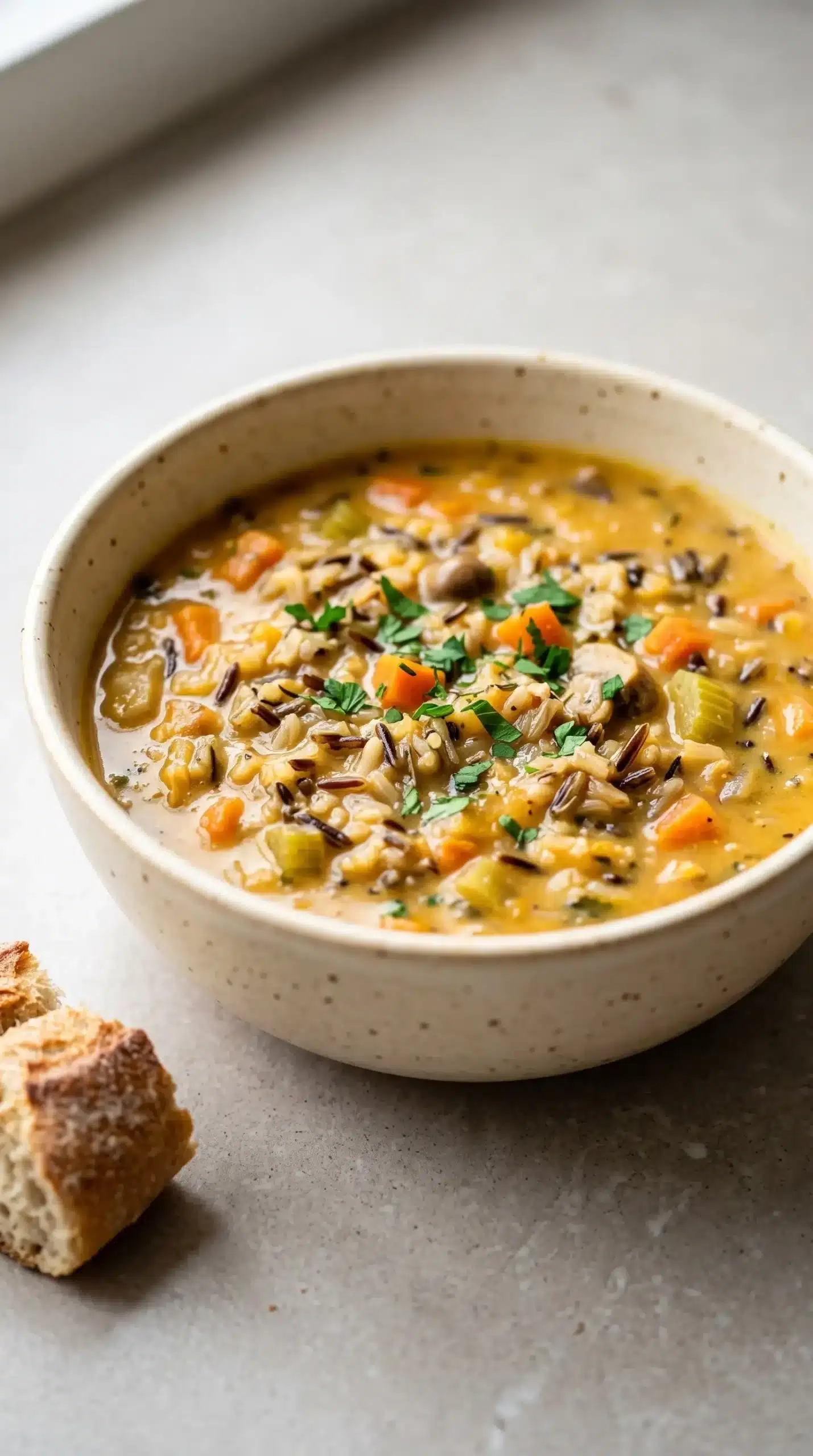
Hot bowls of vegan pumpkin wild rice soup can be finished with fresh parsley for a simple garnish. The parsley adds a fresh visual touch to the warm, creamy soup without changing its core flavor profile.
Crusty bread makes a natural pairing when the soup is being served as a full meal. The combination suits family dinners as well as quiet nights when a warm bowl is the main focus.
Storage Keeps Leftover Soup Ready for Later
An airtight container is the practical choice for refrigerated leftovers. The soup can be kept in the refrigerator for about three to four days, making it suitable for preparing ahead for several meals.
Freezing provides a longer storage option. Use a freezer-safe container, then thaw the soup in the refrigerator overnight when you are ready to serve it again.
Once thawed, reheat the soup on the stove. Gentle reheating gives the stored soup a straightforward path back to serving temperature without changing the basic preparation approach.
Vegan Pumpkin Wild Rice Soup Brings Comfort Without Dairy Cream
Warm pumpkin puree, tender wild rice, softened vegetables, and coconut milk create the defining balance of this soup. The most important cooking judgment is to let the wild rice reach tenderness during its covered simmer before finishing the pot with coconut milk, salt, and pepper.
That sequence preserves the soup’s intended texture while allowing pumpkin, thyme, sage, and vegetables to develop together. A garnish of parsley and a piece of crusty bread then turn the finished bowl into a simple meal suited to chilly evenings.
Questions About Wild Rice Pumpkin Soup Storage and Cooking
Can brown rice replace wild rice in vegan pumpkin wild rice soup?
Brown rice can be used in place of wild rice, but its cooking time differs. Adjust the cooking process so the brown rice reaches tenderness instead of following the wild-rice timing exactly.
Can the soup be made in a slow cooker?
Yes. The supplied method allows the ingredients to be combined in a slow cooker and cooked on low for 6–8 hours or on high for 3–4 hours.
What can make the pumpkin soup thicker?
Partially blending the soup can create a thicker consistency while leaving some of the wild rice and vegetables intact. The blending does not need to include the entire pot.
Can coconut milk be replaced?
Almond milk can replace coconut milk if a different flavor is preferred. The substitution changes the flavor profile while keeping the soup plant-based.
Is vegan pumpkin soup suitable for freezing?
Yes. Place the soup in a freezer-safe container for longer storage, then thaw it in the refrigerator overnight before reheating it on the stove.
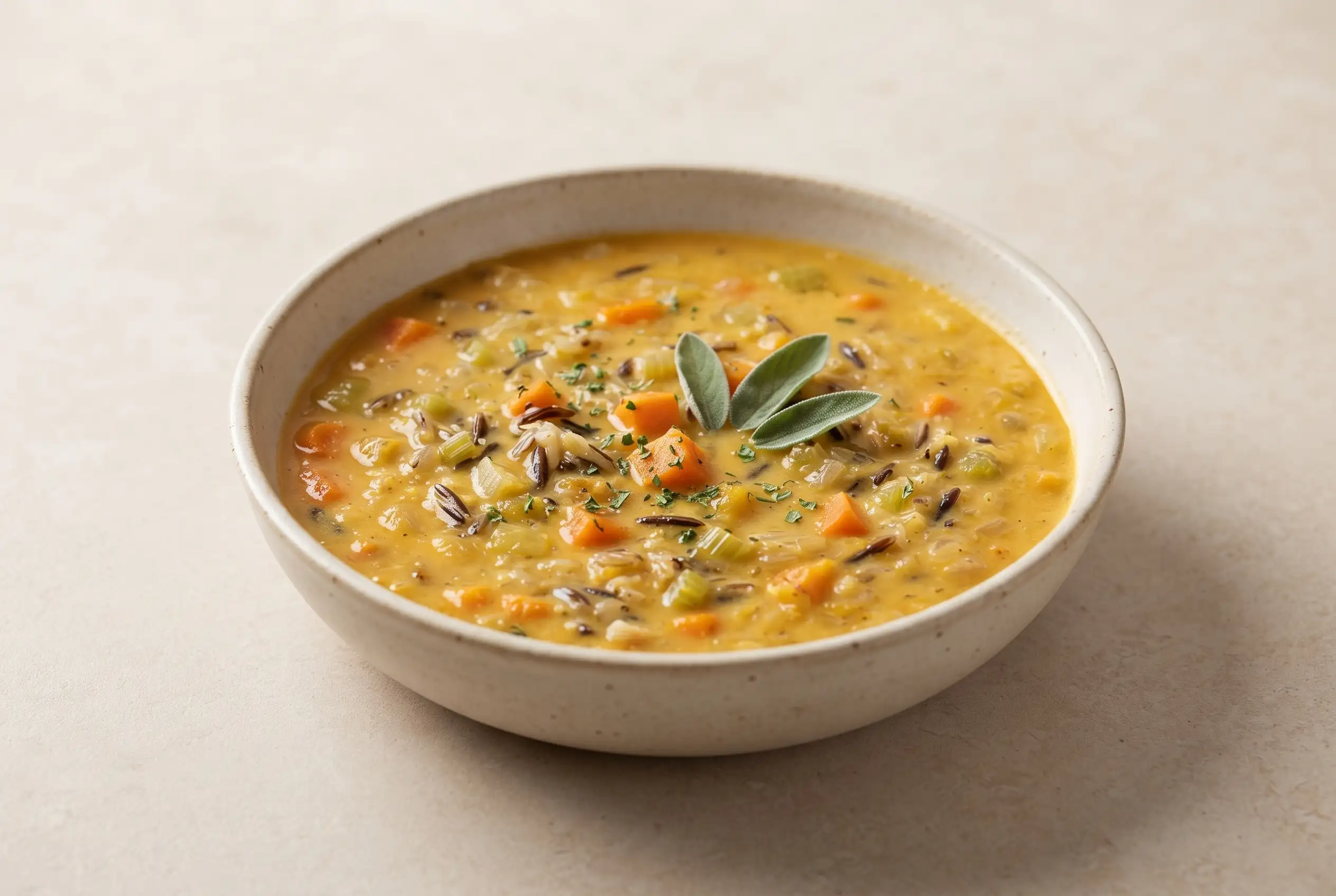
Vegan Pumpkin Wild Rice Soup with Coconut Milk
Ingredients
Method
- Rinse the wild rice thoroughly with cold water, then set it aside.
- Heat a large pot over medium heat. Add the onion, garlic, carrots, and celery and sauté for 5–7 minutes, until the vegetables have softened.
- Add the rinsed wild rice, vegetable broth, pumpkin puree, thyme, and sage. Stir until evenly combined.
- Bring the soup to a boil, then lower the heat to maintain a simmer. Cover the pot and cook for about 45 minutes, until the wild rice is tender.
- Stir in the coconut milk and season with salt and black pepper to taste.
- Serve the soup hot and finish each serving with fresh parsley.