Chick Fil a Mac and Cheese with Yellow and White Cheddar
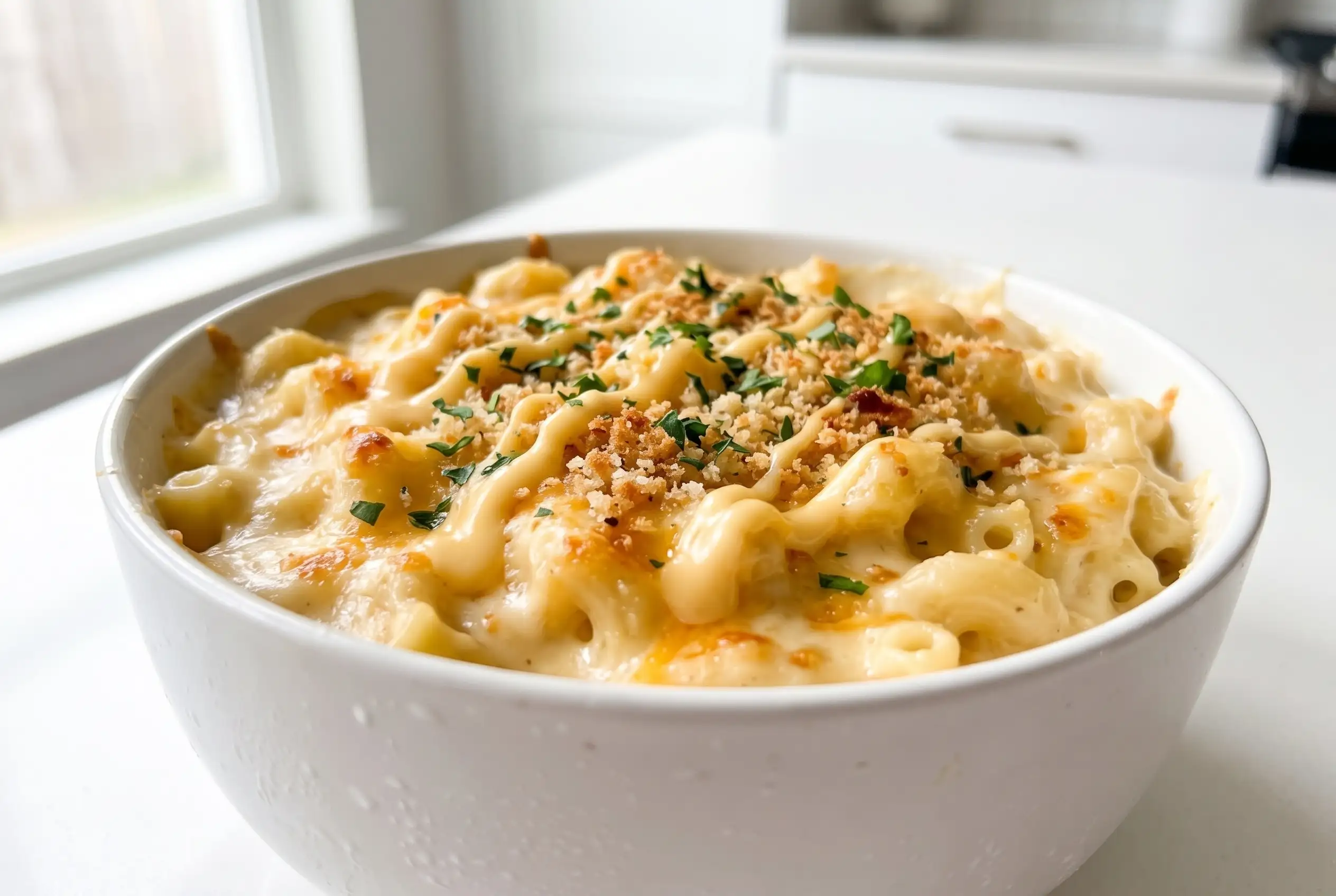
Chick Fil A mac and cheese recipe fans can recreate the rich, creamy side at home with tender elbow macaroni and a five-cheese sauce that bakes into a bubbly, golden finish. The combination of yellow cheddar, white cheddar, American cheese, Parmesan, and Romano creates the distinctive depth and smoothness that makes a copycat Chick Fil A mac and cheese so satisfying.
Five Cheeses Set the Sauce Apart
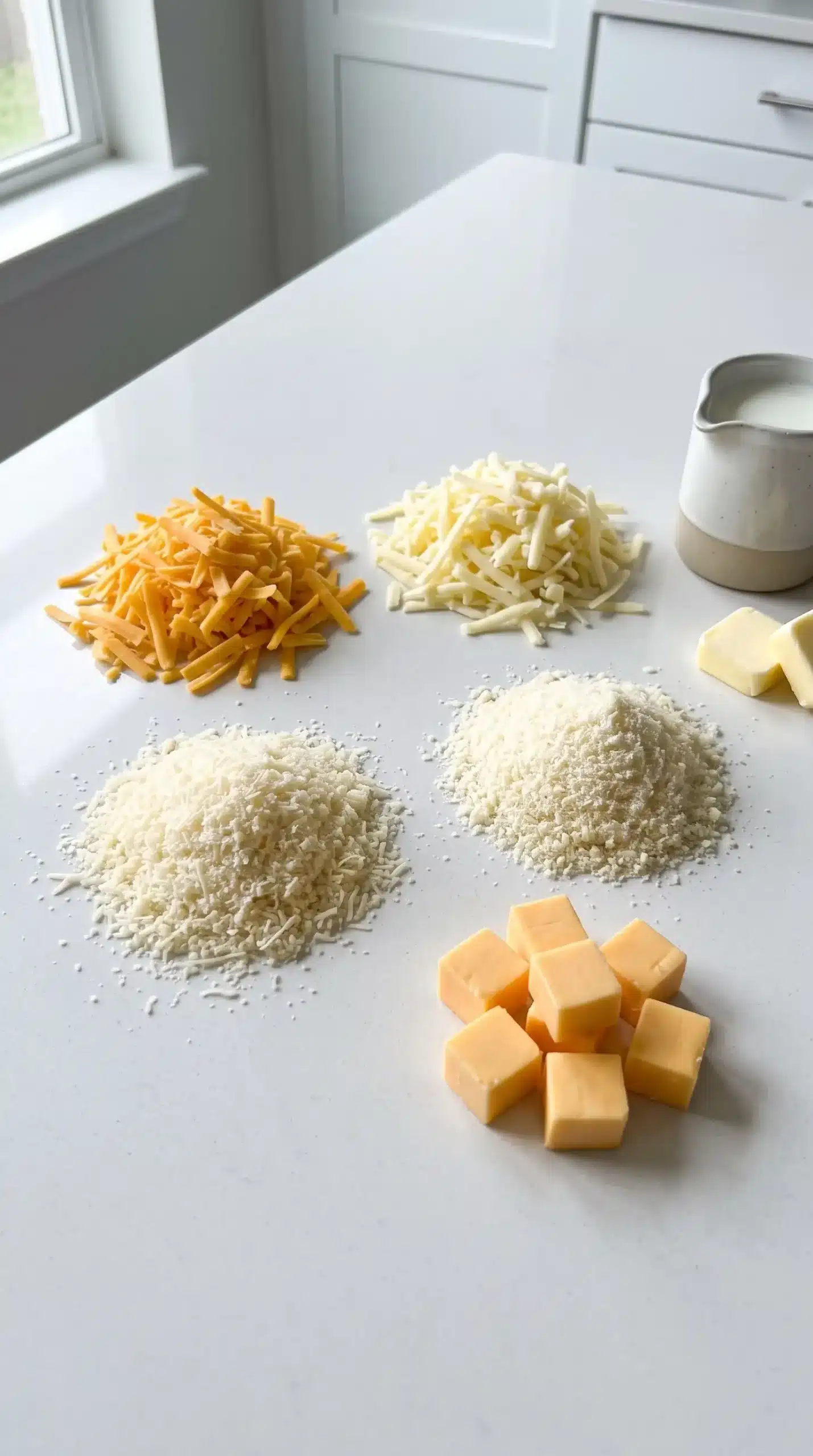
The cheese combination is the defining feature of this five cheese mac and cheese. Yellow and white cheddar form the main cheesy foundation, while Parmesan and Romano bring a saltier, sharper dimension. American cheese plays a different role by helping the mixture become exceptionally smooth and cohesive.
Freshly grated cheese is especially useful here. Blocks of cheddar can be grated directly before cooking, while the Parmesan and Romano should also be grated for the smoothest incorporation. Pre-shredded cheese can contain anti-caking agents that interfere with the texture of a melted cheese sauce.
Keep the yellow and white cheddar divided because part goes into the sauce and the remainder becomes the baked topping. That separation gives the macaroni a creamy interior while creating a distinctly cheesy surface as the dish bakes.
Whole Milk Gives the Sauce Its Body
Whole milk works with the butter-and-flour roux to create a sauce substantial enough to coat the macaroni. The sauce should thicken before the cheeses go in, reaching a consistency that coats the back of a spoon. That stage provides a useful visual cue without requiring an exact thickness measurement.
Freshly Grated Cheese Prevents a Grainy Finish
Grating cheese from blocks is one of the most useful choices for a smooth Chick Fil A mac and cheese recipe. The grated cheese melts directly into the warm sauce without the added anti-caking ingredients commonly found on packaged shredded cheese.
- Cheddar: Grate both the yellow and white cheddar fresh and keep the portions for the sauce separate from those reserved for the top.
- American cheese: Cut the slices into cubes so they can melt evenly into the warm sauce.
- Parmesan and Romano: Grate both cheeses before beginning the sauce so all five cheeses can be added gradually.
Al Dente Elbows Hold Up During Baking
Elbow macaroni needs to retain some firmness when it leaves the boiling water. The noodles continue cooking after they meet the hot cheese sauce and again during the oven stage, so fully soft pasta at the beginning can lose its desirable texture by serving time.
Salted boiling water seasons the pasta while it cooks. Once the elbows reach an al dente texture, drain them thoroughly and leave them unrinsed. Keeping the cooked pasta ready before the sauce is finished makes the combining stage quick and straightforward.
The shape also suits the sauce particularly well. Elbow noodles provide plenty of curved surfaces for the thick cheese mixture to cling to, helping distribute the sauce throughout the baking dish instead of leaving dry pockets.
The Roux Needs a Few Quiet Minutes
The butter and flour mixture deserves consistent whisking over medium-low heat for several minutes. Cooking the roux removes the raw flour character and develops a deeper, nuttier aroma before any milk is introduced.
Whisking Controls the Milk Sauce
Pour the whole milk in gradually while whisking continuously. That steady movement helps incorporate the liquid into the butter-flour mixture and reduces the chance of lumps forming as the sauce begins to thicken.
Once the milk is incorporated, salt and pepper season the base before the cheese arrives. Continue whisking as the sauce heats and thickens, watching for the point where it can coat the back of a spoon.
That thickened base is important because the cheese needs a stable liquid foundation. Moving directly from a thin milk mixture to a heavy cheese addition can make it harder to judge the finished consistency.
Low Heat Keeps the Five-Cheese Sauce Smooth
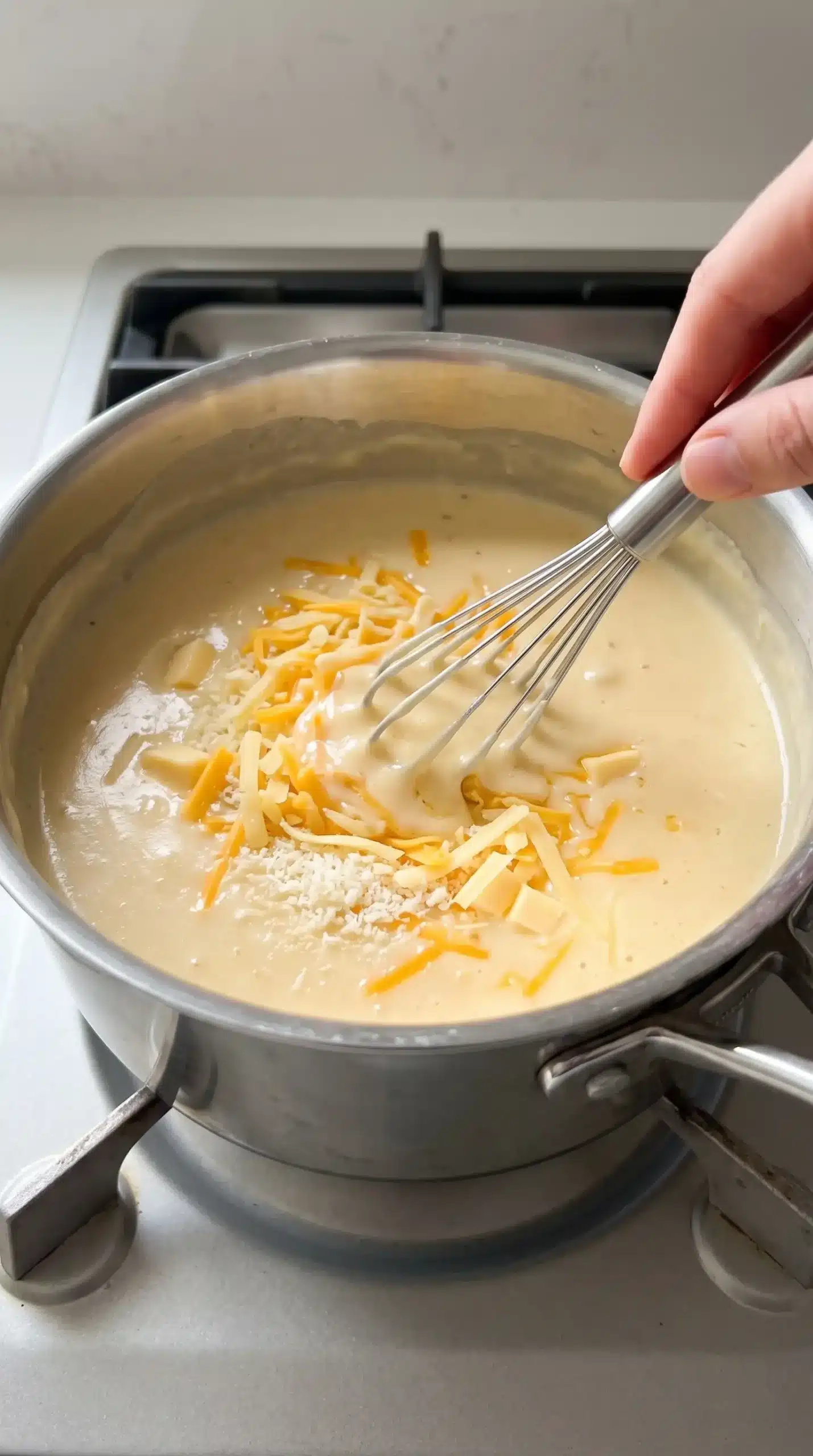
Cheese should be added after the pot is removed from direct heat or placed over very low heat. Excessive heat can separate cheese, leaving an oily or grainy sauce instead of the glossy texture desired for a copycat Chick Fil A mac and cheese.
Add the yellow cheddar, white cheddar, American cheese, Parmesan, and Romano gradually. Gentle whisking gives each addition time to melt into the sauce before more cheese is introduced.
American cheese is particularly useful at this stage because its processed structure helps stabilize the melted mixture. Once all five cheeses have disappeared into the sauce, the mixture should look smooth and cohesive before the macaroni is folded in.
Five-Cheese Mac and Cheese Needs Even Coverage
Fold the cooked elbows through the warm cheese sauce until the noodles are thoroughly coated. A gentle folding motion keeps the pasta intact while distributing the sauce from the bottom and sides of the pot.
The Baked Topping Creates the Right Contrast
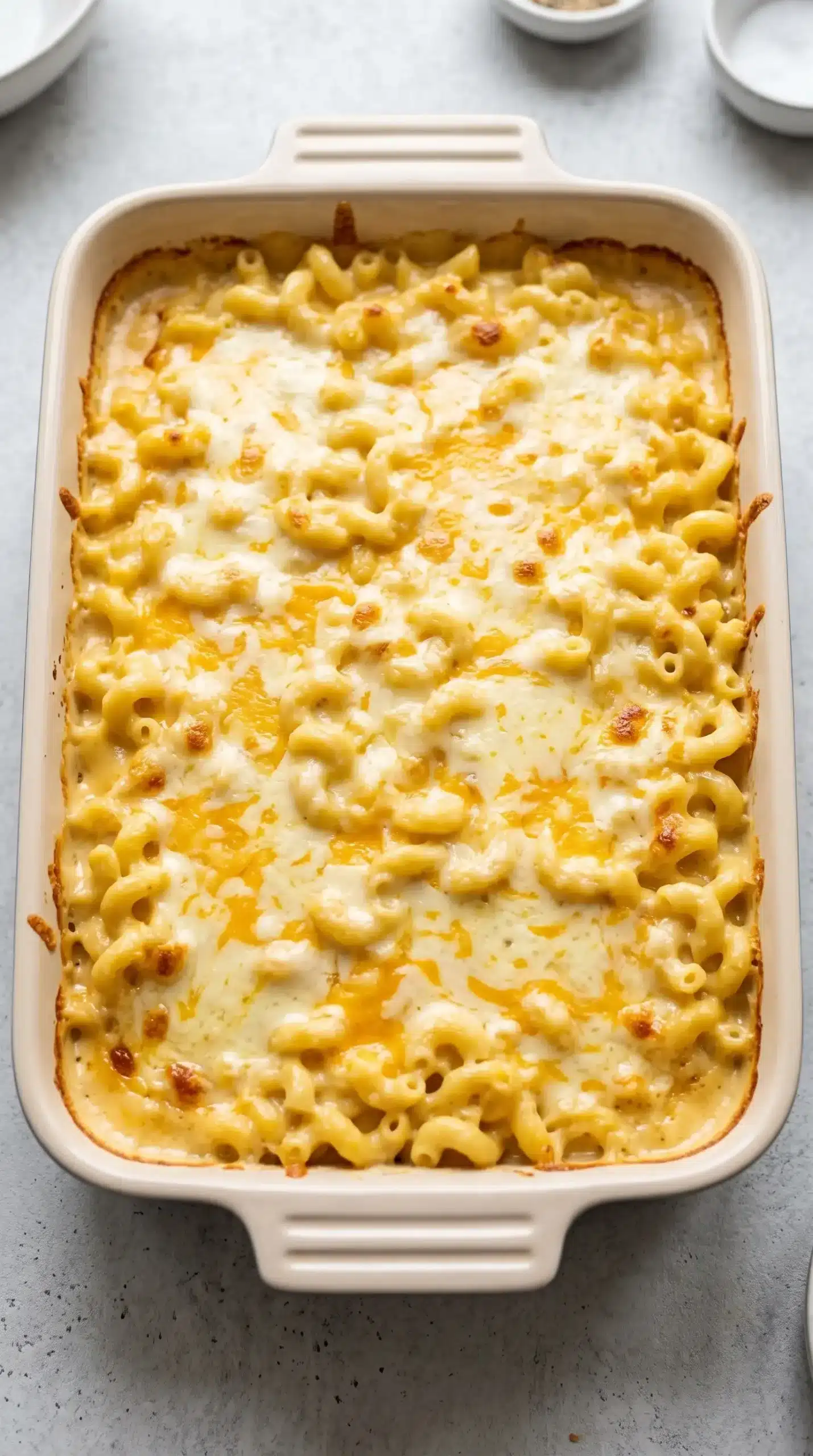
After the sauced macaroni reaches the greased 9×13-inch baking dish, spread it into an even layer. The reserved yellow and white cheddar then cover the surface so the oven can transform the loose cheese into a melted topping.
Baking uncovered allows the surface to brown while the sauce becomes bubbly around the edges. Look for a golden-brown cheese layer and bubbling around the perimeter as visual indicators that the dish is ready.
Mac and Cheese Mistakes to Avoid
A few errors can change the texture of the finished dish even when the ingredient quantities are correct. The most important problems involve pasta texture, cheese temperature, and cheese preparation.
| Potential mistake | What you may notice | Better approach |
|---|---|---|
| Using pre-shredded cheese | Grainy or less-smooth sauce | Grate the cheese from blocks |
| Cooking pasta until very soft | Macaroni becomes too tender after baking | Drain it while still al dente |
| Adding cheese over high heat | Oily or separated sauce | Use low heat or remove the pot from the burner |
| Skipping the roux cooking time | Raw flour flavor can remain | Whisk the butter and flour for 3 to 5 minutes |
Resting Helps the Sauce Set
Give the baked macaroni and cheese a short rest after removing it from the oven. A few minutes allows the hot sauce to settle slightly while keeping the dish warm and ready to serve.
Leftovers Keep Well for Short-Term Storage
Cool leftover mac and cheese completely before transferring it to an airtight container. Refrigerated leftovers can be kept for up to four days.
For reheating, gentle heat is the better choice for preserving the creamy character of the sauce. Warm portions in a saucepan over low heat with a splash of milk or cream, or use short microwave intervals with stirring between them.
Freezing is not recommended because the dairy-heavy sauce can separate during thawing. That change may leave the macaroni watery or grainy and can substantially alter the texture of the finished dish.
Simple Toppings and Heat Variations Change the Finish
A crunchy topping can add contrast without changing the underlying cheese sauce. Crushed Ritz crackers or panko breadcrumbs mixed with a little melted butter can be scattered over the macaroni before it goes into the oven.
For a spicy variation, cayenne pepper or a little hot sauce can be stirred into the cheese sauce before the pasta is incorporated. The amount can be adjusted according to how much heat is desired.
Serving Pairings Keep the Mac and Cheese Centered
The creamy baked elbows work naturally as a hearty side alongside familiar main dishes. Fried chicken, pulled pork sandwiches, barbecue brisket, and grilled burgers all provide substantial savory partners for the cheesy pasta.
- Fried chicken: The creamy pasta fits naturally beside a crisp, savory main dish.
- Barbecue brisket: The rich macaroni provides a comforting accompaniment to brisket.
- Grilled burgers: The baked cheese topping complements a casual burger-centered meal.
Gentle Cheese Handling Makes the Difference
The smooth texture of Chick Fil A mac and cheese recipe depends most heavily on what happens to the cheese before and during melting. Freshly grated cheeses, a properly thickened milk base, and gentle heat work together to keep the five-cheese mixture cohesive.
Once the sauce is glossy, the macaroni only needs thorough coating before baking. The oven then adds the bubbly edges and golden cheese surface that distinguish the finished dish from a simple stovetop pasta.
What Readers Still Ask About Chick Fil A Mac and Cheese
Can the mac and cheese be assembled ahead of baking?
Yes. Assemble the macaroni and cheese in the baking dish, cover it tightly, and refrigerate it for up to 24 hours. When it is time to bake, remove the covering and bake as directed, allowing a few additional minutes if needed to heat the center thoroughly.
Why does the cheese sauce turn oily?
High heat is a common cause of separation in a cheese sauce. Keep the pot off direct heat or over very low heat while adding the cheeses, and whisk gently until the mixture becomes smooth. Freshly grated cheese also helps avoid the melting problems associated with anti-caking agents.
Can another milk be used instead of whole milk?
The supplied proportions are designed around whole milk, which contributes to the rich sauce. Lower-fat milk is not expected to provide the same richness, so whole milk is the appropriate choice when aiming for the intended texture.
How do I know when the baked macaroni is ready?
Look for two visible signs: bubbling around the edges of the baking dish and a golden-brown layer of melted cheese across the top. Once those appear, remove the dish from the oven and let it rest briefly before serving.
Why is American cheese included in a five-cheese sauce?
American cheese contributes more than its flavor because its processed structure helps the other melted cheeses form a smooth, stable sauce. That quality is particularly useful for achieving the velvety consistency associated with the copycat Chick Fil A mac and cheese.
Chick Fil a Mac and Cheese with Yellow and White Cheddar
Ingredients
Method
- Heat the oven to 350°F (175°C) and lightly grease a 9×13-inch baking dish.
- Bring 4 quarts of water to a rolling boil in a large pot. Add 1 tablespoon salt and cook the elbow pasta according to the package directions until al dente. Drain well without rinsing and set aside.
- Melt the salted butter in the same empty pot over medium heat.
- Whisk the all-purpose flour into the melted butter. Lower the heat to medium-low and cook for 3 to 5 minutes, whisking continuously.
- Gradually whisk in the whole milk. Add 1 teaspoon salt and the pepper, then continue cooking and whisking for 4 to 5 minutes, until the sauce is thick enough to coat the back of a spoon.
- Lower the heat to low or take the pot off the heat. Add 1 cup yellow cheddar, 1 cup white cheddar, all of the cubed American cheese, Parmesan, and Romano. Stir gradually until the cheeses melt completely and the sauce is smooth.
- Add the cooked elbow pasta to the cheese sauce and fold until the noodles are evenly covered.
- Pour the macaroni and cheese into the prepared 9×13-inch baking dish and spread it into an even layer.
- Scatter the remaining ½ cup yellow cheddar and ½ cup white cheddar evenly over the surface.
- Bake uncovered at 350°F (175°C) for 15 to 20 minutes, until the edges are bubbling and the cheese on top is golden brown.
- Remove the dish from the oven and let the mac and cheese stand for 2 to 3 minutes before serving warm.