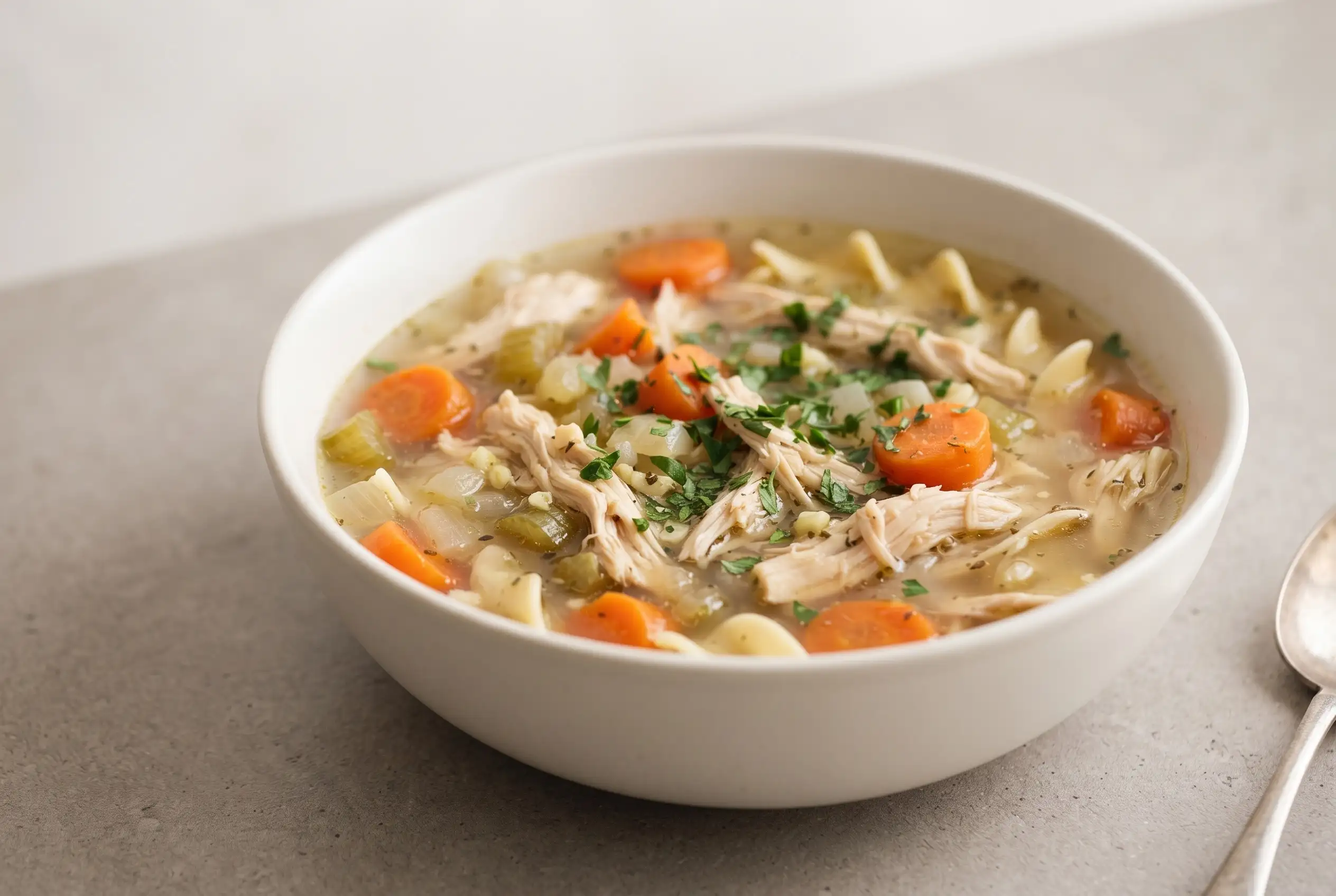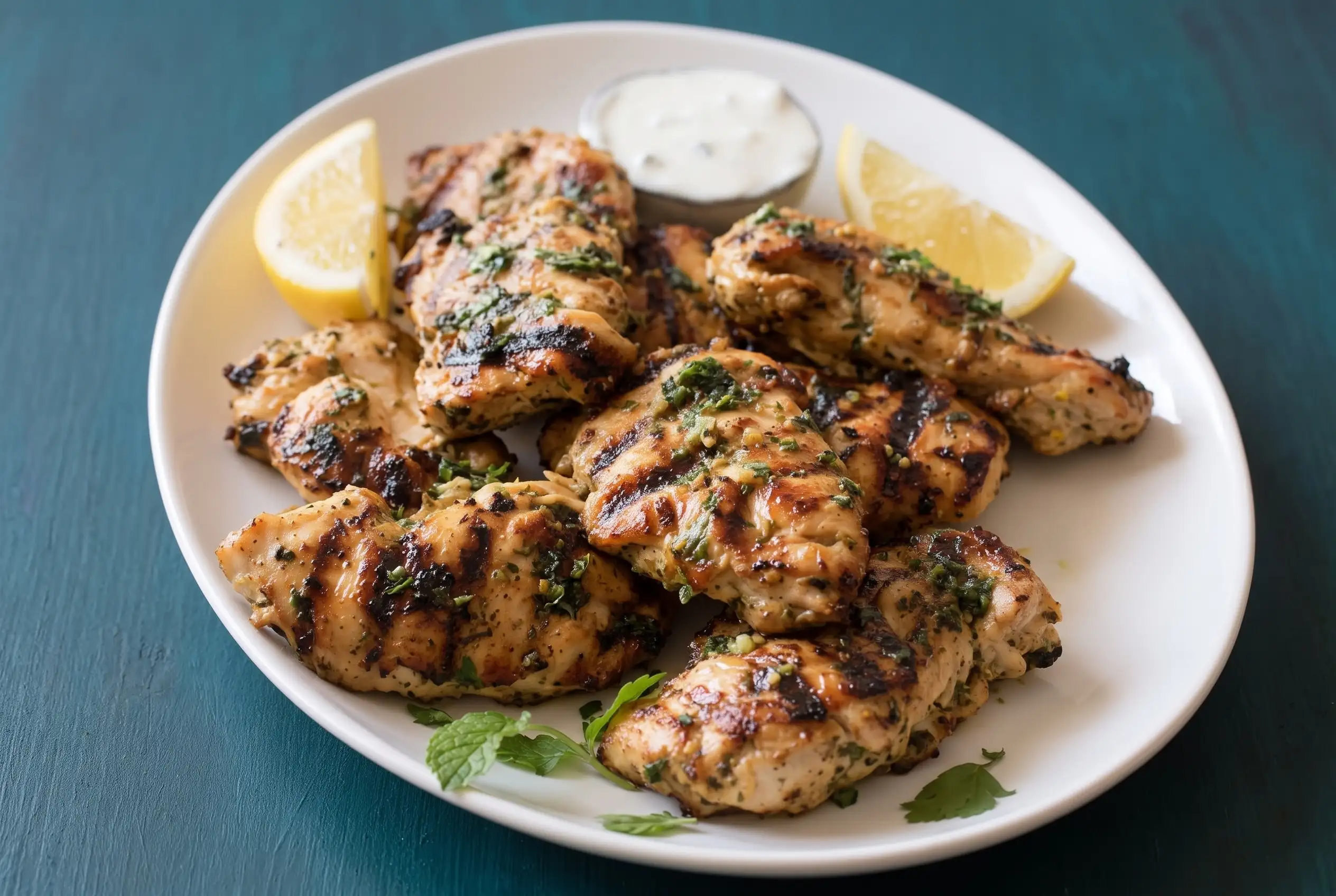
Soy Chicken in Garlic Ginger Broth with Jasmine Rice
Caramelised Soy Chicken in Garlic Ginger Broth with Rice brings together tender chicken thighs, a savory soy glaze, fragrant aromatics, and fluffy jasmine rice in one comforting bowl. The chicken develops a rich caramelised coating while garlic and ginger shape a warm broth that ties every part of the dish together. Each element has a clear job, so a few small cooking decisions make a noticeable difference to the finished meal.
Why Soy Chicken Works So Well in This Bowl
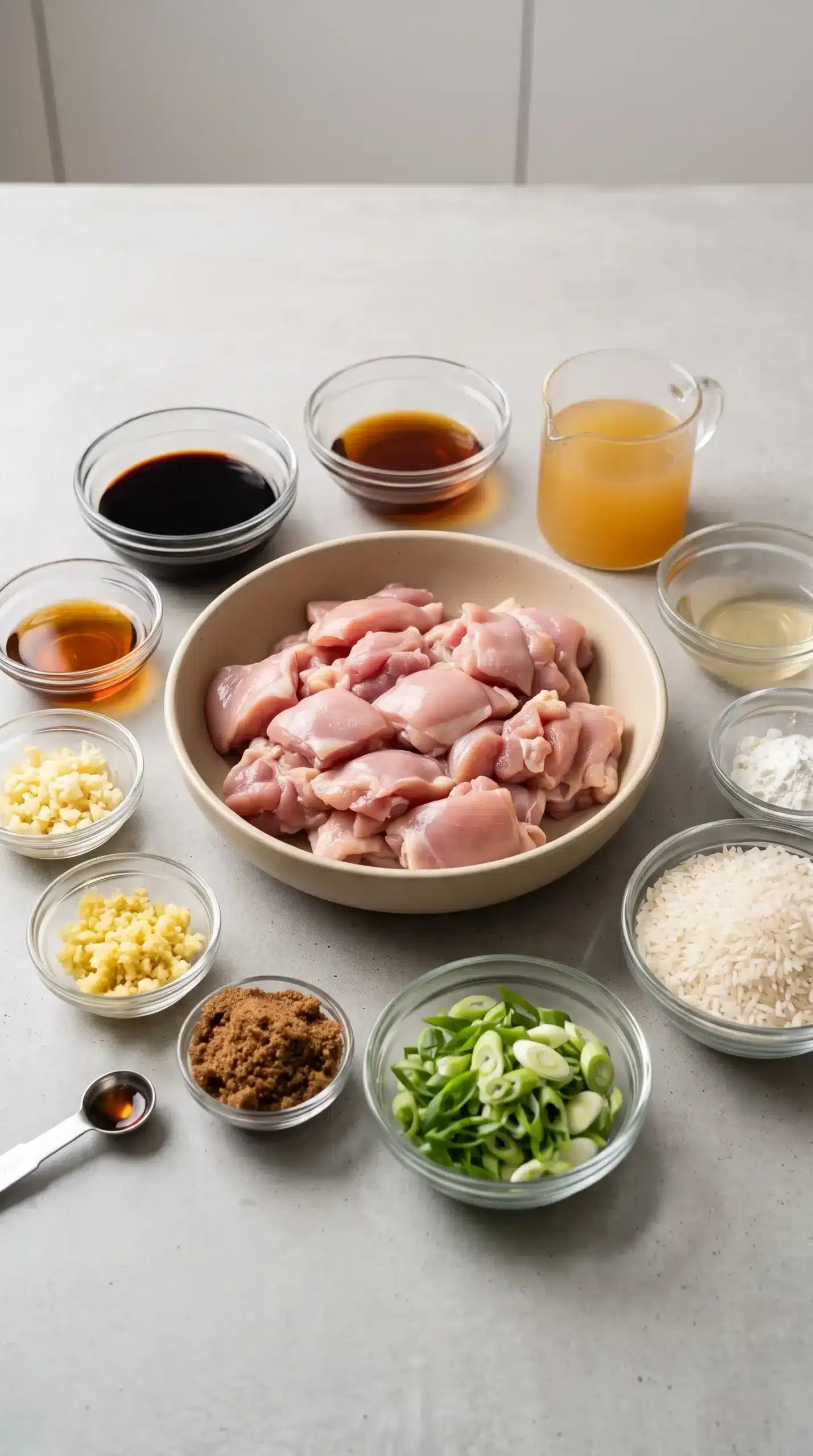
Soy chicken gets its character from the combination of soy sauce, sesame oil, garlic, ginger, and brown sugar. The marinade coats the bite-sized chicken pieces before they reach the pot, allowing those flavors to come together before cooking begins. Brown sugar helps create the caramelised exterior that distinguishes the chicken from a simple sautéed preparation.
The broth brings another layer of flavor without overwhelming the chicken. Chicken broth and rice vinegar create a savory base with a slight tang, while the garlic and ginger already present from the marinade continue to influence the liquid. Cornstarch mixed with water gives the broth enough body to cling to the chicken and rice.
Jasmine rice provides a mild, fluffy foundation for the stronger flavors. Served underneath the chicken and broth, it absorbs some of the savory liquid while keeping the meal substantial. Green onions added at the end provide a fresh finish and a little color against the rich sauce.
Chicken Thighs Give the Soy Chicken Its Best Texture
Boneless, skinless chicken thighs are cut into bite-sized pieces before seasoning, making them practical for a preparation where the chicken needs to brown quickly and cook through in a relatively short period. Chicken breast can also be substituted, but it may cook faster, so its cooking time needs closer attention.
The Soy-Sesame Marinade Sets Up the Caramelised Finish
Soy sauce supplies the main savory seasoning, while sesame oil contributes its characteristic richness. Minced garlic and ginger bring aromatic depth, and brown sugar gives the mixture the sweetness needed for the caramelised coating. Keeping the proportions balanced matters because the marinade needs to season the chicken without becoming so intense that it dominates the broth, as with sesame chicken, where the sweet-savory coating remains central to the dish.
Ten minutes of marinating gives the bite-sized chicken time to become coated with the mixture before cooking. Make sure every piece is covered so that the soy sauce, sesame oil, garlic, ginger, and sugar reach the chicken evenly. A thorough coating also helps distribute the flavors across the finished portion.
Season the chicken lightly with salt and pepper before it enters the marinade. Soy sauce already contributes saltiness, so additional seasoning is best handled with restraint at the beginning. The broth can be tasted later and adjusted if necessary, which gives you better control over the finished balance.
Jasmine Rice Creates the Right Base
Rinsing the jasmine rice under cold water until the water runs clear prepares it for cooking. The rice is then simmered covered with two cups of water until the liquid has been absorbed, after which it is fluffed with a fork. Keeping the rice separate from the broth until serving preserves its fluffy texture while allowing each bowl to receive as much savory liquid as desired.
Browning the Chicken Controls the Caramelised Soy Chicken
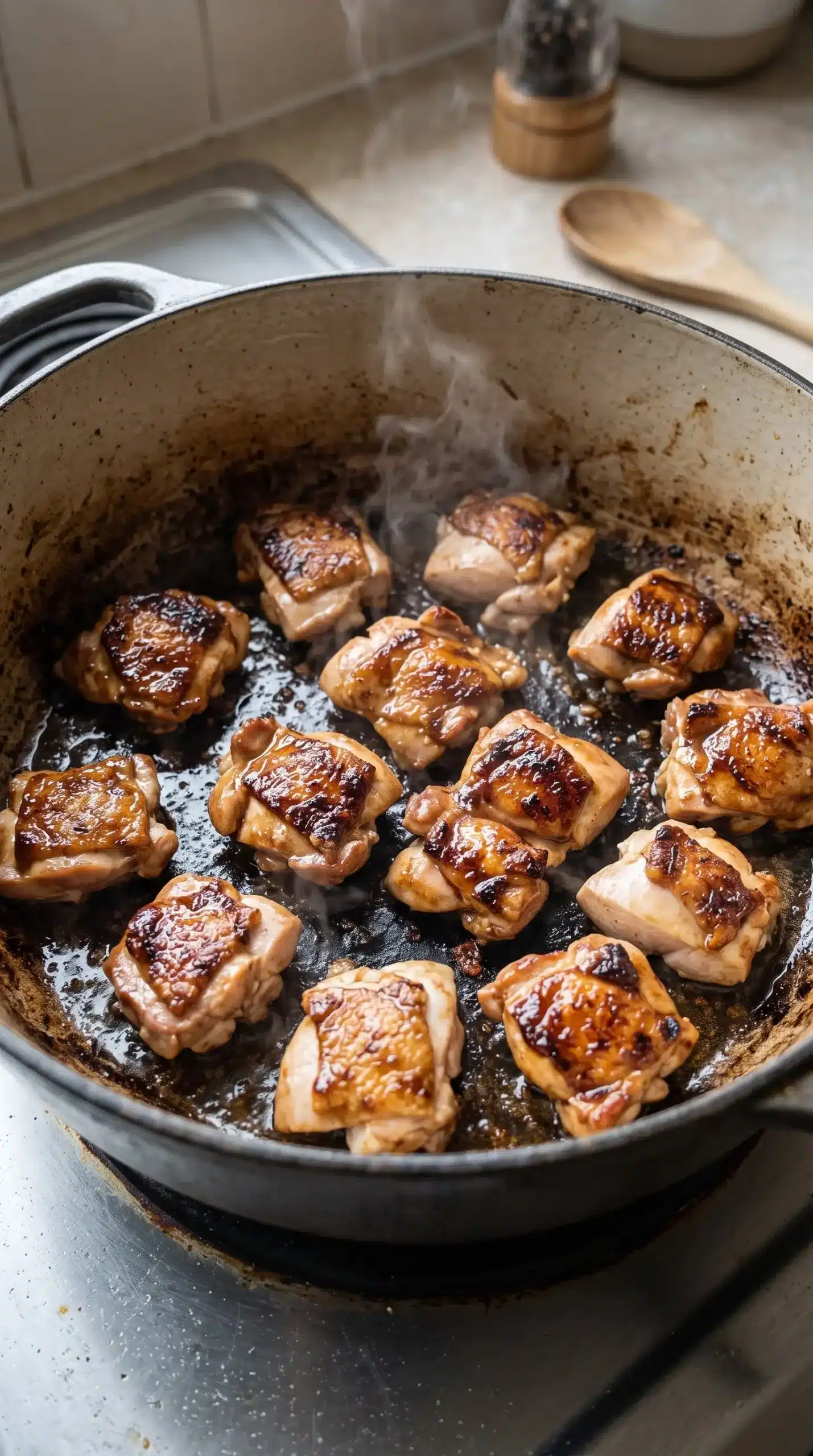
Medium-high heat is important when sautéing the marinated chicken because the pieces need enough heat to develop their caramelised exterior while cooking through. Spread the chicken into the hot pot and give the pieces room to make contact with the cooking surface. The supplied method calls for about five to seven minutes of sautéing, with the chicken cooked through before the broth is added.
Because the marinade contains brown sugar, watch the chicken as it browns. Sugar helps create the desired caramelised surface, but the chicken should not be left unattended while the coating darkens. The useful visual cue is a browned, caramelised exterior paired with chicken that is cooked through.
Once the chicken has reached that stage, the broth can be poured directly into the pot. This changes the cooking environment from dry sautéing to simmering and allows the browned chicken flavors to become part of the liquid. The rice vinegar joins the chicken broth at this point, adding brightness to the savory base.
Thickening the Garlic Ginger Chicken Broth Without Losing Its Balance
The cornstarch slurry should be added gradually while the broth is simmering and stirred as it goes in. Adding it slowly gives you better control over the texture and helps distribute the thickener through the liquid. Afterward, the broth simmers for another five minutes, allowing it to develop its intended consistency.
| Cooking stage | What to watch for | Useful action |
|---|---|---|
| Marinating | Chicken is evenly coated | Turn the pieces through the marinade before resting |
| Sautéing | Exterior becomes caramelised | Use medium-high heat and cook until cooked through |
| Broth simmering | Liquid is hot and gently bubbling | Stir in the cornstarch mixture gradually |
| Finishing | Broth has thickened and flavors are balanced | Taste before adjusting salt or pepper |
A Bowl of Soy Chicken Needs Contrast in Texture
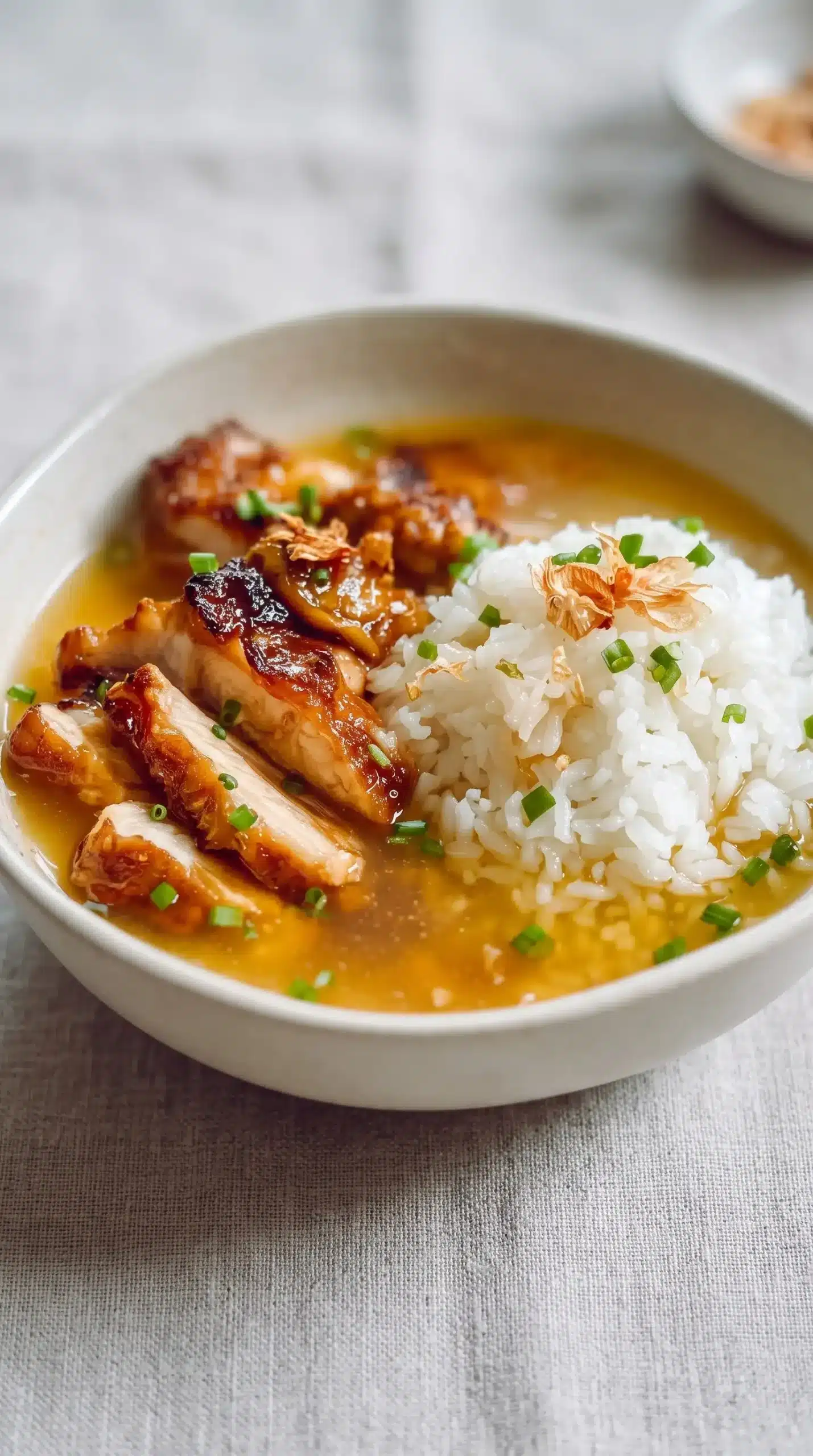
Serving the caramelised chicken and broth over fluffy jasmine rice gives the dish its central textural contrast. The rice remains soft and light, while the chicken supplies a more substantial bite and the thickened broth connects the two. Ladling the liquid over the rice also lets the grains absorb the savory flavors as you eat.
Sliced green onions belong at the end of the preparation rather than during the main cooking stages. Their fresh flavor and color stand out against the darker soy chicken and broth. A generous mound of jasmine rice underneath provides enough surface area for the broth to spread across the bowl.
Steamed vegetables or a side salad can accompany the bowl when you want additional vegetables alongside the chicken and rice. Bok choy, carrots, and bell peppers can also be incorporated into the broth according to the supplied variation ideas. These additions can change the texture and visual character without altering the central soy chicken profile.
Avoid These Caramelised Soy Chicken Mistakes
- Uneven coating: Make sure the chicken pieces are fully covered by the marinade so the soy, sesame, garlic, ginger, and sugar are distributed consistently.
- Overlooking the browning: Brown sugar supports caramelization, so keep an eye on the chicken while it cooks over medium-high heat.
- Adding slurry too quickly: Pour the cornstarch mixture in gradually while stirring so the broth thickens evenly.
- Over-seasoning early: Soy sauce contributes salt, so taste the finished broth before adding more salt or pepper.
Leftover Soy Chicken Keeps Its Broth Useful
Any remaining soy chicken and broth should cool completely before being transferred to an airtight container. Refrigeration keeps the leftovers available for another meal while preserving the dish as a combined chicken-and-broth preparation. The supplied storage guidance gives a refrigerator window of up to three days.
For reheating, a saucepan over medium heat provides a direct way to warm the chicken and broth together. The microwave is another option when convenience matters. Whichever method you use, reheated to 165°F (73.9°C) before serving it again over rice.
Freezing is also presented as an option for leftovers, with an airtight container suitable for storage for up to a month. When ready to eat, reheat the frozen portion thoroughly. If rice has been stored separately, it can be served with the warmed chicken and broth once both components are ready.
Simple Variations Keep the Same Flavor Direction
Chicken breast can replace the thighs when you prefer that cut, with attention to its potentially faster cooking time. For a vegetarian variation, tofu can stand in for the chicken, while brown rice can replace jasmine rice. Chili flakes, sriracha, or fresh chopped chilies can introduce extra heat, and vegetables such as bok choy, carrots, or bell peppers can be added to expand the bowl.
Garlic and Ginger Shape the Broth From the Inside Out
Minced garlic and ginger appear in the marinade and therefore become part of the flavor foundation before the broth is even introduced. Their aromatic character works with the soy and sesame combination to make the chicken more than simply seasoned meat. Once chicken broth enters the pot, those flavors become part of the liquid as well.
Rice vinegar has a particularly useful role because the broth contains several rich and savory components. Its presence gives the liquid a brighter edge, helping distinguish the broth from the sweeter caramelised chicken. The amount supplied is enough to contribute that contrast without requiring additional acidic ingredients.
The finished garlic ginger chicken broth should complement the chicken instead of masking it. Thickening with the cornstarch slurry gives the liquid enough body to sit naturally over the rice. A final taste and seasoning adjustment brings the broth into balance immediately before serving.
One-Pot Timing Makes the Meal Easier to Coordinate
Organize the preparation so the rice can cook while the chicken is being prepared and marinated. Rinsing the jasmine rice first and getting it onto the stove creates useful overlap, while the ten-minute marinade gives you time to focus on the rice before returning attention to the chicken.
Watch These Texture and Flavor Checkpoints
Before cooking, the chicken should be cut into reasonably similar bite-sized pieces and thoroughly coated. During sautéing, look for caramelization on the exterior rather than relying only on elapsed time. The chicken should be cooked through before the broth becomes the primary cooking environment.
As the broth simmers, stirring becomes especially important when the cornstarch mixture is introduced. The thickener needs to disperse through the liquid, and gradual addition makes the consistency easier to control. Once the broth has simmered with the slurry, taste it before making any seasoning adjustment.
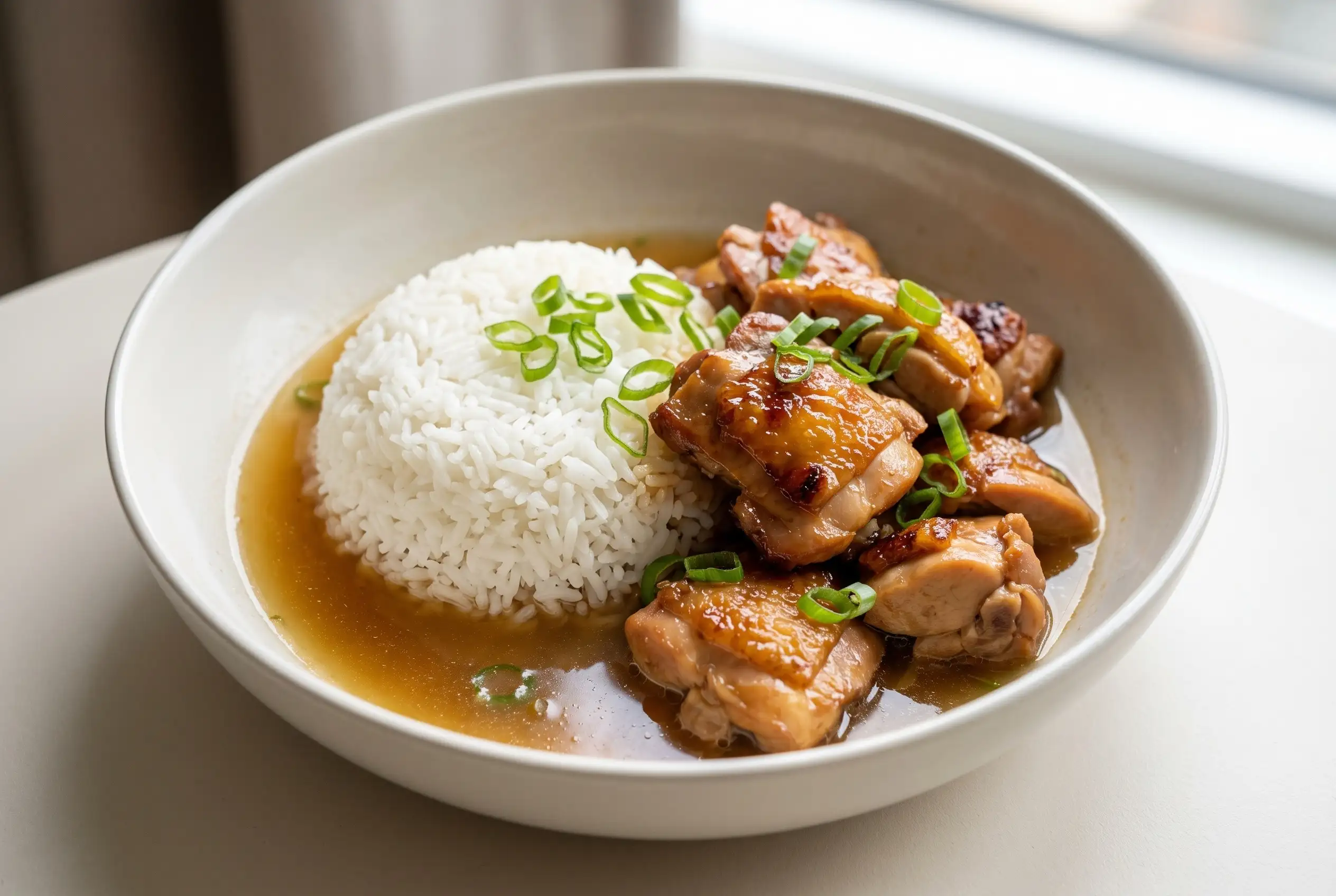
At serving time, fluffy jasmine rice should remain distinct enough to support the chicken and broth. Spoon the caramelised chicken over the rice, ladle the garlic ginger broth across the top, and finish with sliced green onions. That arrangement keeps the major elements recognizable while allowing the broth to bring them together.
Caramelization Gives Soy Chicken Its Defining Finish
Caramelised soy chicken depends on controlled browning and a balanced broth more than on complicated preparation. The chicken needs enough heat to develop its sweet-savory exterior, while the broth needs gradual thickening so it can coat the rice without losing its distinct garlic, ginger, and vinegar notes.
Once those two elements are handled carefully, the fluffy jasmine rice becomes the natural meeting point for the chicken and broth. The result is a cohesive soy chicken with rice meal in which the browned chicken provides depth, the garlic ginger chicken broth supplies moisture and flavor, and green onions add a fresh finishing note.
Soy Chicken Questions About Cooking and Storage
Can chicken breasts be used instead of thighs?
Yes. Chicken breasts are listed as a suitable substitute, but they may cook faster than chicken thighs. Watch the pieces closely during sautéing and adjust the cooking time so they are cooked through without unnecessary additional cooking.
What rice works best with soy chicken?
Jasmine rice is the rice specifically used with the dish and complements the savory chicken and broth. Brown rice is also given as an alternative, while the supplied guidance notes that other types of rice can be used according to preference.
How can the broth be made thicker?
The supplied method uses one tablespoon of cornstarch mixed with two tablespoons of water. Add the mixture slowly to the simmering broth while stirring, then allow the liquid to simmer for an additional five minutes.
Can the dish be made gluten-free?
Use tamari in place of soy sauce when making the dish gluten-free. The substitution specifically applies to the soy sauce component of the preparation.
How can more heat be added?
Chili flakes, sriracha, or freshly chopped chilies can be added to increase the heat. These options allow the spicy character to be adjusted while keeping the caramelised chicken, broth, and rice combination intact.
Soy Chicken in Garlic Ginger Broth with Jasmine Rice
Ingredients
Method
- Cut the chicken thighs into bite-sized pieces and season lightly with salt and pepper.
- In a bowl, stir together the soy sauce, sesame oil, garlic, ginger, and brown sugar. Add the chicken, coat thoroughly, and let it marinate for 10 minutes.
- Rinse the jasmine rice under cold water until the water becomes clear. Bring 2 cups water to a boil in a saucepan, add the rice, lower the heat, cover, and simmer for about 15 minutes, or until the water has been absorbed. Fluff the cooked rice with a fork.
- Warm 1 tablespoon neutral cooking oil in a large pot or Dutch oven over medium-high heat. Add the marinated chicken and sauté for 5–7 minutes, until caramelized and cooked through to an internal temperature of 165°F / 74°C.
- Add the chicken broth and rice vinegar to the pot. Bring the liquid to a boil, then lower the heat to maintain a simmer.
- Whisk the cornstarch with 2 tablespoons water until smooth. Gradually stir the mixture into the simmering broth and cook for 5 minutes, stirring as needed, until the broth has thickened.
- Taste the chicken and broth, then add more salt or pepper if needed.
- Spoon the caramelized soy chicken and garlic ginger broth over the cooked jasmine rice.
- Finish each serving with sliced green onions.