Roasted Pumpkin Soup with Garlic, Thyme and Nutmeg Recipe
Roasted pumpkin soup is a warm, creamy bowl that brings out the natural sweetness of pumpkin with roasted depth, garlic, thyme, and a touch of nutmeg. Roasting the pumpkin before it joins the soup gives the seasonal vegetable a lightly caramelized character, while cream creates a smooth, comforting finish.
An easy roasted pumpkin soup also fits neatly into a fall meal because the preparation is straightforward and the finished soup can be served with crusty bread. Toasted pumpkin seeds add a pleasant crunch, making each bowl feel complete without requiring complicated toppings.
Roasting Brings Out Pumpkin’s Sweetness

Pumpkin becomes tender and slightly caramelized in a hot oven, concentrating the naturally sweet character that makes the soup distinctive. Tossing the cubes with olive oil, salt, pepper, and nutmeg before roasting gives the surface seasoning a chance to accompany that roasted flavor.
Keep the pumpkin spread evenly across the baking sheet so the pieces can roast effectively. The useful visual cue is tenderness accompanied by light caramelization. Once the cubes reach that point, they are ready to move into the pot.
That roasted base gives the soup more character than relying on the pumpkin alone. Garlic, onion, and vegetable broth then provide the savory framework needed to balance its sweetness.
Garlic, Thyme, and Nutmeg Shape the Flavor
The supporting seasonings are deliberately simple, allowing the pumpkin to remain recognizable. Garlic is cooked with softened onion before the roasted pumpkin and broth are added, creating a savory foundation for the puree.
Fresh thyme brings an herbal note near the end of cooking, while a small amount of ground nutmeg works especially well with the creamy character of the soup. Black pepper and kosher salt help keep the overall flavor balanced.
Heavy cream supplies the creamy finish, while coconut milk offers a dairy-free alternative. Optional unsalted butter can be stirred in when extra richness is wanted. These choices affect the character of the finished bowl without changing the essential roasted-pumpkin foundation.
The Creamy Finish Depends on Proper Blending
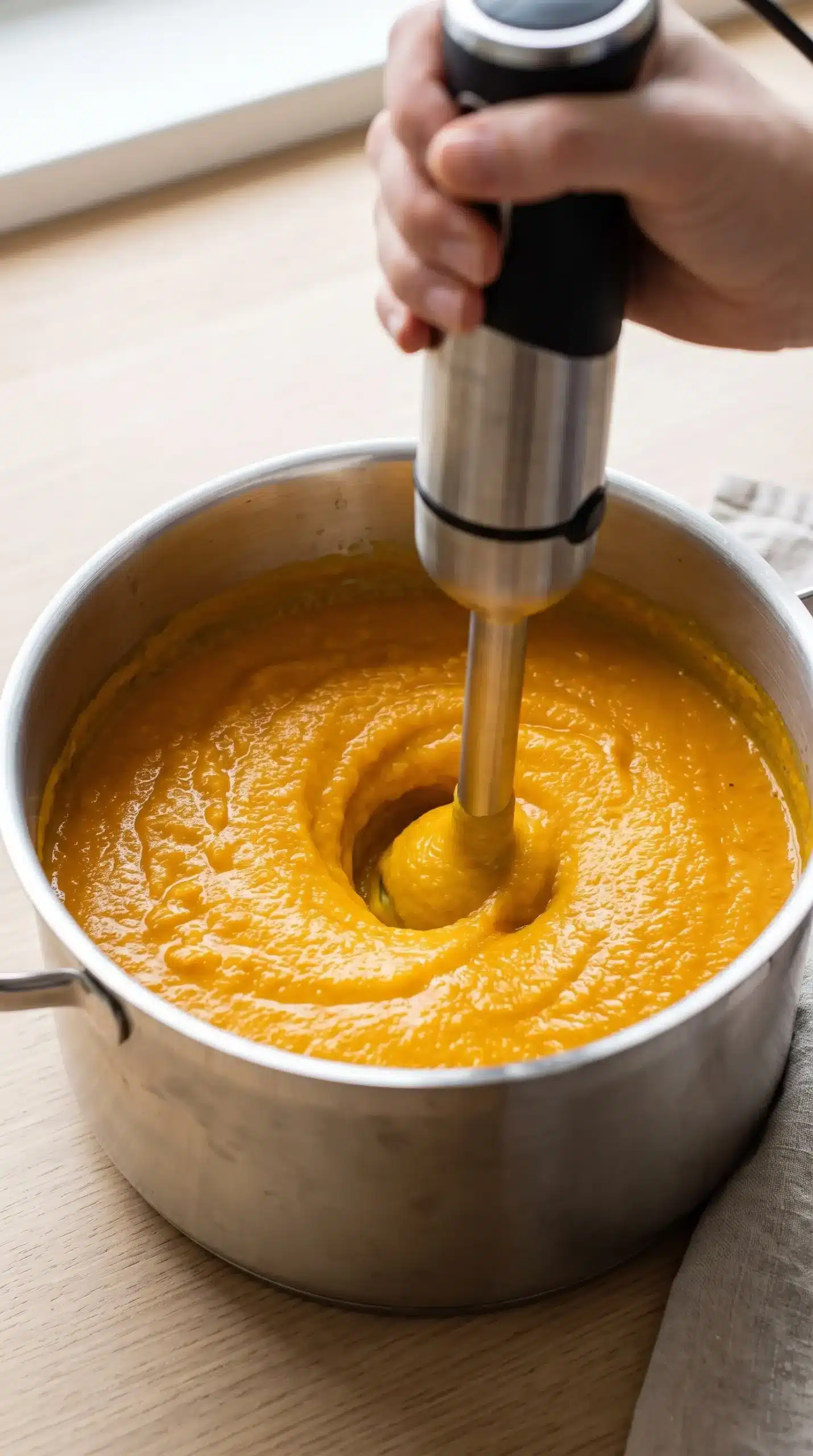
A smooth texture is one of the defining qualities of creamy roasted pumpkin soup. Once the pumpkin and broth have simmered together, blend the mixture until it reaches the desired level of smoothness.
An immersion blender keeps the process in the cooking pot and makes it easy to work toward a uniformly creamy consistency. A standard blender can also be used, but the soup should be transferred in batches instead of filling the blender with the entire hot mixture at once.
After blending, stir in the cream or coconut milk, along with the optional butter and fresh thyme. Taste the finished mixture and adjust the seasoning if needed. Keeping these additions until after pureeing preserves control over the final texture and flavor.
Three Choices That Make the Bowl More Adaptable
- Dairy-free: Replace the heavy cream with coconut milk and leave out the optional butter.
- Extra crunch: Finish individual bowls with toasted pumpkin seeds.
- Different squash: Butternut squash or acorn squash can be prepared similarly when pumpkin is not the preferred choice.
Roasted Pumpkin Soup Mistakes to Avoid
Under-roasting the pumpkin can leave the soup without the lightly caramelized flavor that distinguishes it. Watch for tenderness and slight caramelization before transferring the pieces to the pot.
Overlooking the onion and garlic can also weaken the savory balance. The onion should become soft before the garlic is added, and the garlic needs only a short additional cooking period before the roasted pumpkin joins the pot.
Adding the cream before the soup has been blended makes texture control less straightforward. Puree the pumpkin, broth, onion, and garlic first, then incorporate the creamy element and finish with thyme and seasoning adjustments.
A Few Simple Add-Ins Change the Character
Roasted pumpkin soup has enough flexibility to accommodate small flavor changes while retaining its central character. Cinnamon or ginger can introduce a different spice profile, giving the familiar pumpkin base a new direction.
Additional roasted vegetables can also broaden the flavor. Carrots or sweet potatoes are suitable choices when a more varied roasted-vegetable combination is desired. Their presence can change the balance of the finished soup, so additions should complement the pumpkin rather than overwhelm it.
For a greener variation, spinach or kale can be added for extra nutrients. The most useful approach is to keep the roasted pumpkin recognizable while choosing additions that support its naturally sweet and creamy profile.
Canned Pumpkin Can Shorten the Preparation
Canned pumpkin puree can be used when fresh pumpkin is not convenient. In that version, the roasting stage is skipped and the puree goes directly into the pot with the vegetable broth.
The substitution changes the preparation because there are no pumpkin cubes to roast and caramelize first. For readers specifically seeking the roasted flavor, fresh pumpkin remains the route described by the original method.
Serving Details Complete the Texture Contrast
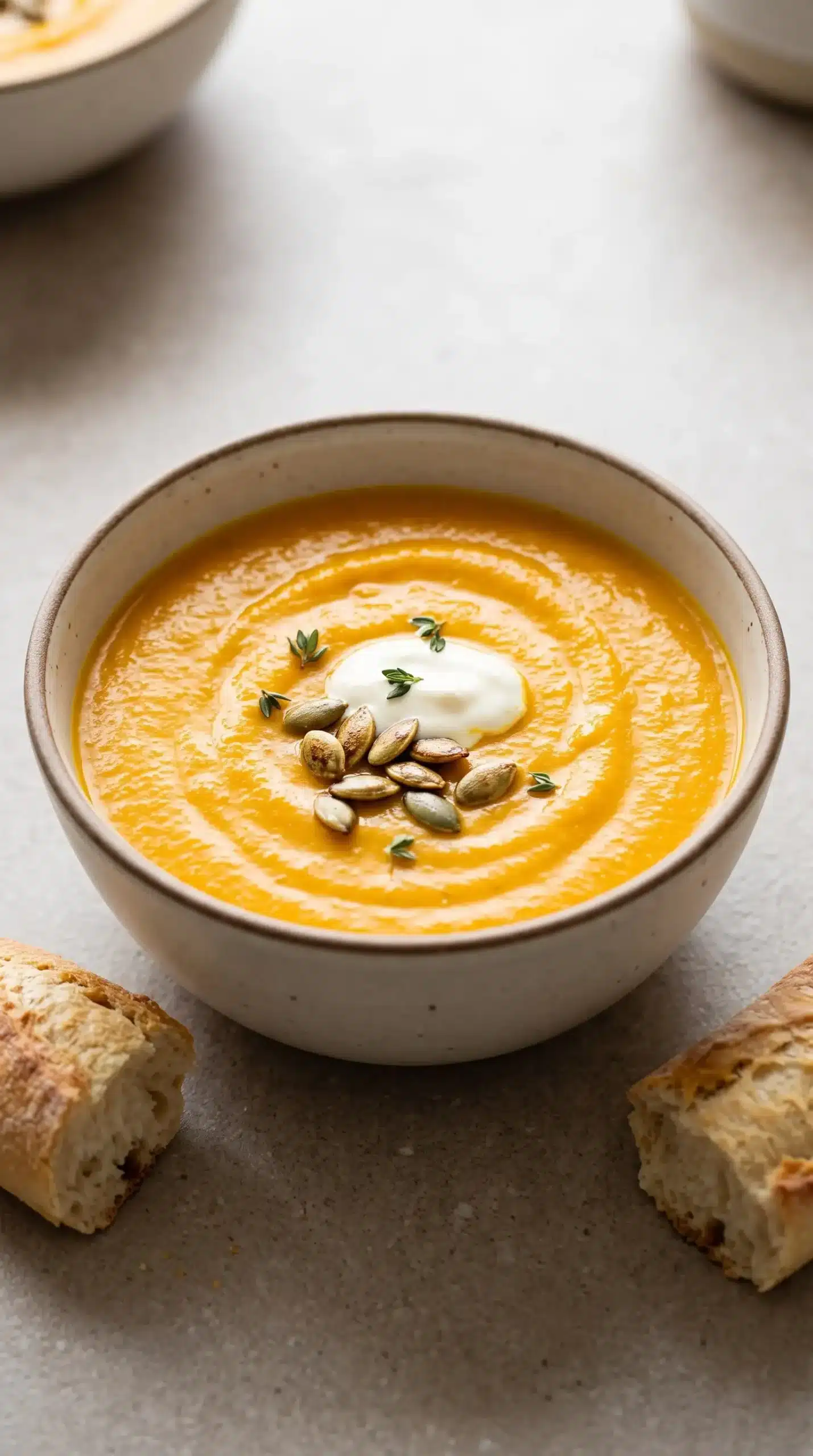
Serve the soup warm in bowls, where its smooth texture makes a natural contrast with a crunchy topping. Toasted pumpkin seeds are an optional finishing touch that adds texture without competing with the pumpkin flavor.
A dollop of cream can provide another creamy accent on top. Crusty bread makes a practical pairing, turning the soup into a more complete meal while adding a contrasting texture.
Storage Keeps Leftovers Ready for Another Meal
Place leftover soup in an airtight container and refrigerate it for about 3–4 days. When you are ready to eat it again, warm it gently on the stove or in the microwave.
Freezing is another option for longer storage, with soups and stews for 2 to 3 months recommended for best quality. Allow enough room in the container for practical freezing and thawing, then reheat until warm when serving.
Seasoning Adjustments Belong Near the End
Salt, pepper, and the creamy ingredients should be treated as adjustable finishing elements. The roasted pumpkin, broth, onion, garlic, and seasonings establish the main flavor, but the finished puree provides the clearest point for deciding whether the balance needs correction.
Fresh thyme is also added after blending, keeping its herbal character as part of the finished soup. A small adjustment at this stage can bring the flavors into better balance without changing the basic recipe.
Serving Options That Suit the Soup’s Smooth Base
| Serving choice | What it adds | Best use |
|---|---|---|
| Toasted pumpkin seeds | Crunch | Use as an optional bowl topping |
| Dollop of cream | Extra creamy contrast | Add directly before serving |
| Crusty bread | Firm, crisp texture | Pair alongside the warm soup |
A Warm Bowl Centers the Recipe Around Roasted Pumpkin
Roasted pumpkin provides the key flavor decision in this soup: tender cubes with slight caramelization create the foundation, while garlic, onion, thyme, nutmeg, and creamy ingredients shape the finished bowl around it.
Blending until smooth and adjusting the seasoning after the creamy ingredients are incorporated keeps the texture and flavor under control. The result is a comforting soup that can be finished simply with pumpkin seeds or paired with crusty bread.
Questions About Pumpkin Soup Texture and Substitutions
Can coconut milk replace the heavy cream?
Yes. Coconut milk is the supplied dairy-free alternative to heavy cream, and the optional butter can also be omitted to make the soup vegan. The substitution keeps the soup creamy while avoiding dairy.
What can I use if I do not have an immersion blender?
A standard blender can puree the soup instead. Transfer the soup in batches, blend until smooth, and return the puree to the pot before stirring in the cream or coconut milk and finishing seasonings.
Can I make roasted pumpkin soup with another squash?
Butternut squash and acorn squash are suitable alternatives when pumpkin is unavailable or you want to vary the squash base. For a heartier meal, butternut squash and sausage tortellini soup combines tender squash with sausage and tortellini, giving the meal a more substantial texture than the smooth roasted pumpkin version.
How can I add more heat?
A pinch of cayenne pepper or crushed red pepper flakes can be added while sautéing the onions. That introduces heat without changing the basic roasted pumpkin and creamy structure.
Can I freeze the soup?
Yes. Roasted pumpkin soup can be frozen for up to 3 months. For shorter storage, keep leftovers refrigerated in an airtight container for about 3–4 days and reheat on the stove or in the microwave.
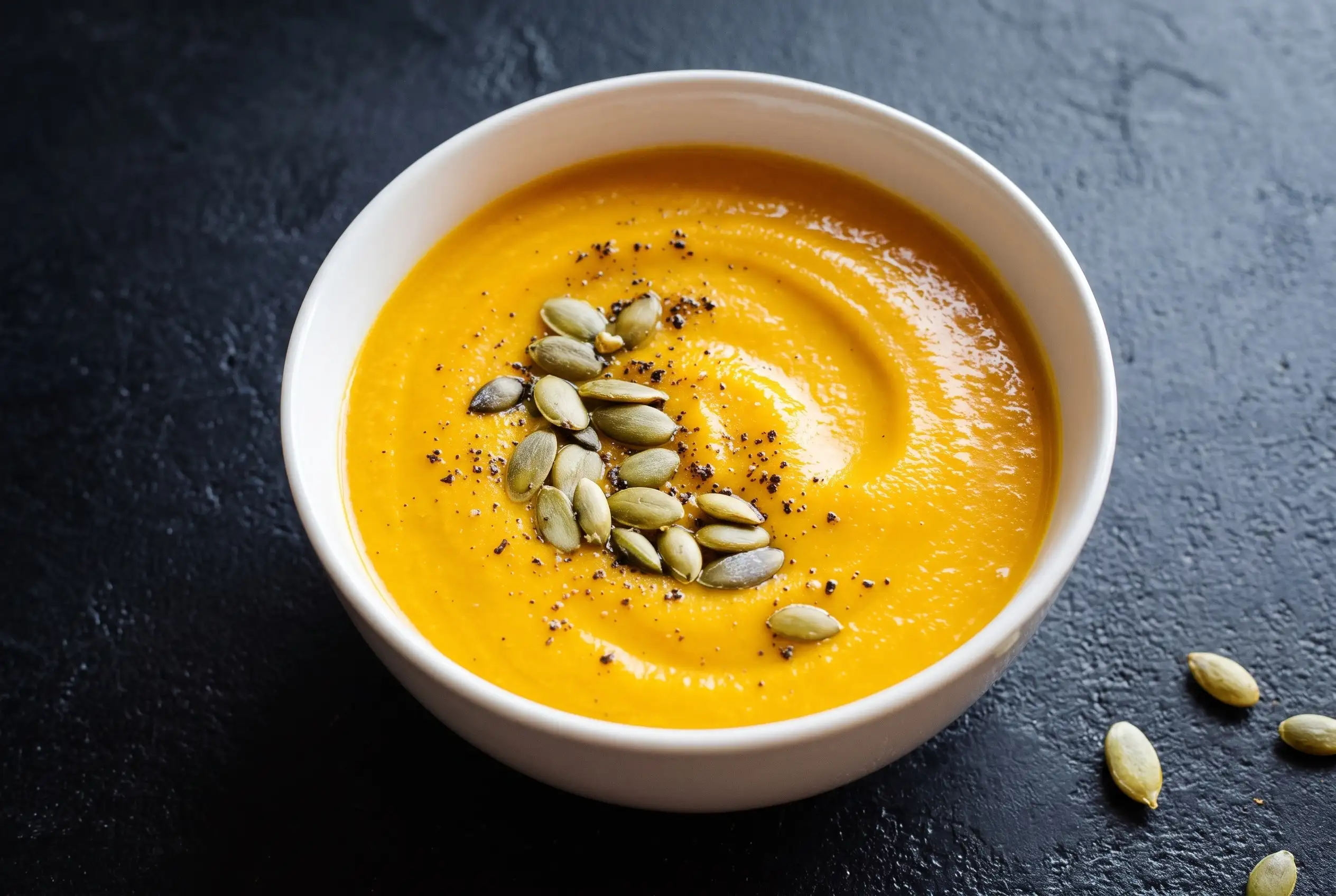
Roasted Pumpkin Soup with Garlic, Thyme and Nutmeg
Ingredients
Method
- Set the oven to 400°F / 200°C.
- Place the cubed pumpkin in a large bowl and coat it with the olive oil, kosher salt, black pepper, and ground nutmeg.
- Arrange the seasoned pumpkin on a baking sheet and roast for 20-25 minutes, until tender and lightly caramelized.
- While the pumpkin roasts, warm a large pot over medium heat and cook the chopped yellow onion for about 5 minutes, until softened.
- Add the minced garlic and cook with the onion for 1 minute.
- Transfer the roasted pumpkin to the pot with the onion and garlic.
- Add the vegetable broth, bring the mixture to a simmer, and cook for about 10 minutes.
- Puree the soup with an immersion blender until smooth, or carefully transfer it to a blender in batches and blend until smooth.
- Mix in the heavy cream or coconut milk, then add the optional unsalted butter and chopped fresh thyme. Adjust the seasoning to taste.
- Serve the soup hot and finish with toasted pumpkin seeds if desired.