Philly Cheese Steak Soup Recipe with Provolone Cheese
Philly Cheese Steak Soup Recipe turns the familiar flavors of a classic cheese steak into a warm, creamy bowl built around thinly sliced beef, tender vegetables, savory broth, and melted provolone. The combination is hearty enough for a satisfying meal while still coming together with a straightforward stovetop method.
Thinly sliced beef sirloin gives the soup its substantial base, while onion, green bell pepper, and garlic bring the savory vegetable character associated with a cheese steak. Beef broth creates the foundation, heavy cream adds richness, and provolone melts into the hot liquid for a smooth cheesy finish.
What Gives Philly Cheese Steak Soup Recipe Its Character
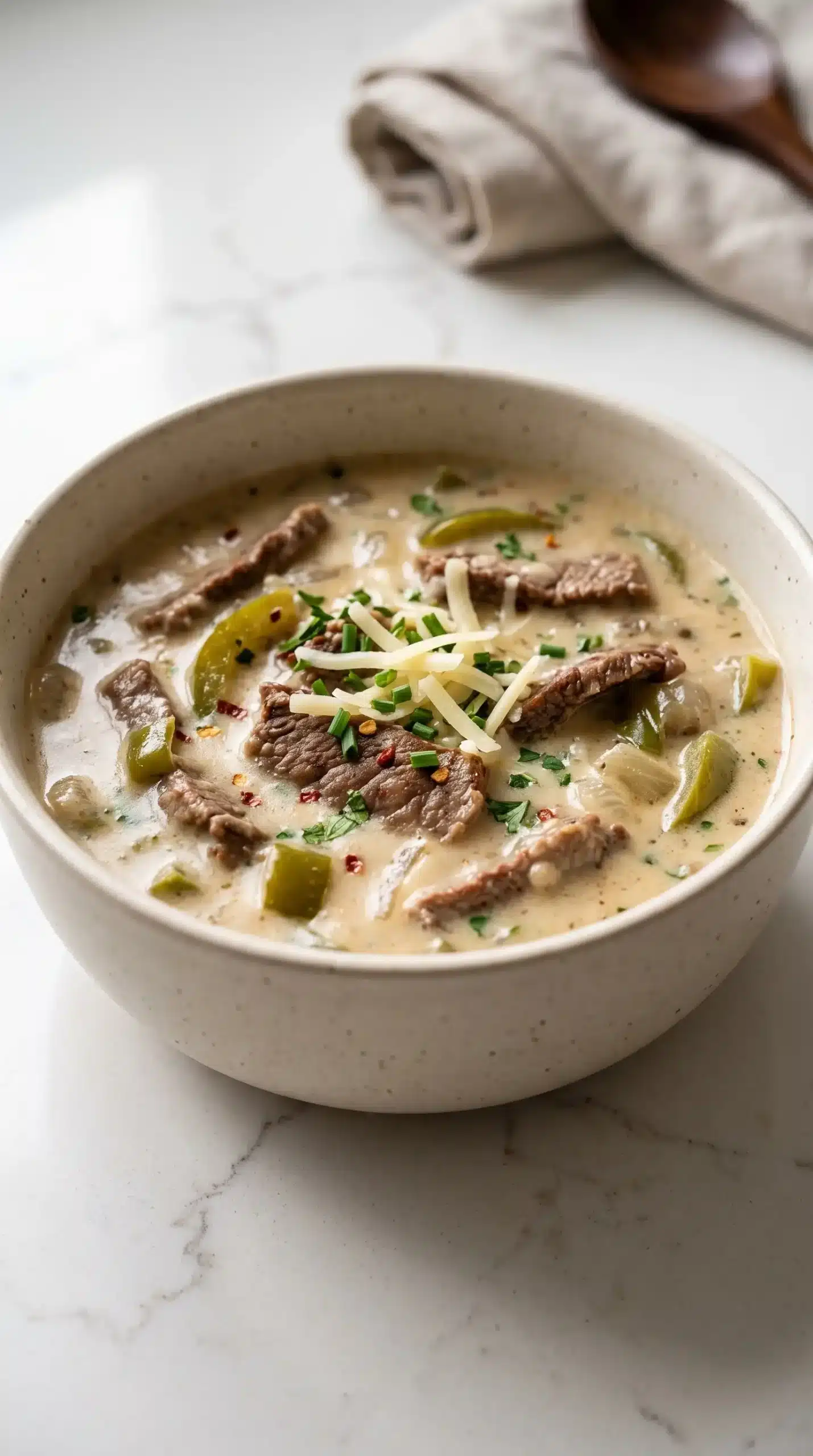
The defining feature of Philly Cheese Steak Soup Recipe is the way familiar sandwich components work together in a different format. Beef remains the centerpiece, but instead of being served between bread, it is surrounded by broth and creamy cheese. Onion and green bell pepper provide the vegetable contrast needed to keep the bowl from tasting one-dimensional.
Provolone is especially important because it connects the soup to the cheese steak inspiration. Once melted into the hot cream-and-broth mixture, it gives the finished soup a distinctly cheesy texture and flavor. The result is comforting without requiring a complicated preparation.
Why Thinly Sliced Sirloin Works So Well
Thinly sliced beef sirloin is well suited to a soup where the meat needs to cook quickly and remain easy to eat by the spoonful. Browning the slices first also gives them a savory surface before they return to the pot with the broth.
The initial browning also develops flavor through the Maillard reaction, the heat-driven process that creates browned color and more complex savory flavors on the surface of meat.
Cooked beef should be removed temporarily after browning. That simple pause gives the onion, bell pepper, and garlic room to cook in the same pot, allowing their flavors to develop without leaving the beef exposed to prolonged cooking during the vegetable stage.
Provolone, Cream, and Broth Need Careful Balance
Heavy cream and shredded provolone create the rich finish, while beef broth supplies the liquid needed for a soup rather than a thick cheese sauce. The combination of savory beef, broth, and melted cheese is also central to cheesy beef and potato soup, while the provolone in this recipe gives the finished bowl its distinct cheese steak character.
| Component | Role in the soup | What to watch for |
|---|---|---|
| Beef sirloin | Provides the main savory protein | Brown the thin slices before returning them to the pot |
| Beef broth | Forms the savory liquid base | Choose a suitable gluten-free version when needed |
| Heavy cream | Adds richness and creamy texture | Stir it in after the broth simmering stage |
| Provolone | Creates the cheese steak-style finish | Cook until completely melted and incorporated |
The Vegetable Base Builds the Savory Layer
Onion, green bell pepper, and garlic provide more than color. Their sautéing stage establishes the aromatic foundation that supports the beef and cheese. Cooking them until tender softens their texture and makes them easier to enjoy throughout the finished soup.
Keeping the vegetables in the same pot used for the beef also makes practical use of the savory flavors left behind during browning. Their tenderness matters because firm pieces can distract from the creamy consistency of the finished bowl.
Managing Heat Keeps the Cheese Smooth
Heat control becomes particularly important once heavy cream and provolone enter the pot. The broth is simmered with the beef before the dairy and cheese are added, separating the main cooking stage from the finishing stage.
Once the cheese goes in, gentle cooking is the useful approach. Stir as it melts so the provolone distributes through the liquid instead of sitting in concentrated pockets. The soup is ready when the cheese has melted and everything is heated through.
Seasoning Philly Cheese Steak Soup Recipe at the Finish
Salt and pepper are added according to taste after the creamy cheese mixture has come together. Waiting until this point makes sense because the beef broth and provolone already contribute savory flavor, so the finished liquid gives you a better opportunity to judge the seasoning.
A small splash of Worcestershire sauce is another option mentioned for adding extra flavor. It can be incorporated while the soup is being finished, but it should complement the beef and cheese rather than overwhelm them.
How the Cooking Stages Fit Together
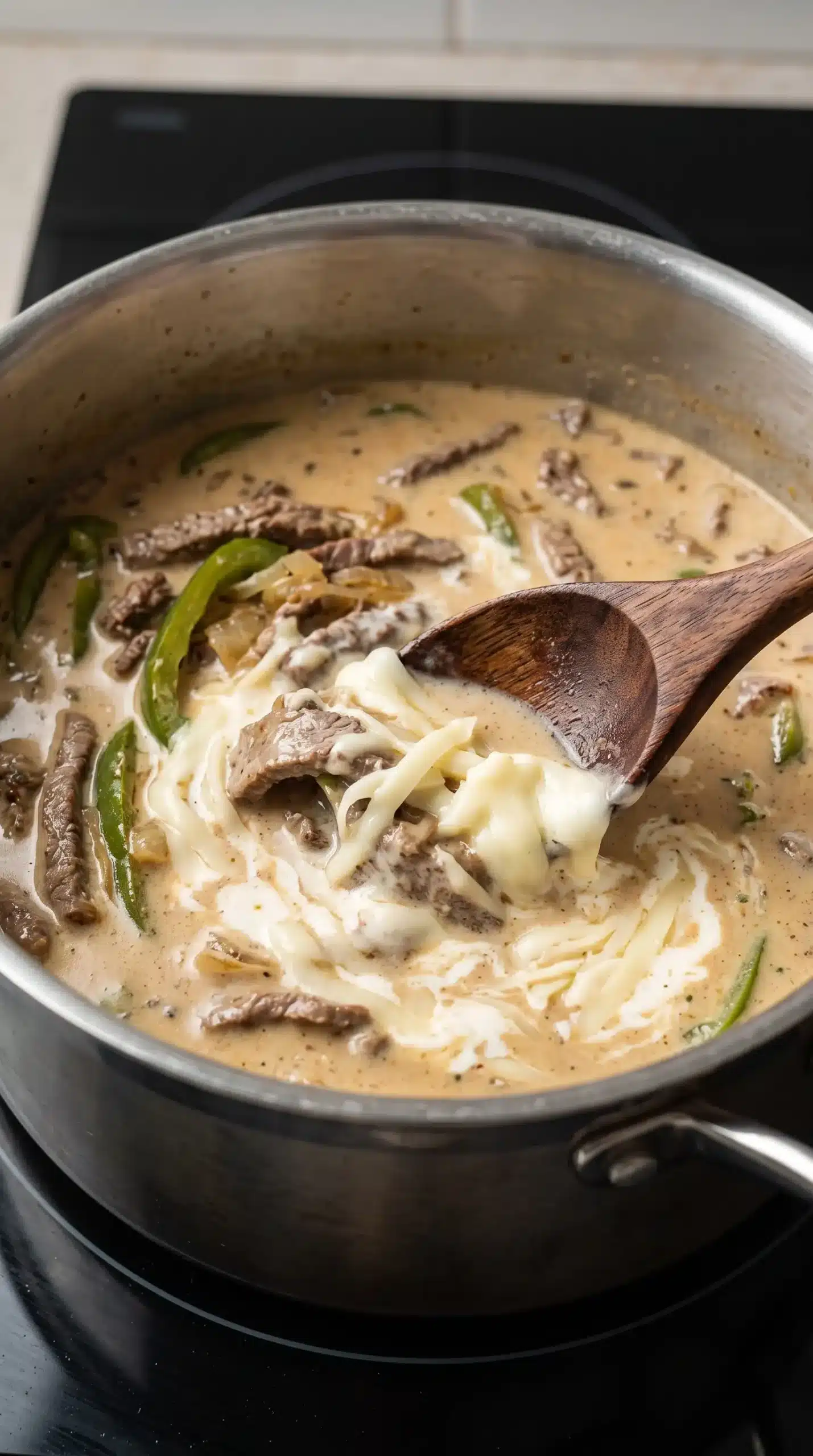
- Brown the beef: Cook the thinly sliced sirloin in olive oil until browned, then remove it temporarily.
- Soften the vegetables: Sauté the onion, green bell pepper, and garlic in the same pot until tender.
- Develop the soup: Return the beef, add beef broth, and simmer so the flavors come together.
- Finish with dairy: Stir in heavy cream and shredded provolone until the cheese melts and the soup is heated through.
- Adjust the flavor: Taste and season with salt and pepper before serving hot.
Common Philly Cheese Steak Soup Recipe Mistakes to Avoid
Overcooking the beef is one issue to avoid because the sirloin is thinly sliced and does not need extended cooking before it returns to the broth. Browning it first, setting it aside, and bringing it back during the simmering stage keeps the cooking process controlled.
Another problem can occur when the cheese is added before the broth stage has been completed. The supplied method keeps provolone and heavy cream until the end, so the beef and vegetables have already had time to cook before the creamy finish is introduced.
- Watery texture: Keep the proportions of broth, cream, and cheese balanced so the finished soup retains its intended creamy character.
- Uneven cheese: Stir after adding the provolone and continue cooking until it has fully melted.
- Firm vegetables: Give the onion, bell pepper, and garlic enough sautéing time to become tender before adding the broth.
- Flat seasoning: Taste after the cheese has melted, then adjust with salt and pepper.
Easy Ways to Change the Soup Without Losing Its Identity
Different cheeses can change the personality of the bowl while preserving its creamy, savory character. Cheddar or mozzarella can replace the provolone when a different cheese flavor is preferred.
Green bell pepper can also be replaced with red or yellow bell pepper. Those choices bring a sweeter pepper character to the soup while keeping the vegetable element intact. Mushrooms or spinach are additional vegetables that can be added for more variety.
For a lighter variation, low-fat milk can stand in for heavy cream. Leftover cooked steak is another practical shortcut when you want to reduce the amount of cooking needed for the beef portion.
Serving Ideas for a Rich, Savory Bowl
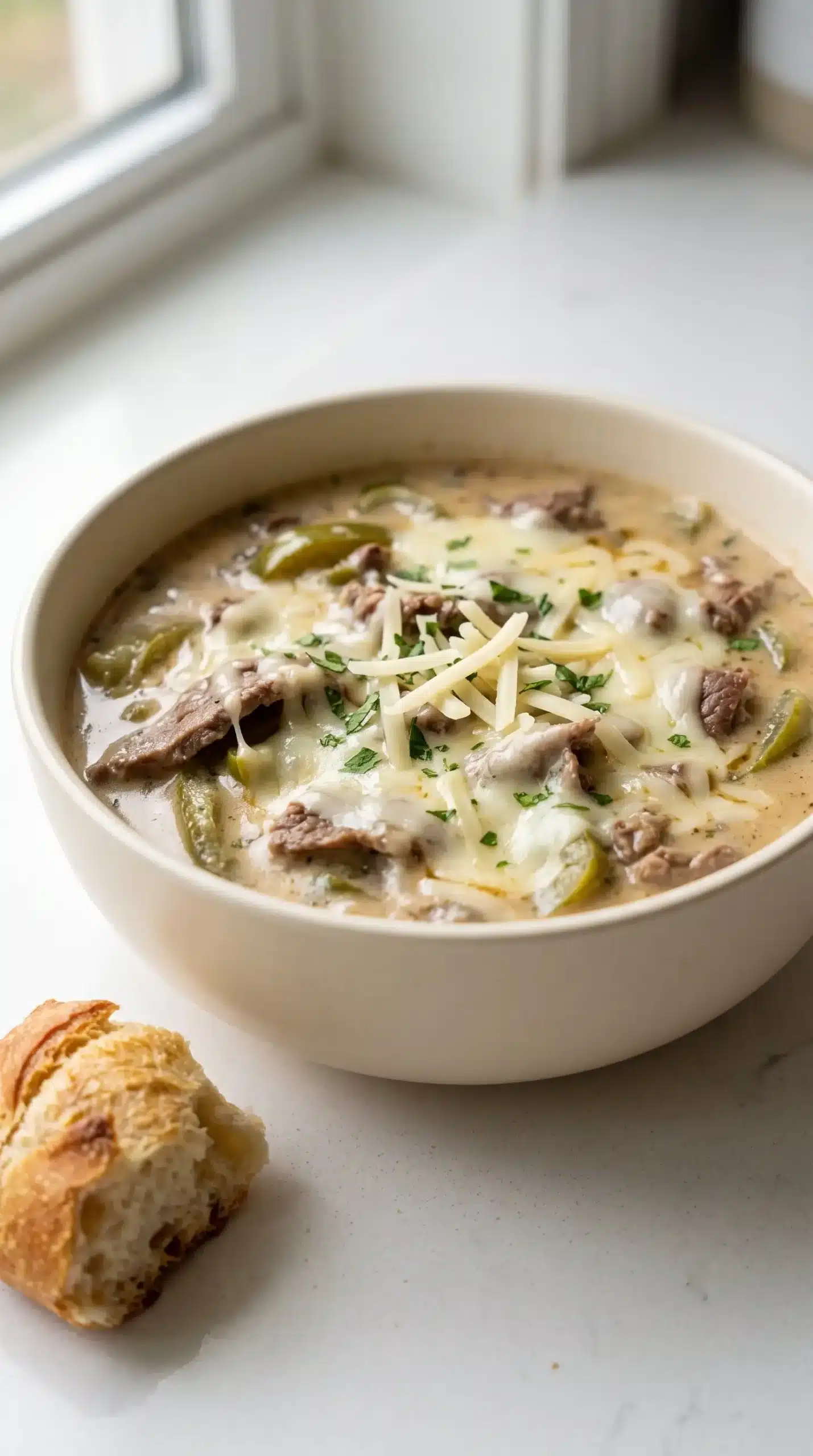
Serve Philly Cheese Steak Soup Recipe hot in bowls so the creamy cheese mixture can be enjoyed at its best. Extra shredded cheese can be placed on top for a more pronounced cheesy finish, while chopped herbs provide a fresh-looking contrast.
Crusty bread makes a natural accompaniment because it adds a firm texture alongside the soft beef, vegetables, and creamy broth. A fresh salad offers another side option when you want something lighter beside the rich soup.
Storage and Reheating Considerations
Once cooled, the soup can be placed in an airtight container and refrigerated for about 3 to 4 days. Keeping it sealed helps maintain its quality while it is stored.
Freezing is also an option for up to 2 months. Allow the soup to cool completely before freezing, then reheat it when ready to serve. Because the soup contains cream and melted cheese, gentle reheating and regular stirring are useful for bringing the mixture back together.
| Storage choice | Maximum stated storage period | Important handling point |
|---|---|---|
| Refrigerator | About 3–4 days | Use an airtight container |
| Freezer | Up to 2 months | Cool the soup completely before freezing |
| Serving after storage | Until heated through | Reheat gently and stir to recombine the creamy mixture |
When Chicken Makes Sense as a Substitute
Chicken breast or thigh can replace the beef when a different protein is desired. The substitution changes the flavor profile, but the soup can still follow the same general creamy structure built from broth, vegetables, cream, and melted cheese.
Either chicken cut offers flexibility depending on the texture you prefer. The key consideration is that the meat should be cooked appropriately before the soup reaches its finished stage.
Gluten-Free Considerations for the Broth
Philly Cheese Steak Soup Recipe can be gluten-free when the beef broth used is specifically labeled gluten-free. The broth is therefore the ingredient that deserves the closest label check when preparing the soup for someone avoiding gluten.
Worcestershire sauce also deserves attention if it is included, since optional additions should be checked for compatibility with the dietary requirement. Keeping the ingredient labels in view helps preserve the intended variation without making assumptions about packaged products.
The Best Cooking Judgment for Philly Cheese Steak Soup Recipe
Thinly sliced beef, tender vegetables, creamy broth, and melted provolone need to arrive together without allowing any single component to dominate. Browning the beef first, softening the vegetables separately in the same pot, and waiting until the end to add the cream and cheese creates a clear progression from savory base to creamy finish.
Once the provolone has fully melted, the soup reaches the point where seasoning can be judged accurately. That finishing moment is where the balance of beef, vegetables, broth, cream, and cheese becomes easiest to assess before serving.
Philly Cheese Steak Soup Recipe Questions About Substitutions and Storage
Can leftover cooked steak be used?
Yes. Leftover cooked steak can be used for a quicker version. Since it has already been cooked, it does not need the same browning stage as raw thinly sliced sirloin; add it at an appropriate point so it can warm through without unnecessary cooking.
Can I use cheddar or mozzarella instead of provolone?
Cheddar and mozzarella are both listed as suitable cheese variations. Either can change the flavor and texture of the finished soup while keeping the creamy cheese component central to the dish.
What can replace heavy cream?
Low-fat milk can be used when a lighter version is preferred. The change reduces the richness supplied by heavy cream, so the finished soup will have a different creamy character.
How do I make the soup gluten-free?
Use beef broth carrying a gluten-free label, and check any optional Worcestershire sauce as well. The packaged ingredients matter because their labels determine whether the finished version meets a gluten-free requirement.
Can the soup be made ahead?
Yes. Preparing it ahead allows the flavors to develop, and it can be reheated before serving. Stir during reheating so the creamy broth and melted cheese come together evenly again.
What should I serve with the soup?
Crusty bread and fresh salad are both suitable accompaniments. Extra shredded cheese or chopped herbs can also be used directly on the hot soup when you want to change the finishing presentation.
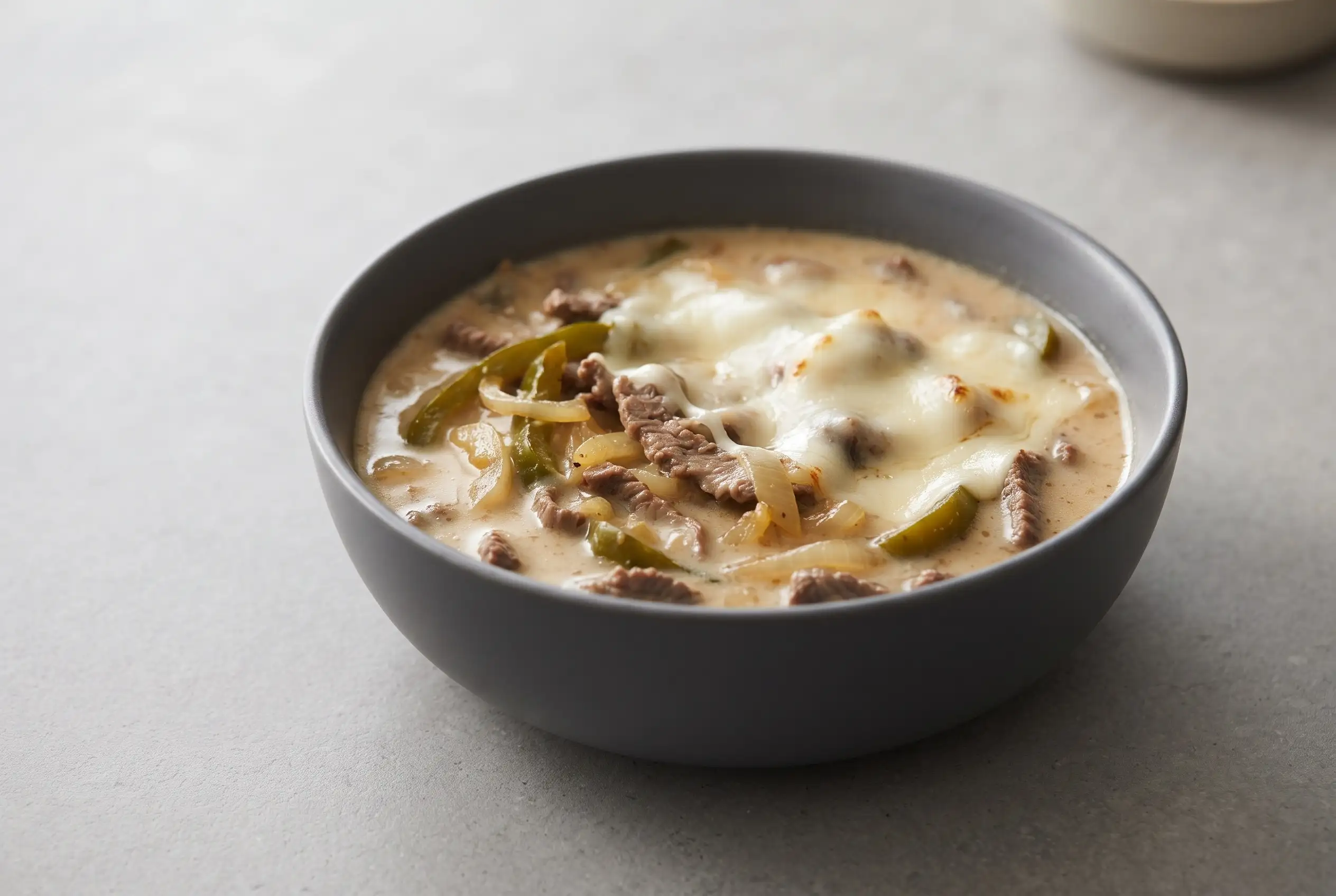
Philly Cheese Steak Soup with Provolone Cheese
Ingredients
Method
- Warm the olive oil in a large pot over medium heat. Add the thinly sliced beef sirloin and cook until browned. Transfer the beef to a plate and set aside.
- Place the onion, green bell pepper, and garlic in the same pot. Sauté until the vegetables are tender.
- Put the browned beef back into the pot and add the beef broth. Bring the soup to a simmer and cook for 15 minutes.
- Add the heavy cream and shredded provolone cheese. Stir and continue cooking until the cheese is fully melted and the soup is hot.
- Season with salt and black pepper to taste. Serve the soup hot.