Creamy Ground Beef Pasta with Garlic, Onion and Parmesan
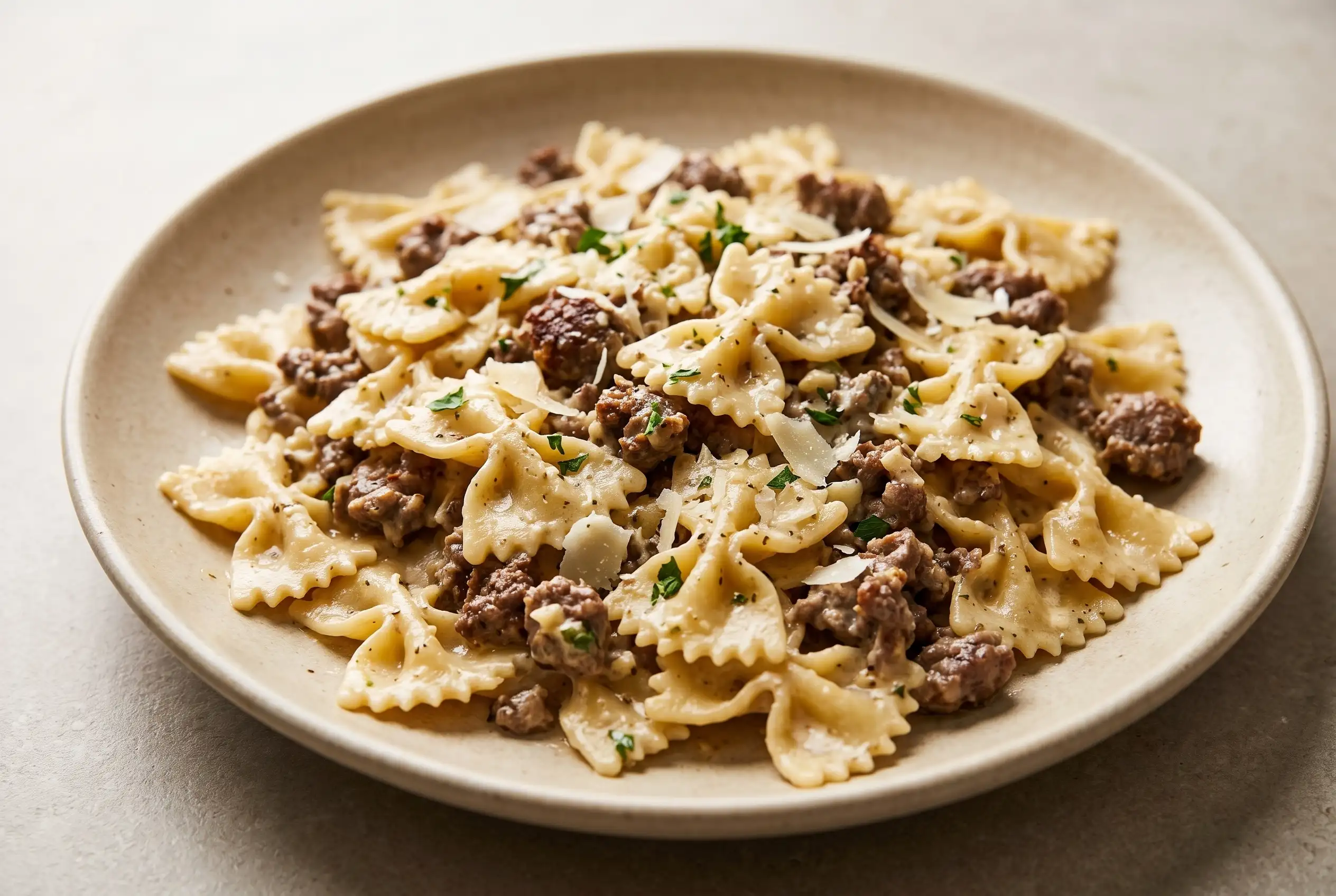
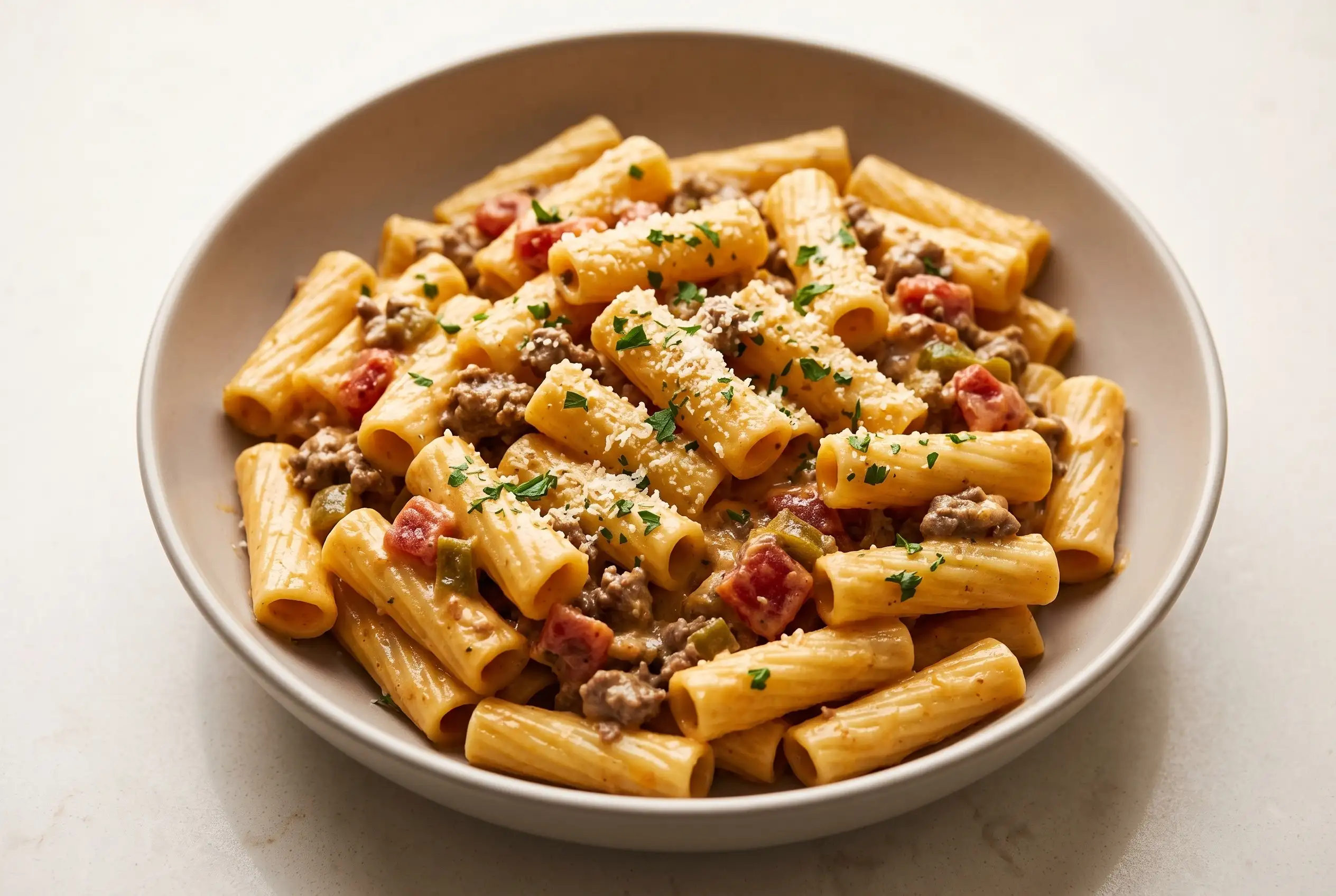
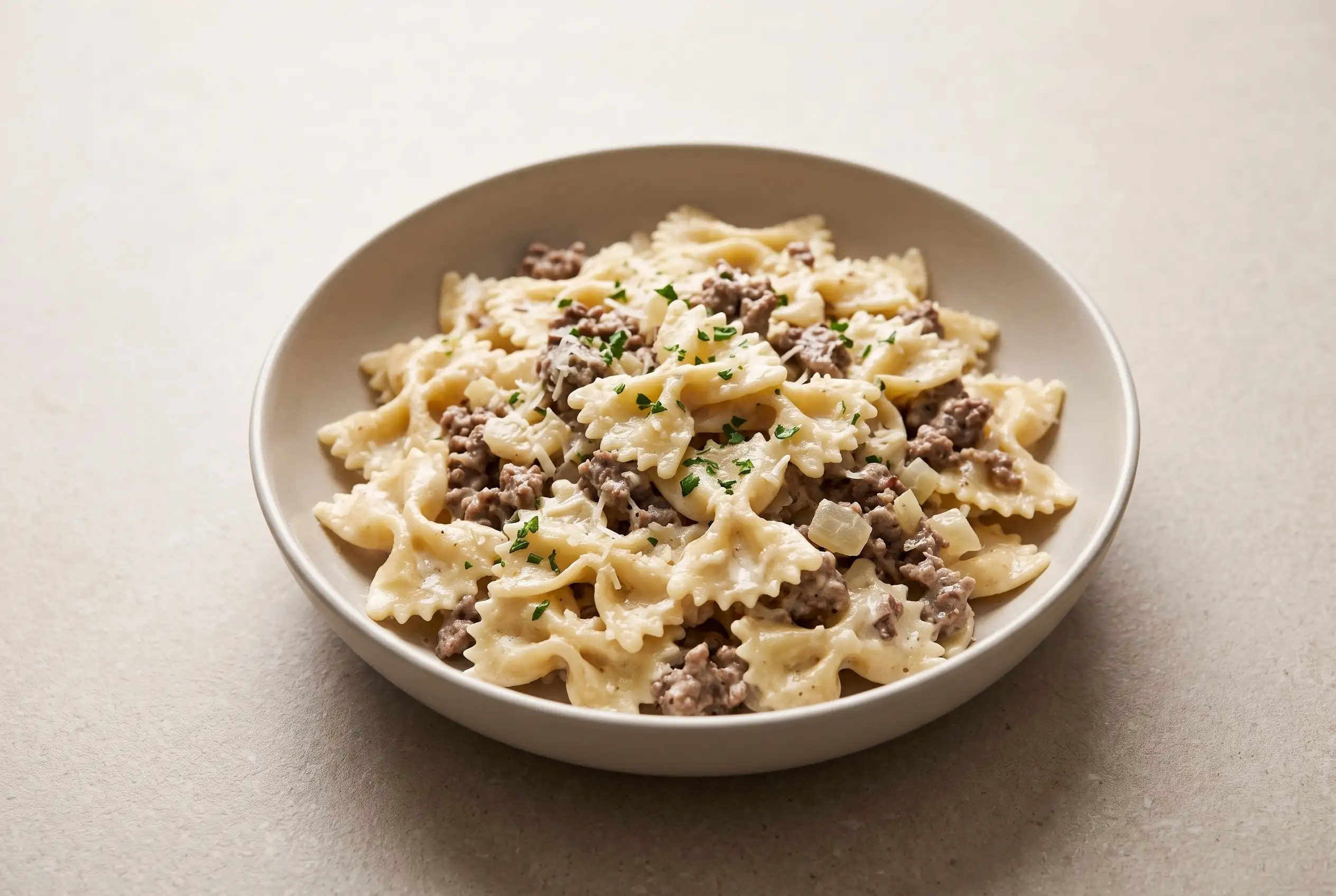
Creamy ground beef pasta brings together browned lean beef, tender penne or fusilli, garlic, onion, Parmesan, and a smooth cream-based sauce in one satisfying skillet meal. The combination feels comforting without requiring a complicated preparation, making it a practical choice when dinner needs to come together with minimal fuss.
Busy evenings benefit from the straightforward stovetop approach. The pasta cooks separately while the beef and aromatics build the sauce in a large skillet, then everything comes together for a creamy finish. Parmesan gives the sauce its savory character, while Italian seasoning keeps the flavor familiar and easy to pair with simple sides.
Why Creamy Ground Beef Pasta Works for Weeknight Dinner
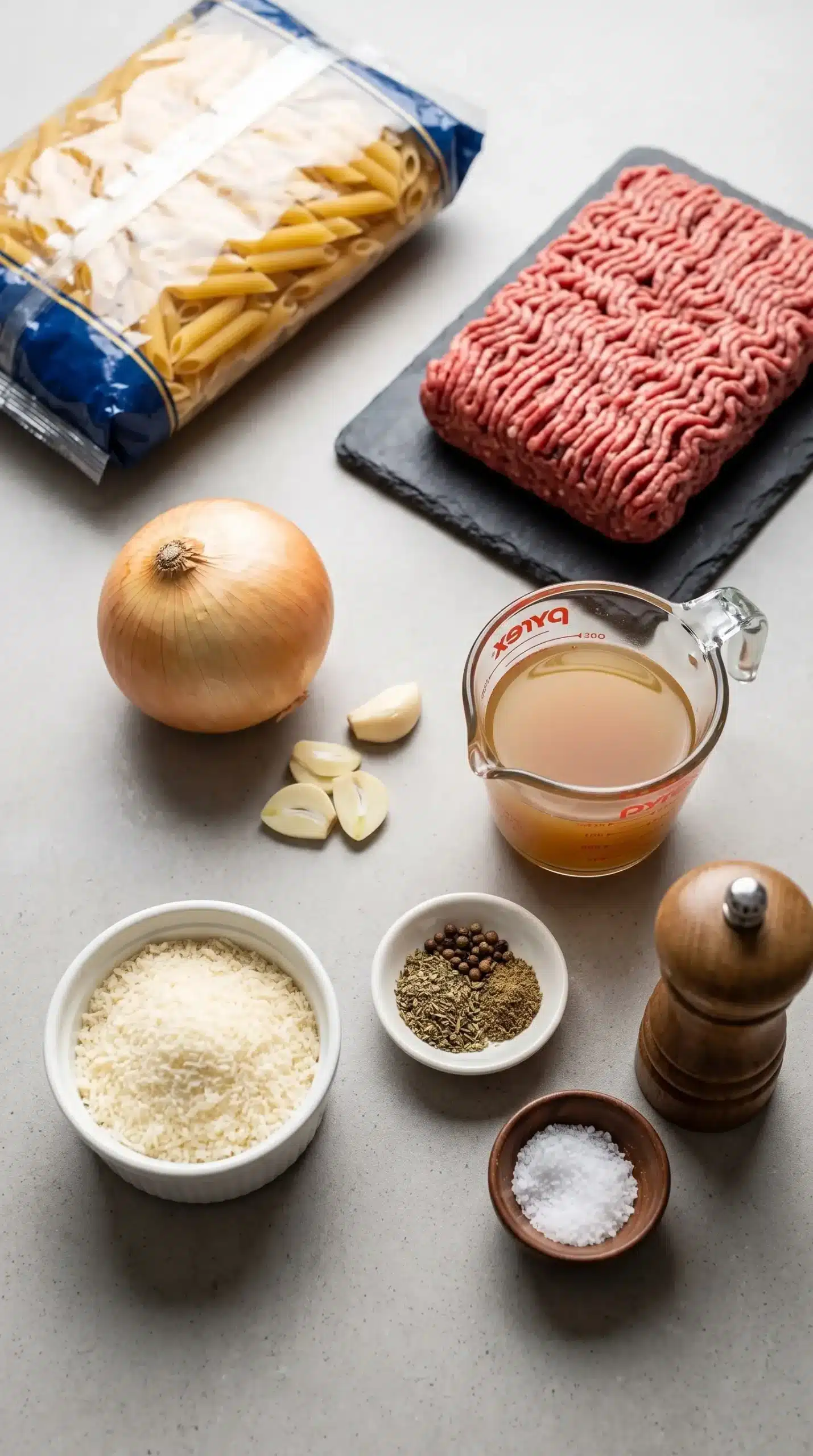
Lean ground beef provides a hearty base while pasta makes the dish filling enough to serve as the centerpiece of a meal. Onion and garlic establish the savory foundation before the broth, cream, and Parmesan turn the skillet mixture into a cohesive sauce.
Another advantage is the flexible ingredient profile. Penne and fusilli both work well because their shapes hold onto the creamy sauce. Half-and-half can stand in for heavy cream when needed, although the finished sauce will be less rich.
Family dinners can stay simple without feeling plain. A little extra Parmesan at serving adds more savory flavor, while a simple salad or garlic bread can round out the plate without requiring another elaborate preparation.
Choosing Pasta Shapes for a Creamy Beef Sauce
Penne and fusilli are the two pasta choices supplied for the dish, and both suit a sauce that needs to cling to the noodles. Penne offers tubular pieces that carry sauce, while fusilli has twists that catch the creamy mixture across their ridges and curves.
| Pasta choice | Best practical feature | Cooking consideration |
|---|---|---|
| Penne | Tubular shape pairs naturally with creamy sauce | Cook until al dente according to the package directions |
| Fusilli | Twists hold sauce across the pasta surface | Cook until firm to the bite |
| Spaghetti | Useful variation when a long pasta is preferred | Use in place of the original shapes without changing the sauce concept |
| Whole wheat pasta | Offers a different pasta option with more fiber | Follow its package cooking directions |
Whatever shape you choose, avoid cooking it past al dente before it reaches the skillet. Firm pasta is easier to combine with the sauce without becoming overly soft during the final coating step.
Parmesan and Cream Build the Sauce
Heavy cream and Parmesan are the key ingredients behind the creamy texture. The cream is warmed with vegetable broth and allowed to simmer briefly, while grated Parmesan melts into the liquid to create a thicker, savory sauce.
Low-sodium vegetable broth brings additional liquid to the skillet while leaving room to adjust the seasoning with salt and pepper. Keeping the broth low in sodium is particularly useful because Parmesan already contributes a naturally savory character.
Half-and-half is a practical substitute for heavy cream when a lighter dairy option is available. Milk can also be used, although the sauce will not have the same level of creaminess. Another cheese, such as mozzarella or cheddar, can replace Parmesan when preferred.
Keep the Stovetop Beef Pasta Sauce Under Control
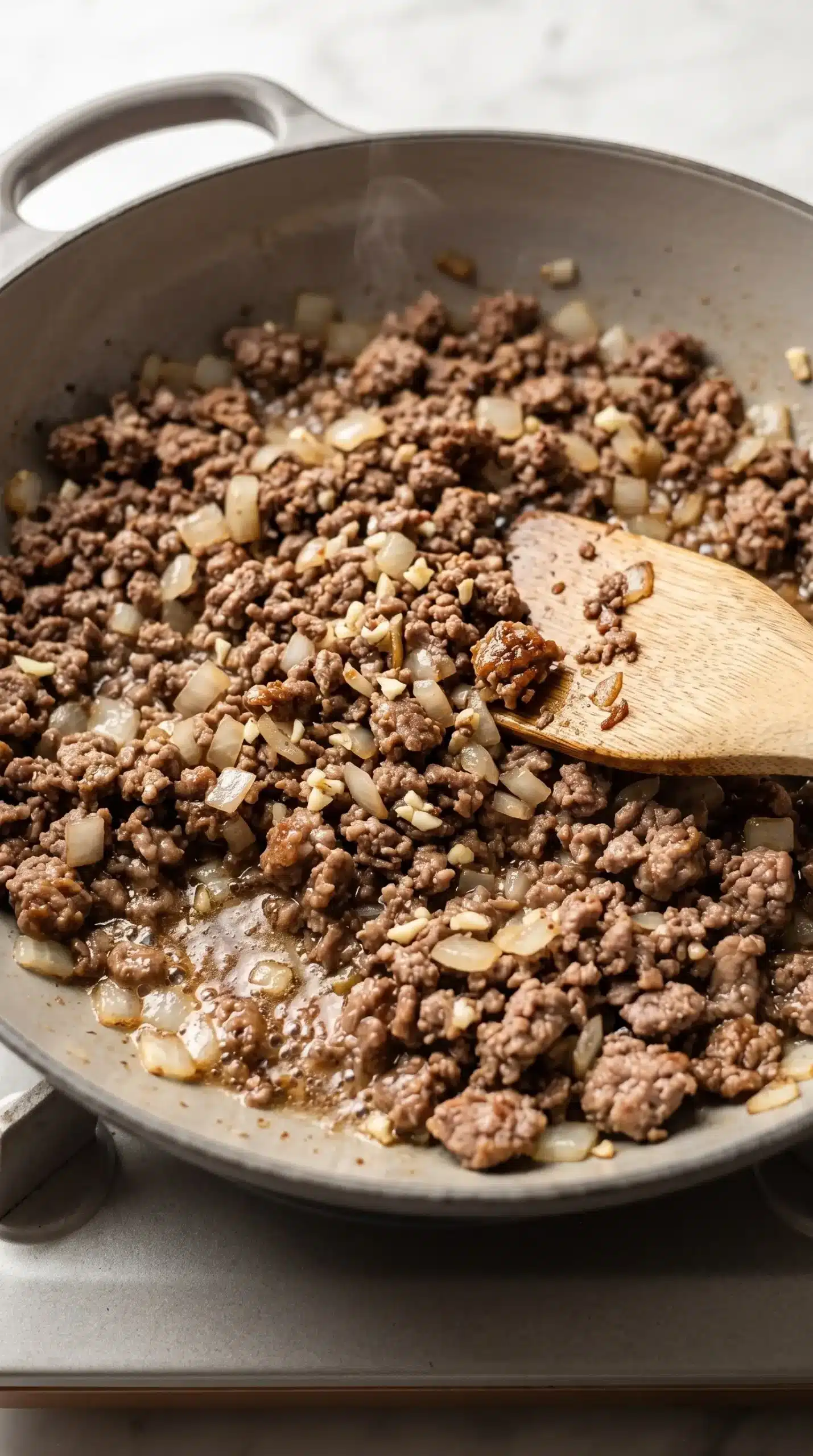
Medium heat gives the onion time to soften before the beef is added. The garlic only needs about a minute after the onion has softened, which helps it become fragrant without giving it an extended cooking period.
Once the beef enters the skillet, cook it until browned and season it with salt and pepper. Browning gives the meat the cooked, savory character needed to balance the creamy dairy components.
For more depth on why the browning step matters, Maillard browning reactions help create the characteristic aromas and flavors associated with well-browned meat.
After the broth and cream are combined with the cooked beef, watch the simmer closely. The sauce should thicken a little during its short simmer before Parmesan is stirred in. A gentle simmer keeps the process controlled while allowing the cheese to melt into the liquid.
Gently folding the drained pasta through the sauce is the finishing control point. Coating the noodles evenly distributes the beef and creamy mixture, while restrained stirring helps keep the cooked pasta intact.
Small Details That Improve Creamy Beef Pasta
- Season in stages: Salt and pepper the beef, then taste the finished sauce before serving so the seasoning can be adjusted.
- Use grated Parmesan: Grated cheese melts directly into the warm cream and broth mixture for an integrated sauce.
- Watch the simmer: The cream and broth only need a short period to thicken slightly before the cheese is added.
- Coat gently: Stir the pasta into the skillet carefully so the sauce covers the noodles without unnecessary handling.
Freshly cooked pasta should be drained before it joins the skillet. Keeping the pasta separate until the sauce is ready gives you better control over its texture and makes the final combination easier to manage.
Common Creamy Ground Beef Pasta Mistakes to Avoid
Overcooking the pasta is one avoidable problem. The noodles are cooked separately and should reach an al dente texture, so letting them become very soft before they meet the sauce can leave the finished dish less pleasant to eat.
Excessive simmering can also change the sauce unnecessarily. The supplied method calls for only a short simmer after the broth and cream are added. Once the mixture has thickened a little, Parmesan can be incorporated.
Adding garlic too early can make timing harder to control. The onion is softened first, followed by garlic for about one minute. Keeping that order gives each aromatic its intended cooking window.
Neglecting the final seasoning check can leave the flavors uneven. Because the skillet contains beef, broth, cream, and Parmesan, tasting before serving is the simplest way to determine whether more salt or pepper is needed.
Vegetables Fit Easily Into the Beef Pasta
Spinach and bell peppers are suggested additions when you want more vegetables in the meal. Bell peppers can bring sweetness and texture to the skillet, while creamy Rotel pasta with ground beef pairs tomatoes and green chilies with the beef and pasta combination.
Zucchini and carrots are also suitable choices when looking for additional vegetables. Their inclusion provides another way to change the dish while keeping the core combination of pasta, seasoned beef, and creamy sauce intact.
A vegetable addition can make the skillet feel more substantial without requiring a separate vegetable side. Keep the main sauce structure recognizable so the added produce complements the beef and pasta instead of overwhelming them.
Simple Swaps Change the Creamy Beef Pasta
Ground turkey or ground chicken can replace the lean ground beef when a different meat is desired. A plant-based ground meat alternative offers another substitution while preserving the general skillet format.
Vegetarian versions can use plant-based ground meat or mushrooms in place of the beef. These options change the main savory component while leaving the pasta and creamy sauce concept available.
Different pasta shapes can also change the presentation. Spaghetti provides a long-pasta variation, while whole wheat pasta offers another option when you want a different texture and more fiber.
Serving Creamy Ground Beef Pasta at Its Best
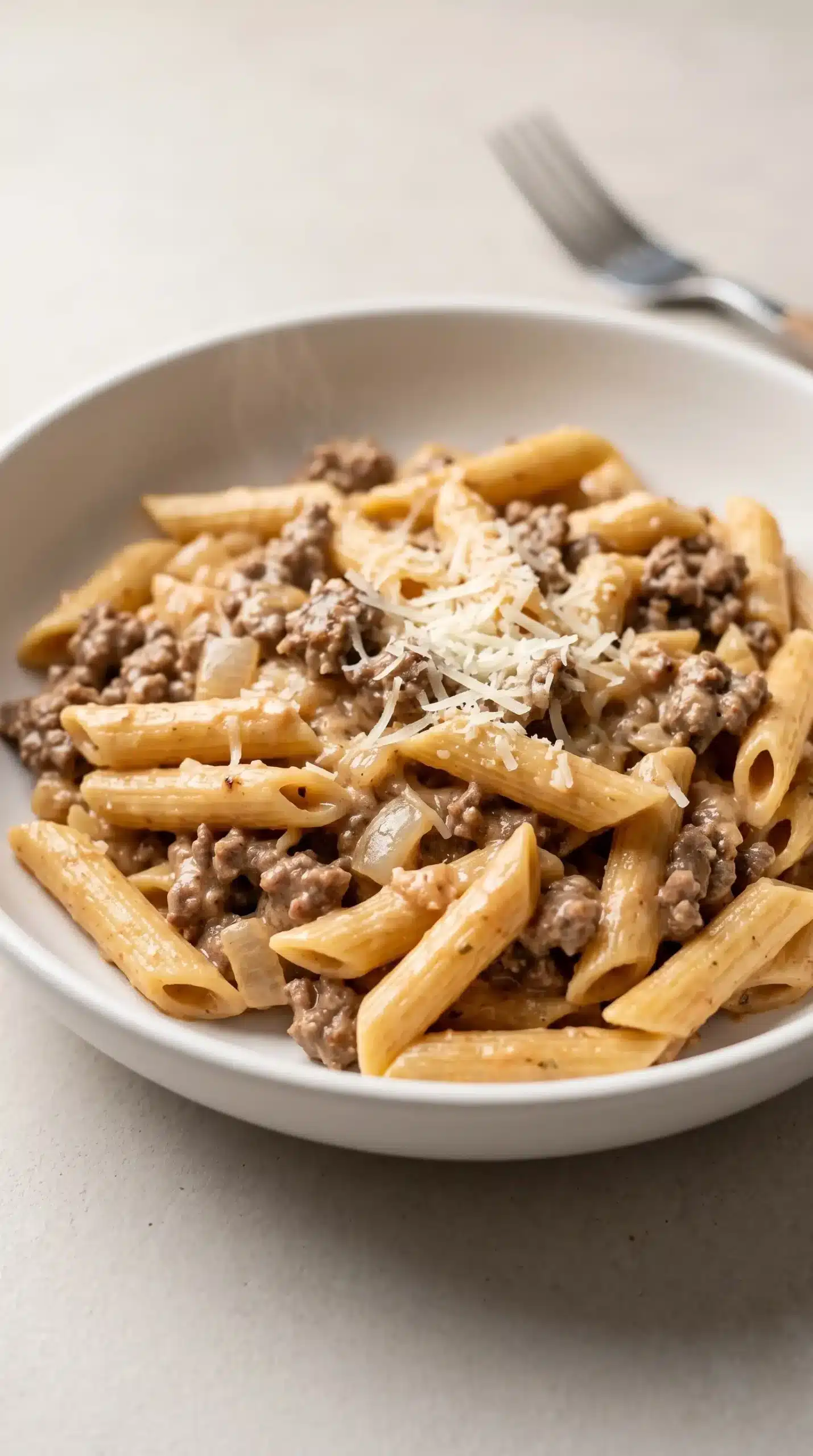
Serve the pasta hot in a bowl or on a plate so the creamy sauce remains the focus of the dish. Extra Parmesan can be sprinkled over each portion for an additional savory finish.
Garlic bread makes a natural companion for the creamy skillet pasta, especially when you want something alongside the saucy noodles. A simple salad provides another easy pairing and brings a fresh element to the meal.
Storing Leftover Creamy Ground Beef Pasta
Cool leftover pasta completely before transferring it to an airtight container. Refrigeration keeps the leftovers convenient for another meal, with the supplied storage guidance indicating about three days in the fridge.
Reheating can be done on the stovetop or in the microwave. Warm the portion until heated through, taking care not to handle the pasta more than necessary so the noodles retain their texture.
What the Creamy Beef Pasta Ingredients Contribute
| Ingredient | Role in the dish | Useful choice or adjustment |
|---|---|---|
| Lean ground beef | Provides the main savory protein component | Use lean beef when you want to keep the dish lighter |
| Onion and garlic | Build the savory aromatic base | Cook the onion until soft before adding the garlic |
| Vegetable broth | Provides liquid for the creamy skillet sauce | Low-sodium broth leaves more control over seasoning |
| Heavy cream | Creates the rich creamy foundation | Half-and-half can be substituted |
| Parmesan | Adds savory flavor and helps thicken the sauce | Grated Parmesan melts into the warm sauce |
| Italian seasoning | Adds the dish’s primary herb seasoning | Use the stated seasoning as the central herb profile |
The ingredients work as a connected system instead of separate flavor layers. Aromatics support the beef, broth provides the liquid base, dairy brings creaminess, and Parmesan finishes the sauce with a concentrated savory note.
When the Stovetop Method Makes Sense
Stovetop ground beef pasta is especially useful when you want a complete dinner assembled from a skillet and a pasta pot. The approach keeps the sauce visible and easy to adjust while the noodles cook separately to the desired texture.
Separate cooking also makes the pasta easier to manage. Once it reaches al dente, it can be drained and held briefly while the skillet sauce reaches the right consistency, then combined for the final coating.
A short ingredient list keeps the preparation approachable without removing the important flavor-building steps. Browning the beef, softening the aromatics, controlling the cream-and-broth simmer, and melting in the cheese are the decisions that have the greatest effect on the finished dish.
Stovetop Creamy Beef Pasta Comes Together Through Sauce Control
The skillet sauce determines how the finished creamy ground beef pasta eats. A brief simmer gives the broth and cream time to thicken slightly, while melted Parmesan brings the mixture together before the cooked pasta is folded through.
Firm pasta, properly browned beef, and a gently thickened sauce create the balance to aim for. Keeping those three elements under control matters more than adding extra complexity, because each one has a clear role in making the finished skillet cohesive.
Creamy Ground Beef Pasta Questions About Sauce and Storage
Can heavy cream be replaced with half-and-half?
Yes. Half-and-half can replace heavy cream, although the sauce will be less creamy. Milk is another possible substitute when needed, with an even lighter result.
Can I use another cheese instead of Parmesan?
Yes. Mozzarella or cheddar can replace Parmesan according to the supplied variation guidance. The cheese will change the flavor and character of the finished sauce, so choose based on the taste you prefer.
How can I add vegetables without changing the dish completely?
Spinach, bell peppers, zucchini, or carrots are suitable additions. These vegetables provide straightforward ways to increase the vegetable content while keeping the beef, pasta, and creamy sauce as the central combination.
Can the ground beef be replaced with another protein?
Ground turkey or ground chicken can be substituted for the beef. A plant-based meat alternative is another option when you want to keep a similar ground-texture format.
What pasta can I use if I do not have penne or fusilli?
Spaghetti or whole wheat pasta can be used as variations. The supplied guidance supports changing the pasta type while retaining the creamy sauce and seasoned ground-meat combination.
How should leftovers be reheated?
Refrigerated leftovers can be reheated either on the stovetop or in the microwave. Store the cooled pasta in an airtight container first, then warm the desired portion before serving.
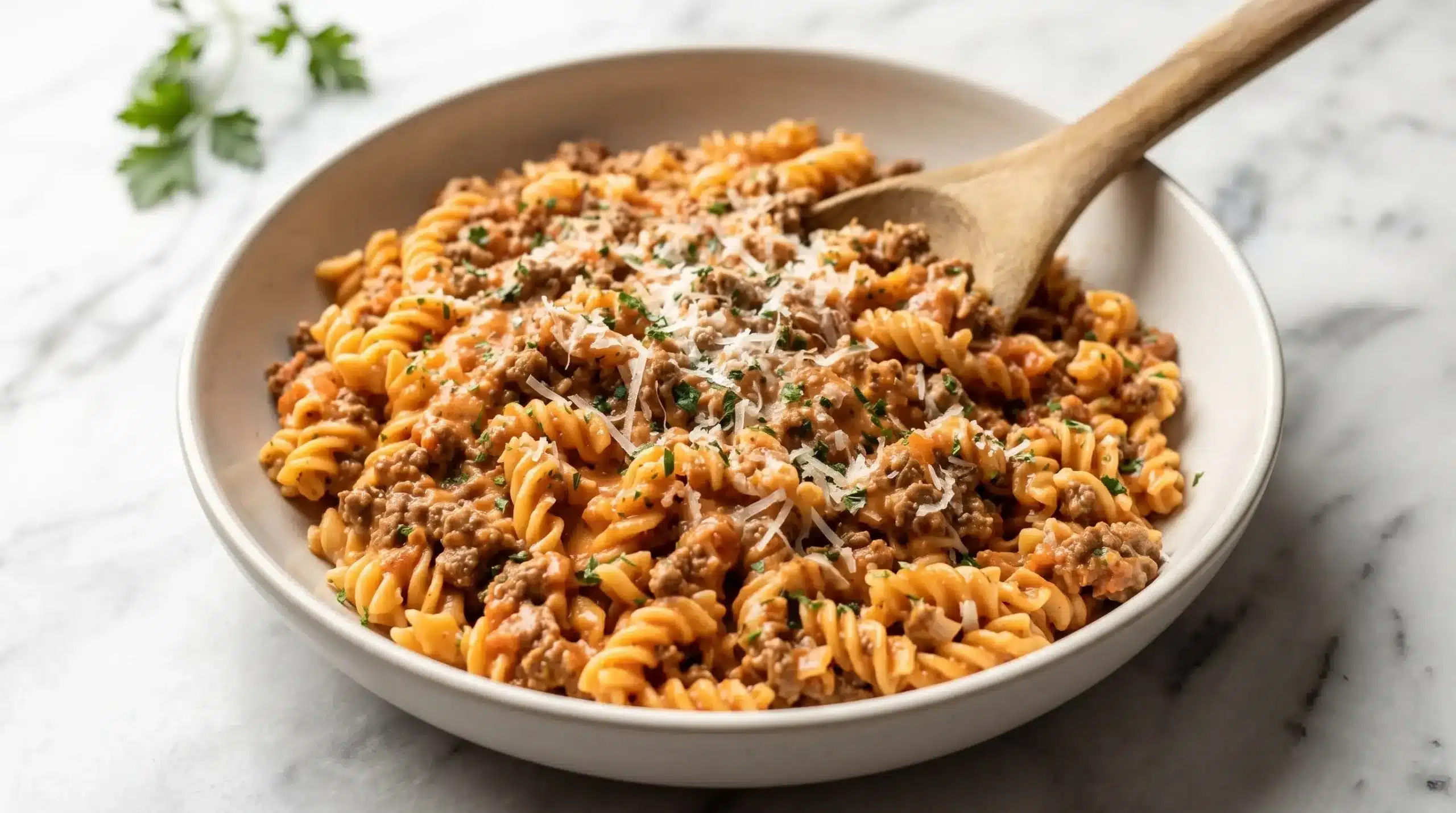
Creamy Ground Beef Pasta with Garlic, Onion and Parmesan
Ingredients
Method
- Warm the olive oil in a large skillet over medium heat. Add the diced onion and cook for about 5 minutes, until softened and translucent. Stir in the minced garlic and cook for 1 minute.
- Add the ground beef, season with salt and pepper, and cook for 6–8 minutes, breaking it up as it cooks, until browned.
- While the beef cooks, bring salted water to a boil in a separate pot. Cook the penne or fusilli according to the package directions until al dente, then drain and set aside.
- Add the vegetable broth to the skillet with the beef. Stir in the heavy cream and Italian seasoning, then simmer for about 3 minutes, until the sauce thickens slightly.
- Stir the grated Parmesan into the skillet until it melts into the sauce.
- Add the drained pasta and gently toss until evenly coated with the creamy beef sauce. Taste and adjust the salt and pepper if needed.
- Serve the pasta hot and finish with extra Parmesan cheese if desired.