Ground Beef Stir Fry Bowl with Garlic Veggies and Rice
Ground beef stir fry brings together savory browned beef, crisp-tender vegetables, a lightly sweet soy-based sauce, and hot white rice in one satisfying bowl. Garlic, chili flakes, sesame oil, and brown sugar create a bold flavor profile without requiring a long ingredient list, while broccoli, red bell pepper, zucchini, and mushrooms add plenty of texture and color.
A Fast Bowl Built Around Contrast
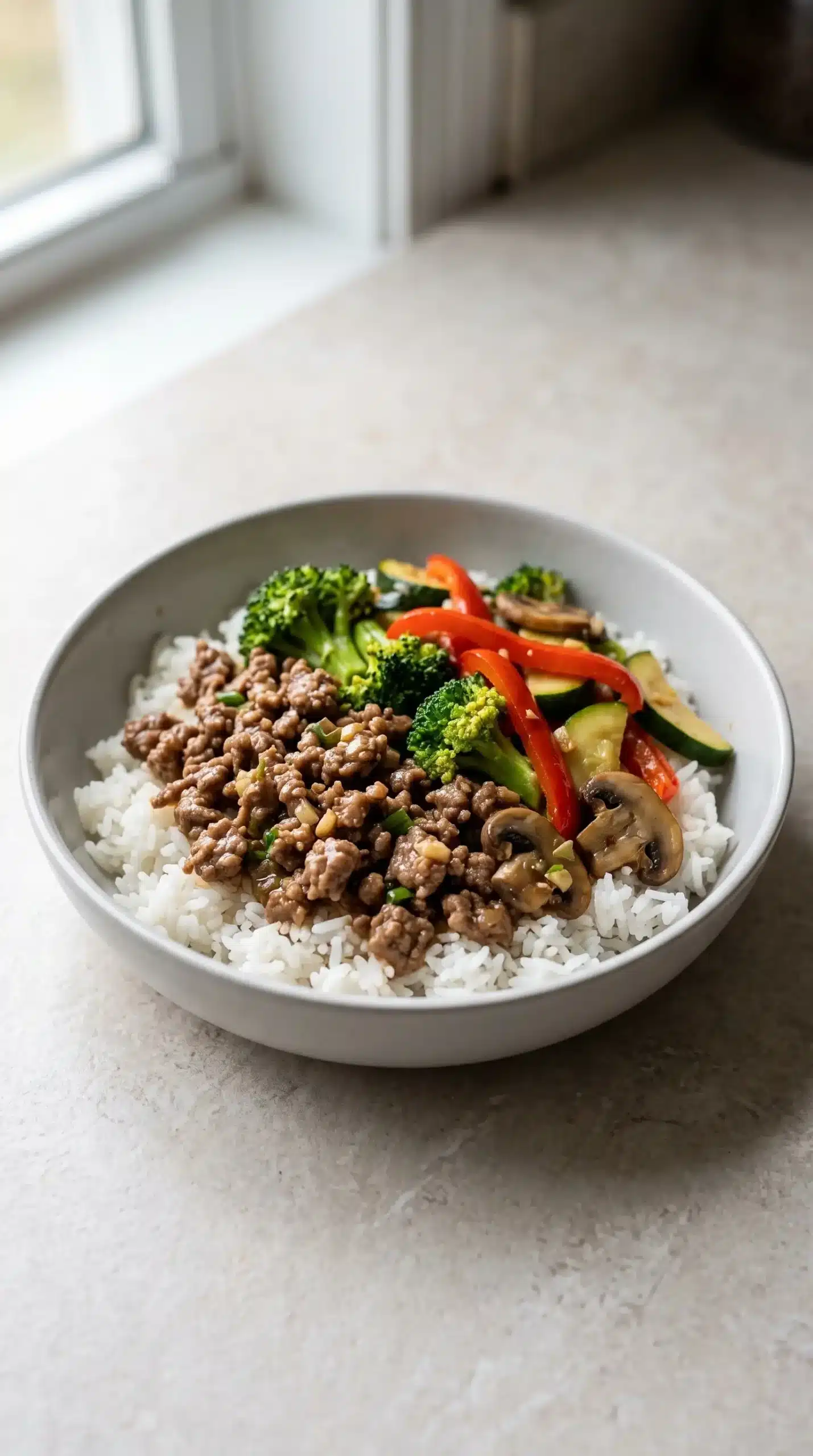
The appeal of a spicy ground beef stir-fry bowl comes from the way its parts complement one another. The beef is rich and savory, the vegetables stay slightly crisp, and the rice provides a soft, neutral base for the seasoned mixture.
Busy weeknight cooking becomes easier because the vegetables do not need to be cooked until soft. Keeping broccoli, zucchini, and bell pepper tender-crisp gives the bowl more texture and prevents the vegetables from becoming lost among the beef and rice.
Separate pans also give the beef and vegetables the attention they need. The beef can develop its seasoned sauce while the vegetables are quickly sautéed, keeping each part distinct when everything reaches the bowl.
Garlic, Soy, and Chili Set the Flavor Direction
Garlic is used with both the beef and vegetables, so its flavor runs through the entire bowl. Brief cooking keeps the minced garlic from sitting in the pan too long before the other ingredients are added.
Soy sauce, brown sugar, and chili flakes create the central seasoning combination for the beef. The soy sauce brings savory depth, brown sugar adds a touch of sweetness, and chili flakes supply the heat. Sesame oil rounds out the beef mixture with its characteristic nutty flavor.
- Chili flakes: Adjust the amount to control the heat without changing the rest of the seasoning.
- Soy sauce: Use it to season both the beef and vegetables, keeping the two components connected.
- Sesame oil: Cook the garlic and beef with it so its flavor becomes part of the seasoned mixture.
- Brown sugar: Balance the savory soy sauce and spicy chili flakes in the beef.
Vegetable Texture Depends on Short Stir-Frying
Broccoli, red bell pepper, zucchini, and mushrooms do not all behave exactly the same way in the pan. Mushrooms are cooked first, giving them time to sauté before the quicker-cooking vegetables are introduced.
Thinly sliced cabbage can be added when a sturdier vegetable is preferred, giving the bowl a tender texture while keeping the beef-centered flavor profile; a Chinese ground beef and cabbage stir-fry uses the pairing in a focused preparation.
Once broccoli, zucchini, and pepper enter the pan, the useful visual cue is tenderness with some crispness remaining. A short stir-fry keeps the vegetables recognizable and gives the finished ground beef stir fry with vegetables a more varied bite.
The Beef Needs Even Browning Before Saucing
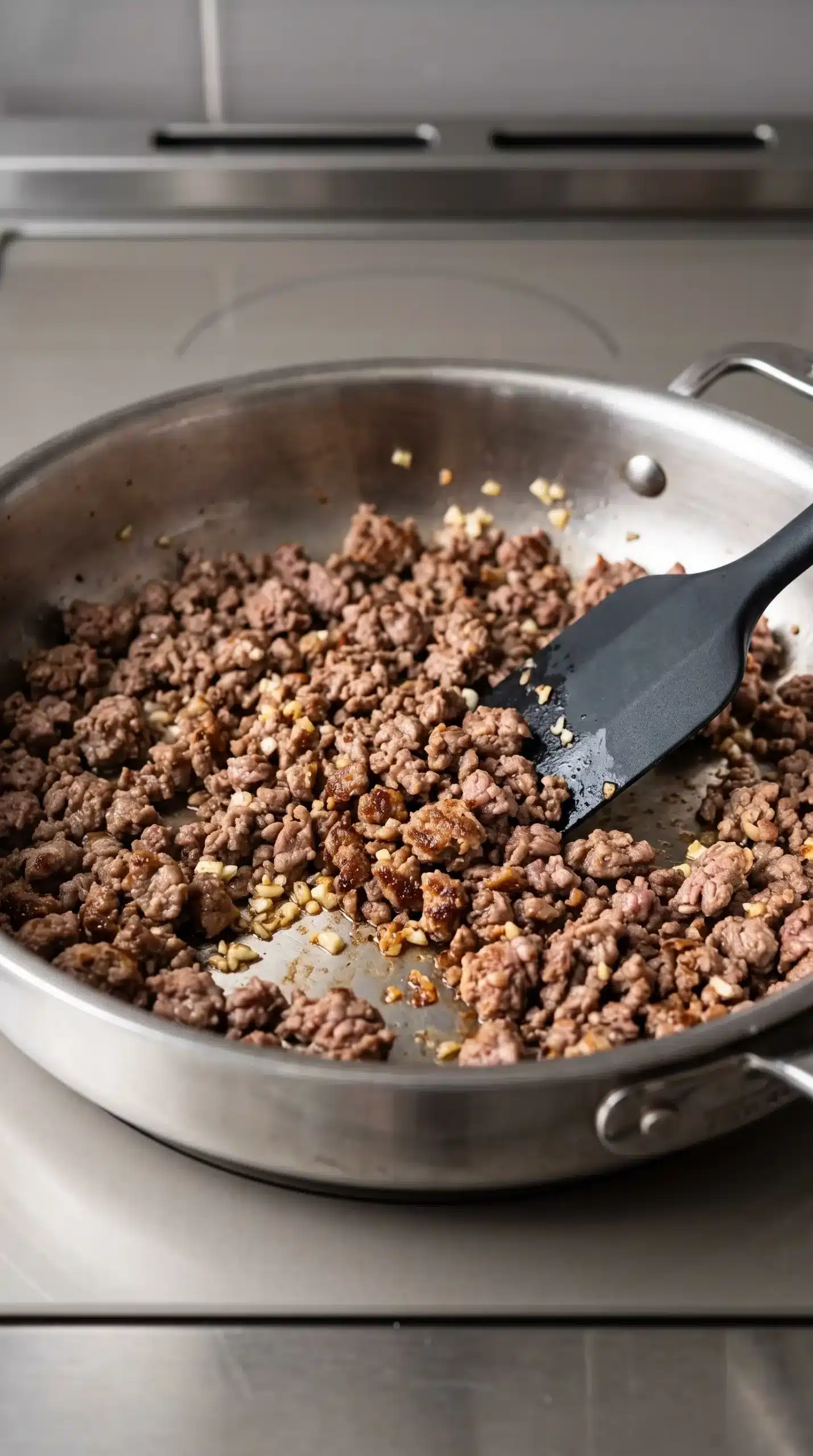
Breaking the ground beef into small pieces as it cooks helps the seasoning reach more of the meat. Browning should happen before the soy sauce, chili flakes, and brown sugar are incorporated, allowing the beef to establish its savory base first.
The browning that develops as the beef cooks involves the Maillard reaction, a set of reactions between amino acids and reducing sugars that produces browned color and characteristic cooked flavors.
After the seasonings are stirred in, the mixture simmers briefly so the sauce can become slightly thicker. The change in consistency is more useful than relying only on the clock: the beef should be coated in the seasoned mixture when it is ready to leave the heat.
Removing the beef from the heat after that brief simmer also keeps the sauce from continuing to reduce while the vegetables finish separately. Any extra sauce can later be spooned over the rice and vegetables at serving time.
Rice Gives the Stir-Fry Its Bowl Structure
Steamed white rice serves as the base for the seasoned beef and vegetables. Its mild flavor makes room for the spicy beef mixture while its soft texture contrasts with the tender-crisp vegetables.
For serving, the hot rice can be placed into bowls with the beef and vegetables arranged on top or alongside it. Keeping the components visible makes it easy to portion the different textures and lets extra sauce be added where it is wanted.
Common Ground Beef Stir-Fry Mistakes to Avoid
Overcooking the vegetables is one of the easiest ways to change the character of the bowl. Broccoli, zucchini, and red bell pepper are meant to remain tender but slightly crisp, so extended cooking can take away the texture that distinguishes them from the softer rice and beef.
Another problem can occur when the beef is not broken into small pieces while browning. Larger clumps make the seasoned mixture less evenly distributed. Breaking the meat apart as it cooks creates smaller pieces that can be coated by the soy, chili, and brown sugar mixture.
Garlic also needs brief cooking. In both pans, the garlic is cooked for about 30 seconds before the next ingredients are added. Keeping that interval short prevents the garlic from spending unnecessary time in the hot oil before the beef or vegetables are introduced.
Two Pans Keep the Components Distinct
The beef and vegetables are cooked separately for a practical reason: they have different cooking stages and different finishing points. The beef needs time to brown and then simmer with its sauce, while the vegetables need a quick sauté that preserves some crispness.
| Component | Cooking focus | Useful finishing cue |
|---|---|---|
| Ground beef | Brown while breaking into small pieces | Meat is browned and coated with a slightly thickened sauce |
| Mushrooms | Sauté before the other vegetables | Cooked through after a short pan time |
| Broccoli, zucchini, and pepper | Stir-fry together after the mushrooms | Tender but still a little crisp |
| White rice | Use hot and steamed for serving | Ready to receive the beef, vegetables, and extra sauce |
Heat Level Is Easy to Personalize
Chili flakes are the simplest control point for changing the intensity of the spicy ground beef stir-fry bowl. The supplied amount creates the recipe’s intended spicy character, while adjusting it lets the heat suit different preferences.
Extra chili flakes can also be added at the table for diners who want more heat. Keeping that adjustment separate from the main cooking process makes the finished bowl easier to serve to people with different spice preferences.
Simple Swaps Preserve the Bowl’s Character
Ground turkey or ground chicken can replace the beef when a different ground meat is preferred. The same general combination of seasoned meat, sautéed vegetables, and rice can still form the structure of the bowl.
Vegetable substitutions are also flexible. Carrots or snap peas are specifically suitable options when the listed vegetables are not available, while the cooking approach should continue to favor a tender-crisp result.
Brown Rice Changes the Rice Component
Brown rice can replace white rice when preferred. The important difference is cooking time: brown rice takes longer to cook, so it needs to be prepared according to its own cooking requirements before the beef and vegetables are assembled.
Storage Works Best With a Simple Reheat
Leftover stir-fry can be placed in an airtight container and refrigerated for about 3 days. Keeping the food covered limits exposure to air while it waits for the next meal.
Reheating can be done in either a microwave or on the stove. Heat the stored portion until it is hot enough to serve, then place it with the rice as desired.
What Makes the Ground Beef Rice Bowl Work
The strongest part of the ground beef rice bowl is the balance between seasoned beef, vegetables with some remaining bite, and steamed rice. No single component has to carry the whole dish because each contributes a different texture and flavor.
A Tender-Crisp Finish Keeps Every Bite Distinct
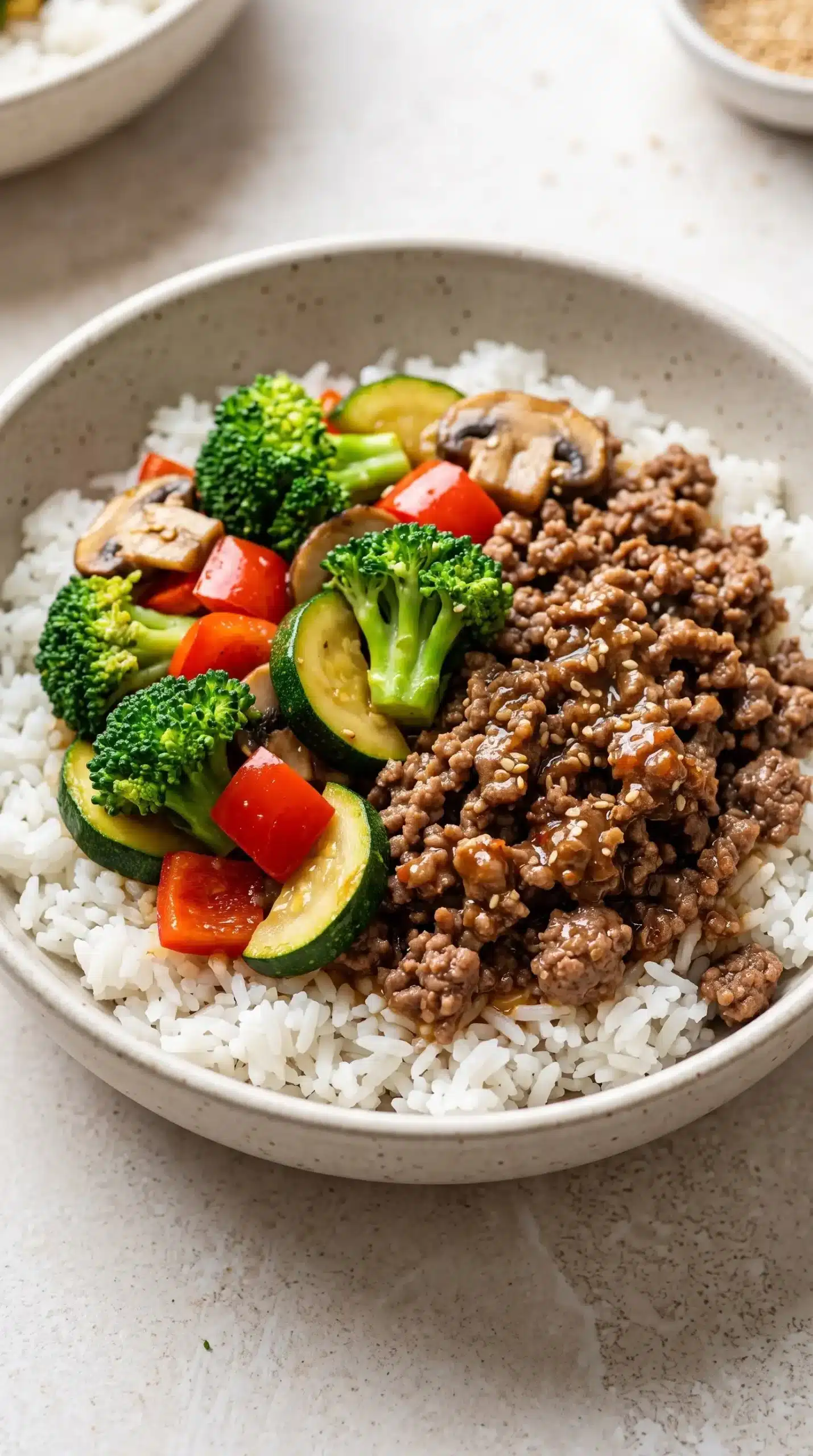
The vegetables should leave the pan tender but still slightly crisp, while the beef should be browned and coated in its lightly thickened seasoning. That contrast is the key cooking judgment that ties the bowl together: stopping the vegetable cooking at the right point keeps their texture clear against the saucy beef and soft rice.
Spicy Ground Beef Stir-Fry Bowl Questions and Answers
Can the chili flakes be reduced for a milder bowl?
Yes. Reduce the chili flakes to suit the desired heat level, and add more at serving time for anyone who wants extra spice.
Why are the mushrooms cooked before the other vegetables?
Mushrooms are given their own short cooking stage before broccoli, zucchini, and red bell pepper are added. This lets them sauté briefly without requiring the quicker-cooking vegetables to remain in the pan longer than needed.
Can white rice be replaced with brown rice?
Yes. Brown rice works as a substitute, but it requires a longer cooking time, so prepare it according to its cooking requirements before assembling the bowls.
What can replace sesame oil?
Canola oil or vegetable oil can be used instead of sesame oil. The substitution changes the flavor because sesame oil contributes a nutty note to the beef mixture.
How can the dish be made gluten-free?
Regular soy sauce makes the dish unsuitable for a gluten-free diet. Using gluten-free soy sauce provides the appropriate substitution while retaining the soy-based seasoning.
How long can leftovers stay refrigerated?
Stored leftovers can be kept in an airtight container in the refrigerator for about 3 days. Reheat them in the microwave or on the stove when ready to eat.
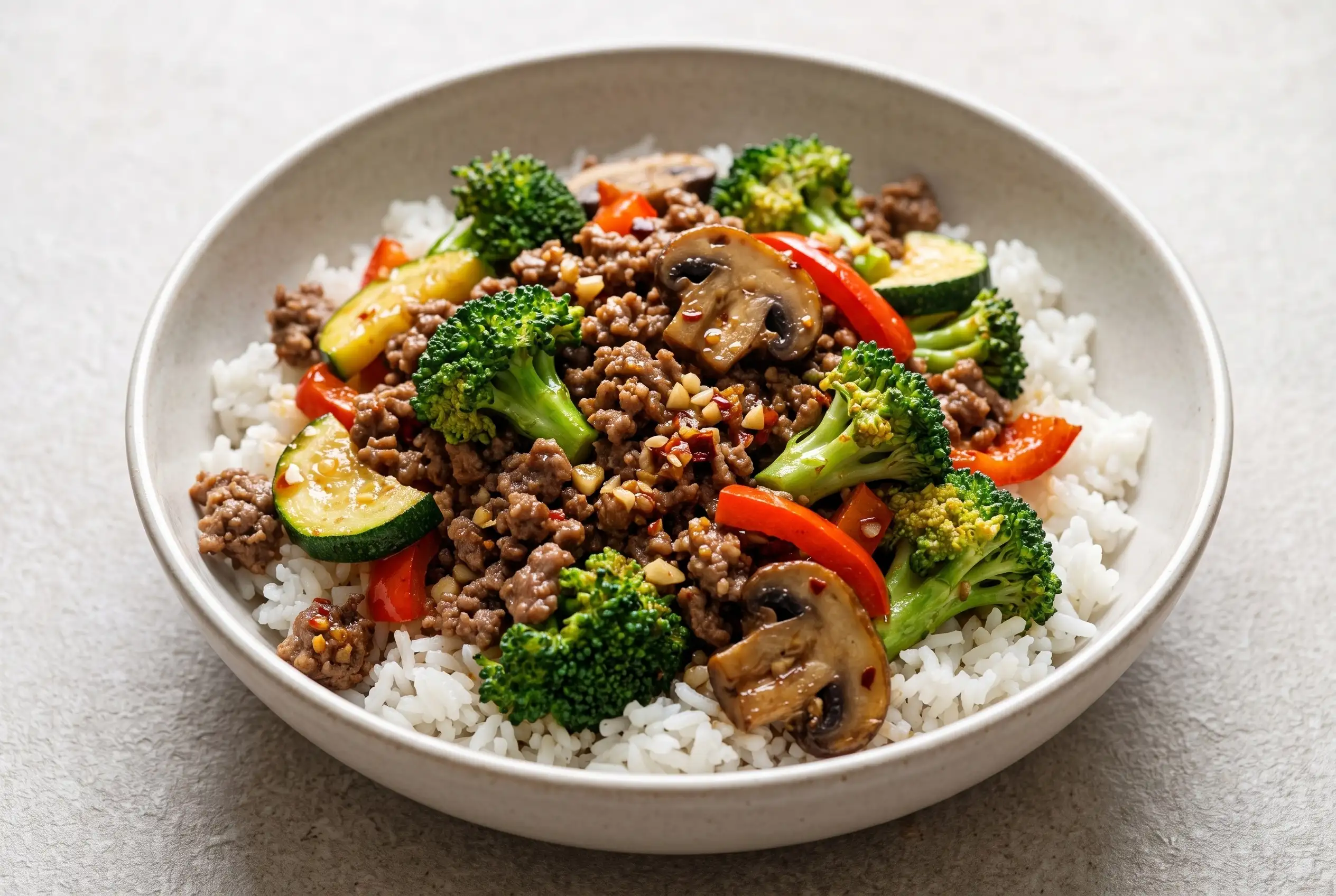
Ground Beef Stir Fry Bowl with Garlic Veggies and Rice
Ingredients
Method
- Wash and chop the broccoli, red bell pepper, zucchini, and mushrooms. Mince the garlic, then measure the soy sauce and remaining seasonings.
- Warm the sesame oil in a skillet over medium-high heat. Add 2 cloves of minced garlic and cook for 30 seconds.
- Add the ground beef and cook until browned, breaking it into small pieces during cooking.
- Mix in 2 tablespoons soy sauce, the chili flakes, and brown sugar. Simmer for 3–4 minutes, until the sauce has thickened slightly, then take the skillet off the heat.
- Heat the olive oil in a separate pan over medium heat. Add the remaining 2 cloves of minced garlic and sauté for 30 seconds.
- Add the sliced mushrooms and cook for 2 minutes.
- Add the broccoli, zucchini, and red bell pepper. Stir-fry for 4–5 minutes, keeping the vegetables tender-crisp, then mix in the remaining 1 teaspoon soy sauce.
- Divide the hot steamed white rice among 4 bowls. Top with or arrange alongside the cooked beef and vegetables, then spoon any remaining beef sauce over the bowls.