Chicken Tortellini Soup with Chicken and Vegetables
Chicken tortellini soup brings together tender chicken, cheese-filled tortellini, vegetables, herbs, and chicken broth in a warm bowl that feels substantial without requiring a complicated approach. The combination works because each part enters the pot at a useful point: vegetables build the base, chicken cooks in the broth, and tortellini joins near the end so it can become tender without spending unnecessary time in the soup.
For a cold-weather meal, chicken tortellini soup has the satisfying qualities of a chicken soup with tortellini while adding a pasta-and-cheese element that makes each spoonful more substantial. Carrots, celery, onion, and garlic give the broth a savory vegetable foundation, while thyme and parsley keep the finished bowl fresh and aromatic.
An easy chicken tortellini soup also leaves room for small adjustments. The supplied ingredients support a straightforward version with chicken breasts or thighs and cheese tortellini, while the suggested variations make it possible to change the tortellini, add vegetables, or create a creamy finish without changing the basic character of the dish.
What Makes Chicken Tortellini Soup Feel Complete
The balance comes from combining protein, vegetables, broth, and cheese tortellini in the same pot. Chicken supplies the main protein, while the tortellini contributes carbohydrates and cheese. Onion, carrots, celery, and garlic create the savory base, and chicken broth carries those flavors throughout the bowl. Because the soup includes several substantial elements, it can stand on its own as a filling meal.
Choosing Chicken and Tortellini for the Best Texture
Chicken breasts or thighs both fit the supplied preparation, provided the meat is cut into bite-sized pieces before cooking. Keeping the pieces reasonably similar in size helps them cook more evenly during the simmering stage. Seasoning the chicken with salt and freshly ground black pepper before it enters the broth also gives the meat a simple layer of seasoning from the beginning.
Cheese tortellini is the defining pasta component here. Fresh or frozen tortellini can be used, but the package directions should guide the cooking time because the two forms can require different handling. The important point is to add the tortellini after the chicken has simmered so the pasta does not spend the entire cooking period in the broth.
Once the tortellini is added, watch its texture closely. The supplied method calls for cooking it according to the package directions, usually around 5–7 minutes, until tender. Removing the pot from the heat or moving directly to serving once the pasta reaches the desired texture helps keep the focus on tender tortellini instead of an overly soft finish.
How the Vegetable Base Shapes the Broth
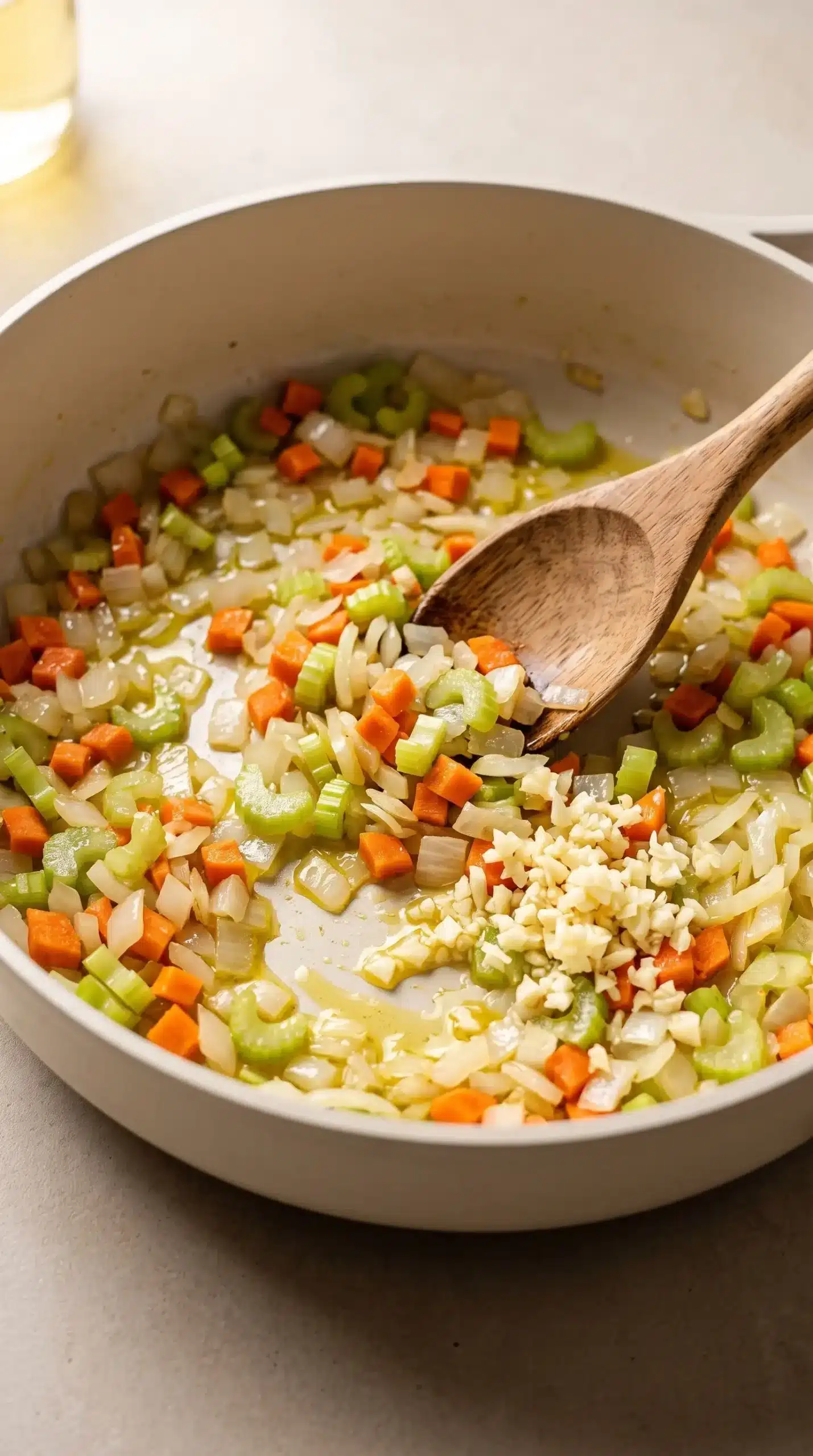
Onion, carrots, and celery form the aromatic foundation of chicken tortellini soup, and sautéing them in olive oil before adding the broth gives the soup a more developed starting point. About five minutes over medium heat allows the vegetables to become tender before garlic is introduced. Garlic needs only about a minute at that stage, just long enough for its aroma to become noticeable without giving it unnecessary cooking time.
Cooking Controls That Keep the Soup Balanced
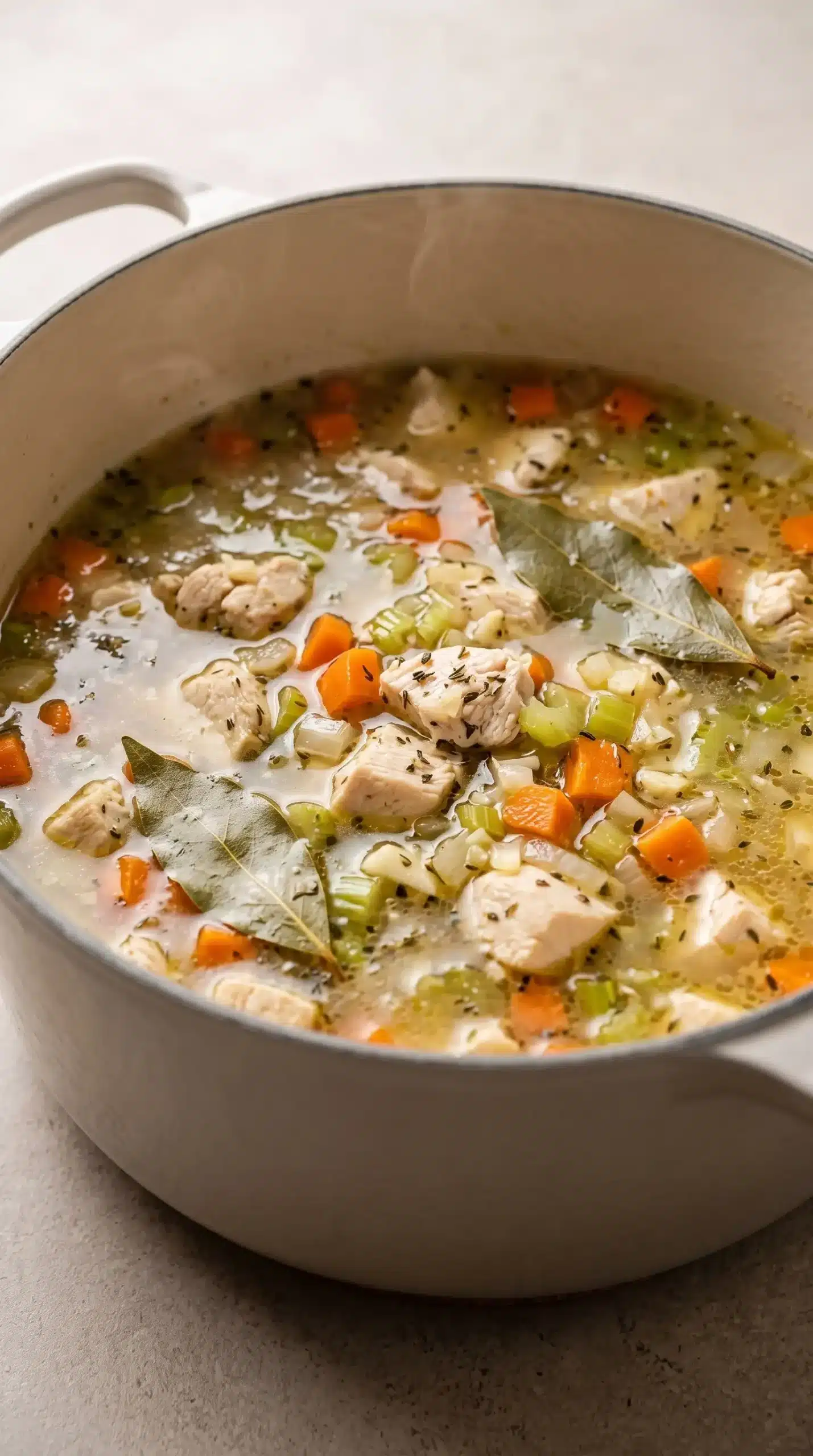
Heat management matters once the chicken broth enters the pot. Bringing the liquid to a boil establishes the cooking temperature, but reducing the heat for the 20-minute simmer keeps the soup moving through the cooking stage in a controlled way. Bay leaves and dried thyme can remain in the broth during this portion, allowing their flavor to spread through the liquid.
Salt should be handled gradually because the chicken broth already contributes seasoning. The most useful adjustment happens near the end, after the tortellini has cooked and the bay leaves have been removed. Tasting at that point gives a clearer picture of whether additional salt or black pepper is needed.
| Cooking stage | What to watch | Useful action |
|---|---|---|
| Vegetable sauté | Onion, carrots, and celery becoming tender | Keep the heat at medium and continue until the vegetables soften |
| Garlic addition | Garlic becoming fragrant | Cook for about 1 minute before adding broth |
| Chicken simmer | Chicken cooking in the seasoned broth | Reduce the heat after boiling and simmer for 20 minutes |
| Tortellini stage | Pasta becoming tender | Follow the package directions, usually about 5–7 minutes |
Fresh parsley belongs at the finishing stage. Stirring it into the soup after removing the bay leaves gives the herbs a fresher presence than if they had been cooked for the entire simmer. Extra parsley can also be added directly to individual bowls.
Why Tortellini Timing Matters in Chicken Soup
Cheese tortellini changes the texture of the soup as it cooks, so its timing deserves separate attention. Adding it only after the chicken has completed its simmer keeps the pasta from sitting in hot broth longer than necessary. Follow the package instructions for the particular tortellini being used, then serve once the pieces are tender.
Chicken Tortellini Soup Mistakes to Avoid
Overcooking the tortellini is one of the easiest ways to change the intended texture. Since the pasta is added near the end, there is little reason to keep cooking it after it reaches tenderness. Watch the package timing and check the texture toward the end of that window.
Another issue can arise when the vegetables are rushed. Onion, carrots, and celery are supposed to be sautéed before the broth goes in, and the supplied method gives them about five minutes to become tender. Skipping that stage removes an important part of the soup’s vegetable foundation.
Seasoning too early can also make the final adjustment less precise. Chicken broth, seasoned chicken, and cheese tortellini all contribute to the finished flavor. Waiting until the tortellini has cooked and the bay leaves have been removed makes it easier to taste the completed soup and decide whether more salt or pepper is necessary.
Simple Ways to Change the Tortellini Soup
Spinach or mushroom tortellini can replace cheese tortellini when a different filling appeals to you. The supplied variation also allows beans for additional fiber, although the resulting soup will have a different texture and a more substantial bean presence. Vegetable broth can be used for a vegetarian direction, but the chicken would need to be omitted for that change to make sense.
Serving Chicken Tortellini Soup at Its Best
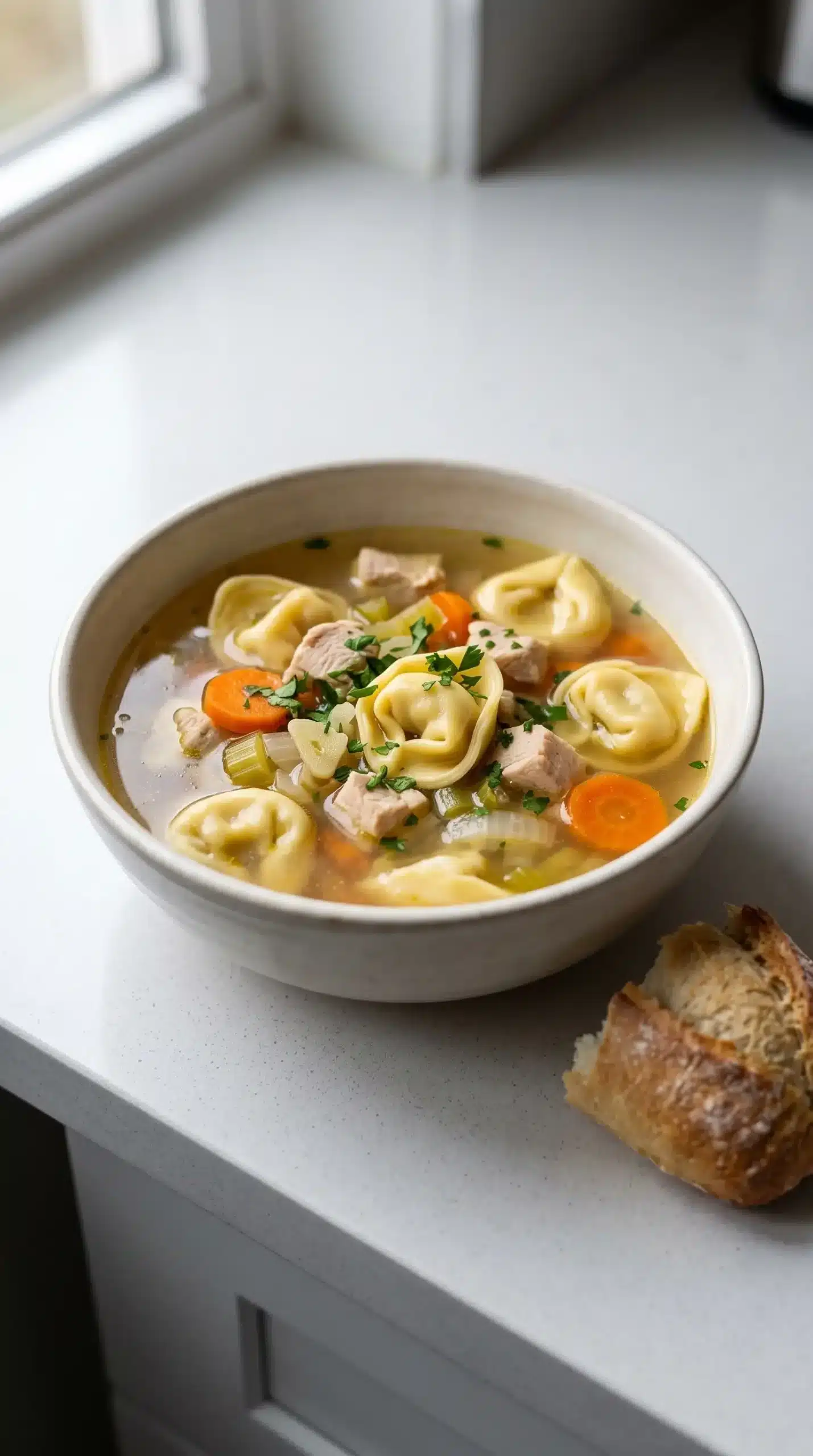
Hot bowls provide the most direct way to serve chicken tortellini soup. The broth, chicken, vegetables, and tender tortellini can all be enjoyed together without additional preparation. Fresh parsley over the top adds a simple finishing touch and reinforces the herbal flavor already stirred into the pot.
Crusty bread makes a practical companion when you want something alongside the soup. Its firm texture provides a contrast to the broth and tender ingredients without changing the recipe itself. A bowl of soup with bread can also make the meal feel more substantial.
A small amount of lemon juice is another finishing option supplied for this dish. Add a splash just before serving when you want a brighter flavor. Because it is a finishing adjustment, you can taste the soup first and decide whether that extra acidity suits the bowl.
Keeping Leftover Chicken Tortellini Soup Properly
Allow chicken tortellini soup to cool before transferring it to an airtight container and placing it in the refrigerator. For a clear storage limit, cooked chicken soup can be refrigerated for 3–4 days. For longer storage, the soup can be frozen for up to 3 months and thawed in the refrigerator overnight before reheating.
What the Chicken and Vegetables Contribute
Chicken gives the soup its primary protein component, while the vegetables bring carrots, celery, onion, and garlic into the same bowl. Carrots, celery, and onions contribute vitamins and minerals, while the chicken and cheese tortellini make the soup more substantial.
Cheese tortellini also supplies carbohydrates, which helps explain why a bowl can feel more filling than a broth-and-vegetable soup alone. The combination of pasta, chicken, and vegetables creates several different textures and nutritional components without requiring a long ingredient list.
For an everyday meal, that combination gives chicken tortellini soup a useful balance between a brothy soup and a more substantial pasta-based dish. The recipe remains centered on recognizable ingredients, with the broth tying the components together and the vegetables adding more than decoration.
Planning Ahead Without Losing the Soup’s Texture
Making the soup ahead is possible because the finished dish can be refrigerated or frozen using the supplied storage approach. When preparing it for later serving, pay particular attention to the tortellini because pasta texture is one of the components most noticeable in a reheated bowl. Thaw frozen soup in the refrigerator overnight before reheating, then serve once hot.
Finishing Choices That Change the Bowl
Fresh parsley keeps the standard finish light and herbal, while a splash of lemon juice introduces a brighter note at the point of serving. Either choice can be made after the soup has been tasted, which gives you control over the character of the finished bowl.
Heavy cream offers a richer finish when stirred into the soup before serving. For a bowl with a fuller, cream-based broth, use a small amount of creamy tortellini soup as a useful flavor direction while keeping the chicken, vegetables, and tortellini at the center.
Vegetable additions can also shift the balance. Spinach or peas can be incorporated as suggested alternatives, while different tortellini fillings such as spinach or mushroom change the pasta component itself. These options are most useful when you want variety without abandoning the basic structure of chicken tortellini soup.
Chicken Tortellini Soup Works Best When Timing Leads the Texture
Tender chicken, softened vegetables, seasoned broth, and properly cooked tortellini depend on different moments in the cooking process. The vegetables need their sauté, the chicken needs its simmer, and the tortellini needs only its package-directed cooking period near the end. Keeping those stages distinct gives chicken tortellini soup its intended balance and makes the finished bowl easier to control.
Chicken Tortellini Soup Questions About Storage and Cooking
Can chicken tortellini soup be made with chicken thighs?
Yes. The supplied ingredients allow either boneless, skinless chicken breasts or thighs. Cut the chosen chicken into bite-sized pieces and season it with salt and pepper before adding it to the broth.
Should frozen tortellini be thawed before adding it?
No separate thawing step is provided or required in the supplied method. Frozen tortellini can be used, with its cooking handled according to the package directions. Watch for tenderness during the cooking window so the pasta reaches the desired texture.
Can the soup be made creamier?
Yes. Stir a bit of heavy cream into the soup before serving. The cream creates a richer finish while keeping the chicken, vegetables, and tortellini as the main components.
What can replace cheese tortellini?
Spinach or mushroom tortellini are supported variations. Using a different filling changes the flavor of the pasta while preserving the basic soup format.
How can the soup have a brighter flavor?
A splash of lemon juice can be added just before serving. Fresh parsley also provides a fresh herbal finish, so either option can be used according to the flavor you want at the table.
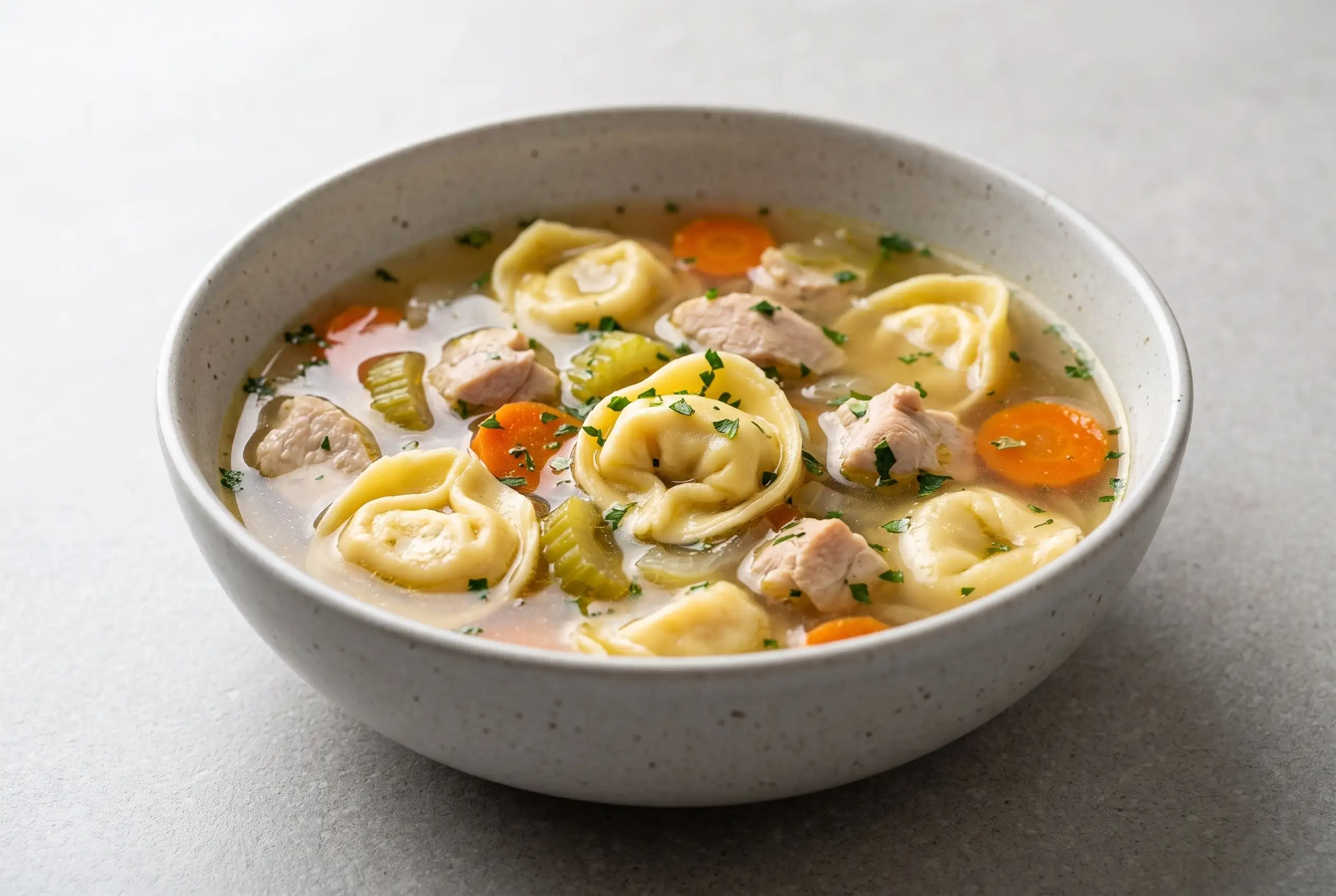
Chicken Tortellini Soup with Chicken and Vegetables
Ingredients
Method
- Cut the chicken into bite-sized pieces and season with salt and black pepper.
- Heat the olive oil in a large pot over medium heat. Add the onion, carrots, and celery, and cook for about 5 minutes, until tender.
- Add the minced garlic and cook for 1 minute.
- Add the chicken broth, seasoned chicken, bay leaves, and dried thyme to the pot. Bring to a boil, then lower the heat and simmer for 20 minutes, until the chicken reaches 165°F / 74°C and is fully cooked.
- Add the cheese tortellini and cook according to the package directions, usually 5–7 minutes, until tender.
- Take out the bay leaves. Taste the soup and adjust the salt and black pepper as needed, then stir in the chopped fresh parsley.
- Serve the soup hot and garnish with additional fresh parsley if desired.